Get help with Science, Grade 10, Applied
Most tutoring makes you sit through material you already know. MapleMind flips that: pick the exact skill that's causing trouble — any of the 64 below — and the tutor teaches just that one, step by step, as many times as it takes. Ask questions in plain words, any time of day, in English, French, or 12 other languages.
The official Ontario Science, Grade 10, Applied curriculum
Ontario defines Science, Grade 10, Applied by strands and outcomes. MapleMind teaches the same curriculum reorganized for one-skill-at-a-time tutoring — the table shows exactly where every official strand lands, and the ministry's own wording is quoted under each unit below.
Official source Ontario's official science curriculumRead it on the government site — dcp.edu.gov.on.ca ↗| Official strand | Outcomes | Where MapleMind teaches it |
|---|---|---|
| Strand A | 2 | Investigation Skills and Careers |
| Strand B | 13 | Biology: Tissues, Organs, and Systems |
| Strand C | 14 | Chemistry: Chemical Reactions and Their Practical Applications |
| Strand D | 16 | Earth and Space Science: Earth's Dynamic Climate |
| Strand E | 17 | Physics: Light and Applications of Optics |
Every skill below, taught one on one.
 Try the first session free
How MapleMind teaches Science, Grade 10, Applied — every unit, lesson, and skill
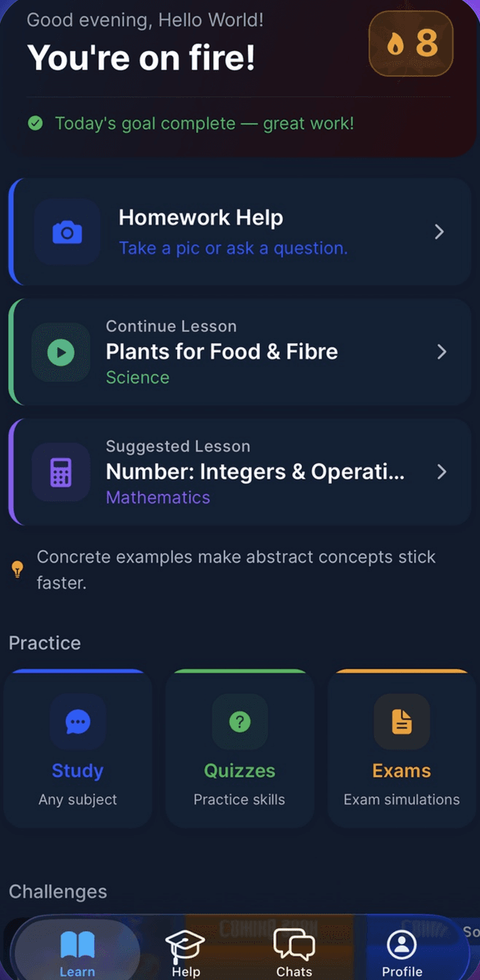
Every skill below runs as a short session: a plain-words lesson, a worked example, solving it together, then a five-question skill check that earns up to three stars. Guided Mode keeps it teaching instead of answer-handing — turning it off needs a parent's password.
Unit 1Investigation Skills and CareersOfficial strand · Strand A
Careers related to the fields of science under study and the education and training they require, and scientists — including Canadians — who have contributed to those fields. The scientific investigation skills of strand A1 are woven through every lab and inquiry in strands B-E rather than taught here on their own.
Careers in Science
- Careers in the sciencessnc2p.SNC2P.A2.1 — Identify and describe a variety of careers related to the fields of science under study and the education and training necessary for them.
Scientists and Their Contributions
- Scientists who contributed to these fieldssnc2p.SNC2P.A2.2 — Identify scientists, including Canadians, who have contributed to the fields of science under study.
The official wording — 2 outcomes in this unit
- snc2p.SNC2P.A2.1
identify and describe a variety of careers related to the fields of science under study (e.g., veterinarian assistant, quality control technician, conservation officer, sound and light technician) and the education and train- ing necessary for these careers
- snc2p.SNC2P.A2.2
identify scientists, including Canadians (e.g., Maude Abbott, Paul Kebarle, Reginald Fessenden, James Hillier), who have made a contribution to the fields of science under study
Unit 2Biology: Tissues, Organs, and SystemsOfficial strand · Strand B
Human cells, cell division and specialization, and how cells organize into tissues, organs, and systems — examined with the microscope and dissection — plus analysing medical imaging technologies and evaluating how technologies, substances, and environmental factors affect human tissues, organs, and systems.
Health Technology and the Body
- Medical imaging technologiessnc2p.SNC2P.B1.1 — Analyse medical imaging technologies used in Canada to explore, diagnose, or treat the human body, and communicate the findings.
- Effects of technologies and substances on the bodysnc2p.SNC2P.B1.2 — Evaluate the effects that use of or exposure to a technology, substance, or environmental factor may have on human tissues, organs, or systems.
Investigating Human Cells and Systems
- Human cell and system terminologysnc2p.SNC2P.B2.1 — Use appropriate terminology related to human cells, tissues, organs, and systems.
- Stages of mitosis in animal cellssnc2p.SNC2P.B2.2 — Examine cells under a microscope to identify the various stages of mitosis in animals.
- Investigating human cell specializationsnc2p.SNC2P.B2.3 — Investigate cell specialization in the human body under a microscope and draw labelled diagrams of different cell types.
- Cancerous vs non-cancerous cell divisionsnc2p.SNC2P.B2.4 — Compare the division of cancerous and non-cancerous cells and describe the impact of cancerous cells on the body.
- Dissecting an animal's organ systemsnc2p.SNC2P.B2.5 — Locate the organs of a specific system of an animal through dissection and describe their interrelationship.
- Researching a human health problemsnc2p.SNC2P.B2.6 — Use scientific investigation skills to research health problems related to human tissues, organs, or systems, and communicate the findings.
- The cell cycle and its importancesnc2p.SNC2P.B3.1 — Describe the cell cycle in animals and explain its importance for growth and tissue repair.
- Specialized cells and tissuessnc2p.SNC2P.B3.2 — Describe the structure, function, and importance of specialized cells and tissues in multicellular organisms.
- Cell organization in the bodysnc2p.SNC2P.B3.3 — Explain cell organization by describing the link between cells, tissues, organs, and systems in the human body.
- Functions of human body systemssnc2p.SNC2P.B3.4 — Explain the general function of some of the systems in the human body.
- Interaction of body systemssnc2p.SNC2P.B3.5 — Describe the interaction of systems in the human body and explain why these interactions are necessary for survival.
The official wording — 13 outcomes in this unit
- snc2p.SNC2P.B1.1
analyse, on the basis of research, medical im- aging technologies (e.g., ultrasound, X‑rays, computerized axial tomography [CT or CAT] scan, magnetic resonance imaging [MRI], mi- croscopy, biophotonics) used in Canada to explore, diagnose, or treat the human body, and communicate their findings [PR, AI, C]
- snc2p.SNC2P.B1.2
evaluate the effects that use of or exposure to a technology, substance, or environmental factor (e.g., cellphones, X‑rays, UV radiation, personal audio players, cigarette smoke, pesti- cides, food additives/preservatives, vitamins, gene therapy) may have on the function of human tissues, organs, or systems [AI, C]
- snc2p.SNC2P.B2.1
use appropriate terminology related to human cells, tissues, organs, and systems, including, but not limited to: absorption, anaphase, capillaries, concentration, differentiation, diffusion, interphase, metaphase, osmosis, prophase, red blood cells, regener- ation, and telophase [C]
- snc2p.SNC2P.B2.2
examine cells under a microscope or similar instrument to identify the various stages of mitosis in animals [PR, AI]
- snc2p.SNC2P.B2.3
investigate, using a microscope or similar instrument, cell specialization in the human body, focusing on different types of human cells (e.g., muscle cells, epithelial cells, nerve cells), and draw labelled biological diagrams of each type of cell [PR, C]
- snc2p.SNC2P.B2.4
compare, on the basis of observation (e.g., using pictures, videos, or images), the division of cancerous cells and non‑cancerous cells, and describe the impact of cancerous cells on the human body [PR, AI]
- snc2p.SNC2P.B2.5
locate, through a laboratory or computer‑ simulated dissection, the organs of a specific system of an animal (e.g., a worm, a frog, a fish), and describe their interrelationship [PR, AI, C]
- snc2p.SNC2P.B2.6
use scientific investigation skills to research health problems related to tissues, organs, or systems in humans (e.g., asthma, sickle-cell anemia, heart disease, Crohn’s disease), and communicate their findings [IP, PR, C]
- snc2p.SNC2P.B3.1
describe the cell cycle in animals, and explain its importance for the growth of cells and repair of tissues
- snc2p.SNC2P.B3.2
describe the structure, function, and im- portance of specialized cells and tissues in multi‑cellular organisms (e.g., neurons have many branching dendrites and long axons to receive and transmit messages; muscle cells have a higher concentration of mitochondria, which produce energy)
- snc2p.SNC2P.B3.3
explain cell organization by describing the link between cells, tissues, organs, and systems in the human body
- snc2p.SNC2P.B3.4
explain the general function of some of the systems in the human body (e.g., the function of the circulatory system is to transport materials through the body; the function of the digestive system is to absorb nutrients; the function of the respiratory system is to bring oxygen into and remove carbon dioxide from the body)
- snc2p.SNC2P.B3.5
describe the interaction of systems in the human body (e.g., the respiratory system brings oxygen into the body, and the circulatory system transports the oxygen to cells), and explain why these interactions are necessary for survival
Unit 3Chemistry: Chemical Reactions and Their Practical ApplicationsOfficial strand · Strand C
Chemical reactions — synthesis, decomposition, displacement, and acid-base neutralization — investigated through inquiry and represented with word and balanced equations, grounded in conservation of mass, formulae, and the pH scale, with a strong applied focus on reactions in products, professions, and everyday processes.
Reactions at Home and Work
- Reactions in products and processessnc2p.SNC2P.C1.1 — Analyse the function of chemical reactions in the production of products or in processes at home or in the workplace, and communicate the findings.
- Reactions in a professionsnc2p.SNC2P.C1.2 — Identify practical applications of chemical reactions in a particular profession.
- Assessing chemical hazardssnc2p.SNC2P.C1.2 — Assess the hazards associated with chemical reactions in a profession, including hazards of handling and disposing of chemicals.
Investigating Chemical Reactions
- Chemical-reaction terminologysnc2p.SNC2P.C2.1 — Use appropriate terminology related to chemical reactions, including antacid, dilute, neutralization, product, reactant, and word equation.
- Molecular models of reactionssnc2p.SNC2P.C2.2 — Construct molecular models of simple chemical reactions and produce diagrams of them.
- Investigating reaction typessnc2p.SNC2P.C2.3 — Conduct and observe inquiries related to synthesis, decomposition, and displacement reactions, and represent them in a variety of formats.
- Conservation of mass inquirysnc2p.SNC2P.C2.4 — Use an inquiry process to investigate the law of conservation of mass in a reaction and account for any discrepancies.
- Investigating neutralizationsnc2p.SNC2P.C2.5 — Use an inquiry process to investigate acid-base neutralization reactions.
- Classifying acids and basessnc2p.SNC2P.C2.6 — Conduct an inquiry to classify common substances as acidic, basic, or neutral.
- Acid-base reactions in productssnc2p.SNC2P.C2.7 — Investigate applications of acid-base reactions in common products and processes.
- Formulae, composition, and namessnc2p.SNC2P.C3.1 — Describe the relationships between chemical formulae, composition, and names of simple compounds.
- Naming and writing formulaesnc2p.SNC2P.C3.2 — Name and write the formulae for simple ionic and molecular compounds.
- Writing balanced equationssnc2p.SNC2P.C3.3 — Write word equations and balanced chemical equations for simple chemical reactions.
- Neutralization reactionssnc2p.SNC2P.C3.4 — Describe the process of neutralization for simple acid-base reactions.
- The pH scalesnc2p.SNC2P.C3.5 — Describe how the pH scale is used to identify the concentration of acids and bases.
The official wording — 14 outcomes in this unit
- snc2p.SNC2P.C1.1
analyse, on the basis of research, the function of chemical reactions in the production of select- ed products and/ or in processes commonly encountered at home or in the workplace (e.g., carbonation of soft drinks; rust proofing), and communicate their findings [IP, PR, AI, C]
- snc2p.SNC2P.C1.2
identify practical applications of chemical re- actions in a particular profession (e.g., ceramics, cosmetology, firefighting, heating and cooling system technology, food preparation, plumbing, custodial services), and assess the associated hazards, including hazards associated with the handling and disposal of chemicals [PR, AI, C]
- snc2p.SNC2P.C2.1
use appropriate terminology related to chemical reactions, including, but not limited to: antacid, dilute, neutralization, product, reactant, and word equation [C]
- snc2p.SNC2P.C2.2
construct molecular models of simple chemical reactions (e.g., C + O 2 ➞ CO 2 ; 2H 2 + O 2 ➞ 2H 2 O), and produce diagrams of these models [PR, C]
- snc2p.SNC2P.C2.3
conduct and observe inquiries related to sim- ple chemical reactions, including synthesis, decomposition, and displacement reactions, and represent them using a variety of formats (e.g., word equations, balanced chemical equations, molecular models) [PR, AI, C]
- snc2p.SNC2P.C2.4
use an inquiry process to investigate the law of conservation of mass in a chemical reaction (e.g., compare the values before and after the reaction), and account for any discrepancies [PR, AI]
- snc2p.SNC2P.C2.5
use an inquiry process to investigate acid– base neutralization reactions (e.g., neutralize a dilute solution of sodium hydroxide with dilute hydrochloric acid and extract the sodium chlor- ide produced) [PR, AI]
- snc2p.SNC2P.C2.6
conduct an inquiry to classify some common substances as acidic, basic, or neutral (e.g., use acid–base indicators or pH strips to classify com- mon household substances) [PR, AI]
- snc2p.SNC2P.C2.7
investigate applications of acid–base reac- tions in common products and processes (e.g., compare the effectiveness of different brands of antacid tablets, using quantitative analysis) [PR, AI]
- snc2p.SNC2P.C3.1
describe the relationships between chemical formulae, composition, and names of simple compounds (e.g., carbon dioxide, CO 2 , has one more oxygen atom than carbon monoxide, CO)
- snc2p.SNC2P.C3.2
name and write the formulae for simple ionic and molecular compounds (e.g., NaCl, NaOH, H 2 O, CO 2 )
- snc2p.SNC2P.C3.3
write word equations and balanced chem- ical equations for simple chemical reactions (e.g., 2H 2 + O 2 ➞ 2H 2 O)
- snc2p.SNC2P.C3.4
describe the process of neutralization for simple acid–base reactions (i.e., an acid reacts with a base to form a salt and often water)
- snc2p.SNC2P.C3.5
describe how the pH scale is used to identify the concentration of acids and bases
Unit 4Earth and Space Science: Earth's Dynamic ClimateOfficial strand · Strand D
Earth's climate system and the natural and anthropogenic greenhouse effect — heat sinks, greenhouse-gas sources, and the causes and indicators of climate change — with an applied focus on a personal carbon footprint and a plan to reduce it, plus analysing how living things and human actions are affected by and affect climate change.
Climate Change and Us
- Effects of climate change on living thingssnc2p.SNC2P.D1.1 — Analyse various ways living things and natural systems have been affected by climate change, and communicate the findings.
- Human actions and greenhouse gasessnc2p.SNC2P.D1.2 — Analyse ways in which human actions have increased or decreased the production of greenhouse gases.
Investigating Earth's Climate
- Climate terminologysnc2p.SNC2P.D2.1 — Use appropriate terminology related to Earth's dynamic climate.
- Investigating the greenhouse effectsnc2p.SNC2P.D2.2 — Investigate the principles of the natural greenhouse effect using simulations, diagrams, or models, and compare them to an actual greenhouse.
- Investigating a greenhouse-gas sourcesnc2p.SNC2P.D2.3 — Use a research process to investigate a source of greenhouse gases and its effect on a region of Canada.
- Factors affecting global warmingsnc2p.SNC2P.D2.4 — Conduct an inquiry to determine how different factors affect global warming and climate change.
- Your carbon footprint and a plansnc2p.SNC2P.D2.5 — Investigate your personal carbon footprint using a simulation or data, and plan a course of action to reduce it.
- Tools for climate decisionssnc2p.SNC2P.D2.6 — Compare different tools or systems scientists use to make informed decisions on global climate change.
- Perspectives and bias in climate mediasnc2p.SNC2P.D2.7 — Compare different perspectives and biases evident in scientific and non-scientific media discussions of climate change.
- Earth's climate systemsnc2p.SNC2P.D3.1 — Describe the principal components of Earth's climate system.
- Natural vs anthropogenic greenhouse effectsnc2p.SNC2P.D3.2 — Describe the natural greenhouse effect, its importance for life, and the difference between it and the anthropogenic greenhouse effect.
- Heat sinkssnc2p.SNC2P.D3.3 — Describe how heat is transferred and stored in hydrospheric and atmospheric heat sinks.
- Naturally produced greenhouse gasessnc2p.SNC2P.D3.4 — Identify different greenhouse gases and explain how they are produced naturally in the environment.
- Human-produced greenhouse gasessnc2p.SNC2P.D3.5 — Describe methods by which greenhouse gases are produced by humans.
- Causes of climate change and Canada's rolesnc2p.SNC2P.D3.6 — Identify the natural and human causes of climate change and how Canada contributes to it.
- Indicators of climate changesnc2p.SNC2P.D3.7 — Identify indicators of global climate change.
The official wording — 16 outcomes in this unit
- snc2p.SNC2P.D1.1
analyse, on the basis of research, various ways in which living things and natural systems have been affected by climate change (e.g., the effect of loss of permafrost on northern roads and housing; the effect of longer growing sea- sons in some regions on farmers; the effect of warming oceans on coral reefs), and communi- cate their findings [IP, PR, AI, C]
- snc2p.SNC2P.D1.2
analyse ways in which human actions (e.g., burning fossil fuels, implementing tree-planting programs) have increased or decreased the pro- duction of greenhouse gases [AI, C]
- snc2p.SNC2P.D2.1
use appropriate terminology related to Earth’s dynamic climate, including, but not limited to: anthropogenic, atmosphere, carbon footprint, carbon sink, climate, greenhouse gases, hydrosphere, and weather [C]
- snc2p.SNC2P.D2.2
investigate the principles of the natural greenhouse effect, using simulations, diagrams, and/or models, and compare these principles to those of an actual greenhouse [PR, AI]
- snc2p.SNC2P.D2.3
use a research process to investigate a source of greenhouse gases (e.g., decaying garbage, animal digestive processes, burning biomass) Grade 10, Applied 90 THE ONTARIO CURRICULUM, GRADES 9 AND 10 | Science EARTH AND SPACE SCIENCE: EARTH’S DYNAMIC CLIMATE 91 Science SNC2P and its effect on a region of Canada (e.g., melt- ing of the polar ice cap in the Arctic, shrinking of glaciers in the Rockies) [IP, PR, AI]
- snc2p.SNC2P.D2.4
conduct an inquiry to determine how different factors (e.g., an increase in surface temperature, an increase in water temperature) affect global warming and climate change [PR]
- snc2p.SNC2P.D2.5
investigate their personal carbon footprint, using a computer simulation or numerical data (e.g., determine carbon emissions that result from their travelling to school, work, and rec- reation venues; from vacation travelling; from buying products imported from distant coun- tries), and plan a course of action to reduce their footprint (e.g., a plan to increase their use of bicycles or public transit; to eat more local foods) [PR, AI, C]
- snc2p.SNC2P.D2.6
compare different tools or systems used by scientists to make informed decisions on global climate change (e.g., Ecoregions of Canada, bio- climate profiles) [PR, AI]
- snc2p.SNC2P.D2.7
compare different perspectives and/or biases evident in discussions of climate change in scientific and non‑scientific media (e.g., with reference to knowledge, beliefs, and/or values) [PR, AI]
- snc2p.SNC2P.D3.1
describe the principal components of Earth’s climate system (e.g., the sun, oceans, and the atmosphere; the topography and configuration of land masses)
- snc2p.SNC2P.D3.2
describe the natural greenhouse effect, its importance for life, and the difference between it and the anthropogenic greenhouse effect
- snc2p.SNC2P.D3.3
describe how heat is transferred and stored in both hydrospheric and atmospheric heat sinks
- snc2p.SNC2P.D3.4
identify different greenhouse gases (e.g., car- bon dioxide, methane, water vapour, nitrous oxide), and explain how they are produced nat- urally in the environment
- snc2p.SNC2P.D3.5
describe methods by which greenhouse gases are produced by humans (e.g., burning of bio- mass, chemical reactions involving pollutants)
- snc2p.SNC2P.D3.6
identify the natural and human causes of climate change in the world and, in particular, how Canada contributes to climate change
- snc2p.SNC2P.D3.7
identify indicators of global climate change (e.g., changes in: the mass of glacial and polar ice, sea levels, wind patterns, global carbon budget assessments, migratory patterns of birds)
Unit 5Physics: Light and Applications of OpticsOfficial strand · Strand E
The behaviour of light — reflection in mirrors, refraction through lenses, and additive and subtractive colour — investigated with ray diagrams and a hands-on optical device, plus the electromagnetic spectrum, types of light emission, how colour works, and the role of optical technologies in everyday life and information transmission.
Optical Technology in Everyday Life
- Colour theory in technologysnc2p.SNC2P.E1.1 — Analyse how additive and subtractive colour theory are applied in technologies used in everyday life.
- Optical technologies and informationsnc2p.SNC2P.E1.2 — Describe the role of selected optical technologies in transmitting information.
- Societal impact of optical technologiessnc2p.SNC2P.E1.2 — Analyse the impact on society of selected optical technologies used to transmit information.
Investigating Light and Colour
- Light and optics terminologysnc2p.SNC2P.E2.1 — Use appropriate terminology related to light and optics.
- Investigating reflection in mirrorssnc2p.SNC2P.E2.2 — Investigate the laws of reflection, use them to explain images in plane, converging, and diverging mirrors, and draw ray diagrams.
- Investigating refractionsnc2p.SNC2P.E2.3 — Investigate the refraction of light as it passes through a variety of media.
- Predicting converging-lens imagessnc2p.SNC2P.E2.4 — Predict the qualitative characteristics of images formed by converging lenses, test the predictions, and draw ray diagrams.
- How objects reflect, transmit, or absorb lightsnc2p.SNC2P.E2.5 — Investigate how various objects or media reflect, transmit, or absorb light, and record observations with ray diagrams.
- Coloured light on coloured objectssnc2p.SNC2P.E2.6 — Predict the effect of shining a coloured light on objects of different colours, and test the predictions.
- Building an optical devicesnc2p.SNC2P.E2.7 — Construct an optical device that uses a variety of mirrors.
- Types of light emissionsnc2p.SNC2P.E3.1 — Describe various types of light emissions and how they produce light.
- The electromagnetic spectrum and white lightsnc2p.SNC2P.E3.2 — Identify and label the visible and invisible regions of the electromagnetic spectrum, and identify the colours in white light.
- Laws of reflection and mirrorssnc2p.SNC2P.E3.3 — Explain the laws of reflection and identify how light reflects from different types of mirrors.
- Refraction between mediasnc2p.SNC2P.E3.4 — Describe qualitatively how visible light is refracted at the interface between two different media.
- Additive colour theorysnc2p.SNC2P.E3.5 — Use additive colour theory to predict the results of combining primary and secondary light colours.
- Subtractive colour theorysnc2p.SNC2P.E3.6 — Use subtractive colour theory to describe the effect of colour filters on white light.
- Why objects have coloursnc2p.SNC2P.E3.7 — Explain how the colour of an object is determined by reflection, absorption, and transmission of colour.
- Light and colour in optical devicessnc2p.SNC2P.E3.8 — Explain how the properties of light or colour are applied in the operation of an optical device.
The official wording — 17 outcomes in this unit
- snc2p.SNC2P.E1.1
analyse how additive and/or subtractive col- our theory are applied in technologies used in everyday life (e.g., stop lights, high-definition television, colour monitors, coloured spotlights) [AI, C]
- snc2p.SNC2P.E1.2
describe the role of selected optical technolo- gies in the transmission of information, and analyse their impact on society (e.g., cellphones, optical fibre cables, satellite dishes) [AI, C]
- snc2p.SNC2P.E2.1
use appropriate terminology related to light and optics, including, but not limited to: angle of incidence, angle of reflection, angle of refraction, centre of curvature, focal length, luminescence, magnification, principal axis, radius of curvature, and vertex [C]
- snc2p.SNC2P.E2.2
use an inquiry process to investigate the laws of reflection; use these laws to explain the charac- teristics of images formed by plane, converging (concave), and diverging (convex) mirrors; and draw ray diagrams to illustrate their observa- tions [PR, AI, C]
- snc2p.SNC2P.E2.3
use an inquiry process to investigate the re- fraction of light as it passes through a variety of media (e.g., the angles of incidence and refrac- tion as light passes through a clear acrylic block) [PR]
- snc2p.SNC2P.E2.4
predict the qualitative characteristics of im- ages (e.g., location, orientation, size, type) formed by converging lenses, test their predic- tions through inquiry, and draw ray diagrams to record their observations [IP, PR, AI, C]
- snc2p.SNC2P.E2.5
investigate how various objects or media (e.g., opaque, translucent, and transparent materials; black-and-white surfaces) reflect, transmit, or absorb light, and record their observations using ray diagrams [PR, C]
- snc2p.SNC2P.E2.6
predict the effect of shining a coloured light on objects of different colours, and test their predictions through inquiry [IP, PR, AI, C]
- snc2p.SNC2P.E2.7
construct an optical device (e.g., a funhouse mirror, a device that produces an optical illusion, a solar oven) that uses a variety of mirrors [PR]
- snc2p.SNC2P.E3.1
describe various types of light emissions (e.g., chemiluminescence, bioluminescence, incandescence, electric discharge) and how they produce light
- snc2p.SNC2P.E3.2
identify and label the visible and invisible regions of the electromagnetic spectrum, and identify the colours that make up visible white light
- snc2p.SNC2P.E3.3
explain the laws of reflection of light, and iden- tify ways in which light reflects from various types of mirrors (e.g., plane, converging, diverging)
- snc2p.SNC2P.E3.4
describe qualitatively how visible light is refracted at the interface between two differ- ent media
- snc2p.SNC2P.E3.5
use additive colour theory to predict the results of combining primary and secondary light colours
- snc2p.SNC2P.E3.6
use subtractive colour theory to describe the effect of colour filters on white light
- snc2p.SNC2P.E3.7
explain how the colour of an object is deter- mined by reflection, absorption, and transmis- sion of colour
- snc2p.SNC2P.E3.8
explain how the properties of light or colour are applied in the operation of an optical de- vice (e.g., a reflecting telescope, stop lights, stage lights)


Printable workbook · A keepsake of the year
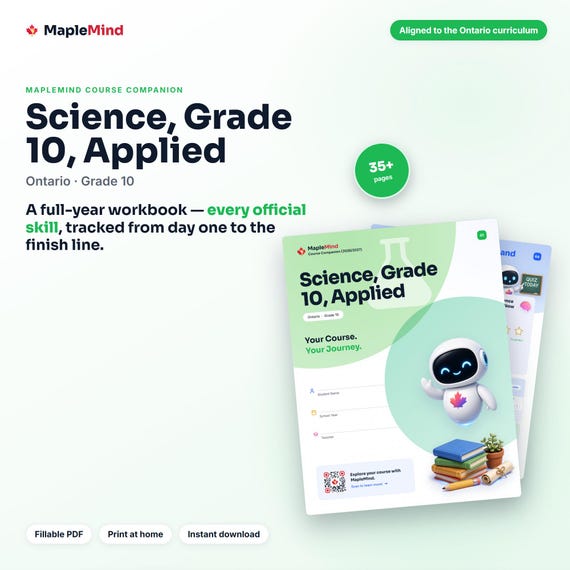
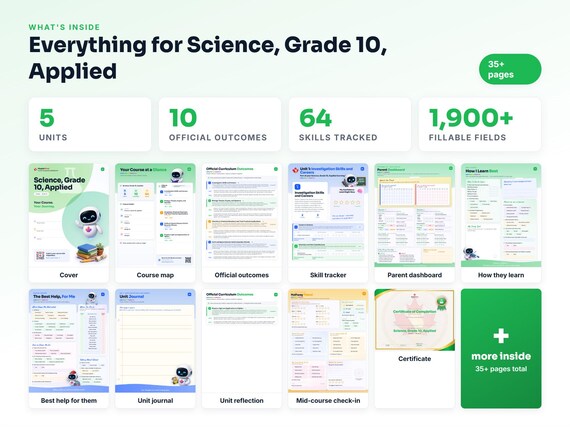
A Science, Grade 10, Applied workbook worth keeping
Built from the same official curriculum as this page. Before and after each skill above, your student colours in how sure they feel — so the two of you can see, on one page, what's clicking and what needs another look. It's a quiet way to follow how the year is really going.
By June it's full of their own handwriting: units worked through, confidence grown, a mid-year check-in, notes from parent-teacher night, and a certificate at the end. Less a worksheet, more a record of the year worth keeping on the shelf.
Instant download · see every page, reviews and the full description · five or more workbooks are $2.99 each
What it looks like in the app

Common questions
Can MapleMind help me with Science, Grade 10, Applied?
Yes. MapleMind's AI tutor covers all 64 skills in Ontario's Science, Grade 10, Applied — you pick the exact skill, and the tutor teaches it step by step: a short lesson, a worked example, solving together, then a skill check to show it stuck.
Is MapleMind aligned to Ontario's official curriculum?
Yes. Every skill in this course maps to an official outcome code from Ontario's Grade 10 Science curriculum, and the ministry's own wording is quoted under each unit on this page — with the official government source linked so you can check it yourself.
What does MapleMind cost?
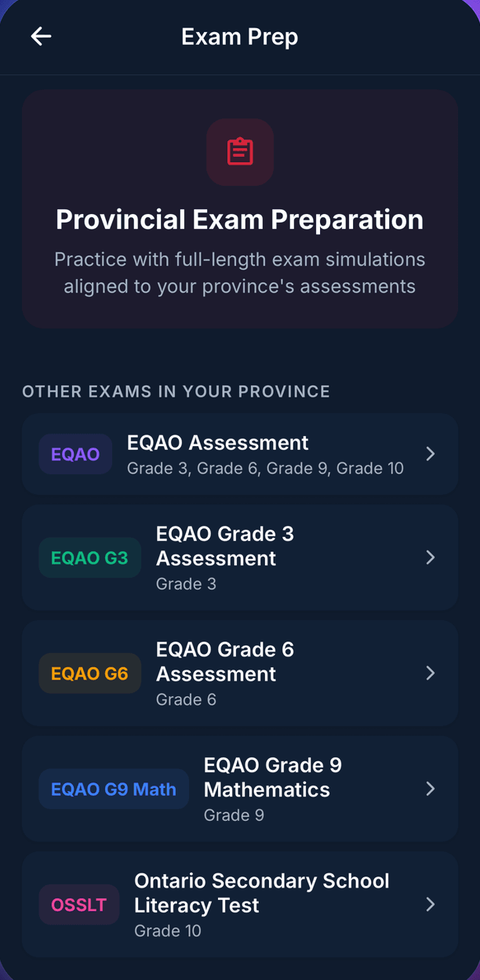
It's free to start — 5 tutoring chats and a practice quiz every day, no credit card. A Pro subscription ($9.99/month or $49.99/year CAD, 7-day free trial) unlocks unlimited tutoring, practice, and exam simulations.
What if I'm stuck on just one topic?
That's the point of skill-level tutoring: open Science, Grade 10, Applied in the app, tap the exact skill from the list on this page, and the tutor teaches just that — no wading through lessons you don't need.
Does MapleMind work in French or other languages?
Yes — 14 languages, including French. Both the app and the tutor's explanations switch to the language you choose.
Where can I see the official Ontario curriculum for Science, Grade 10, Applied?
The official source is linked on this page — Ontario's official science curriculum. The outline here follows it: every MapleMind skill carries its official outcome code, and the ministry's own wording is quoted under each unit.
Keep exploring
Ready when you are
Pick a skill from this page and see it taught properly — free, in the browser, in under a minute.