Get help with Current Topics in the Sciences, Grade 11 (Current Topics in the Sciences 30S)
Most tutoring makes you sit through material you already know. MapleMind flips that: pick the exact skill that's causing trouble — any of the 28 below — and the tutor teaches just that one, step by step, as many times as it takes. Ask questions in plain words, any time of day, in English, French, or 12 other languages.
The official Manitoba Current Topics in the Sciences, Grade 11 (Current Topics in the Sciences 30S) curriculum
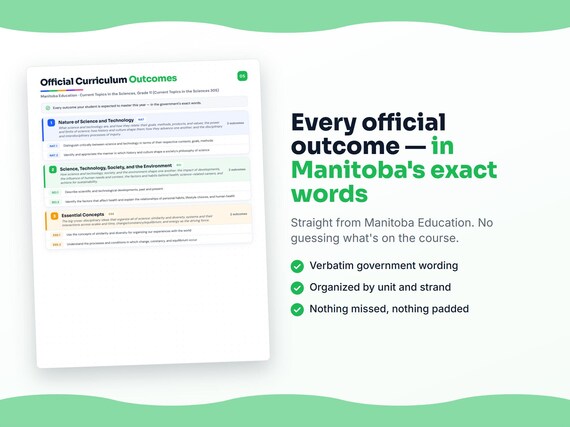
Manitoba defines Current Topics in the Sciences, Grade 11 (Current Topics in the Sciences 30S) by strands and outcomes. MapleMind teaches the same curriculum reorganized for one-skill-at-a-time tutoring — the table shows exactly where every official strand lands, and the ministry's own wording is quoted under each unit below.
Official source Manitoba's official curriculumRead it on the government site — edu.gov.mb.ca ↗| Official strand | Outcomes | Where MapleMind teaches it |
|---|---|---|
| Strand A | 5 | Nature of Science and Technology |
| Strand B | 5 | Science, Technology, Society, and the Environment |
| Strand D | 4 | Essential Concepts |
Every skill below, taught one on one.
 Try the first session free
How MapleMind teaches Current Topics in the Sciences, Grade 11 (Current Topics in the Sciences 30S) — every unit, lesson, and skill
Every skill below runs as a short session: a plain-words lesson, a worked example, solving it together, then a five-question skill check that earns up to three stars. Guided Mode keeps it teaching instead of answer-handing — turning it off needs a parent's password.
Unit 1Nature of Science and TechnologyOfficial strand · Strand A
What science and technology are, and how they relate: their goals, methods, products, and values; the power and limits of science; how history and culture shape them; how they advance one another; and the disciplinary and interdisciplinary processes of inquiry.
What Science and Technology Are
- Science versus technology: goals and methodsA1 — Distinguish critically between science and technology in terms of their goals and methods.
- Science versus technology: products and valuesA1 — Distinguish critically between science and technology in terms of their products and values.
- The power of science to explain the worldA2 — Recognize the power of science as a way of answering questions about the world and explaining natural phenomena.
- The limitations of scienceA2 — Recognize the limitations of science as a way of answering questions about the world.
How Science and Technology Evolve
- How history shapes a society's philosophy of scienceA3 — Identify and appreciate the manner in which history shapes a society's philosophy of science.
- How culture shapes a society's creation and use of technologyA3 — Identify and appreciate the manner in which culture shapes a society's creation or use of technology.
- How technology advances scienceA4 — Recognize that science and technology interact, with technology often advancing science.
- How science advances technologyA4 — Recognize that science and technology interact and evolve, with science often advancing technology.
- Disciplinary processes of inquiryA5 — Describe and explain disciplinary processes used to investigate and understand natural phenomena and develop technological solutions.
- Interdisciplinary processes of inquiryA5 — Describe and explain interdisciplinary processes used to investigate natural phenomena and develop technological solutions.
The official wording — 5 outcomes in this unit
- A1
Distinguish critically between science and technology in terms of their respective contexts, goals, methods
- A2
Recognize both the power and limitations of science as a way of answering questions about the world
- A3
Identify and appreciate the manner in which history and culture shape a society's philosophy of science
- A4
Recognize that science and technology interact and evolve, often advancing one another
- A5
Describe and explain disciplinary and interdisciplinary processes used to enable us to investigate and understand natural phenomena and develop technological solutions
Unit 2Science, Technology, Society, and the EnvironmentOfficial strand · Strand B
How science and technology, society, and the environment shape one another: the impact of developments, the influence of human needs and context, the factors and habits behind health, science-related careers, and actions for sustainability.
Developments and Their Context
- Describing scientific and technological developmentsB1 — Describe scientific and technological developments, past and present.
- Appreciating the impact of developments on people and the environmentB1 — Appreciate the impact of developments on individuals, societies, and the environment, both locally and globally.
- How human needs drive science and technologyB2 — Recognize that scientific and technological endeavours have been, and continue to be, influenced by human needs.
- How societal and historical context shapes science and technologyB2 — Recognize that scientific and technological endeavours are influenced by societal and historical contexts.
Health, Careers, and Sustainability
- Factors that affect healthB3 — Identify the factors that affect health.
- How personal habits and lifestyle choices relate to healthB3 — Explain the relationships of personal habits, lifestyle choices, and human health, both individual and social.
- Identifying actions that promote sustainabilityB5 — Identify actions that promote a sustainable environment, society, and economy, both locally and globally.
- Demonstrating a sustainable actionB5 — Demonstrate actions that promote a sustainable environment, society, and economy.
The official wording — 5 outcomes in this unit
- B1
Describe scientific and technological developments, past and present
- B2
Recognize that scientific and technological endeavours have been, and continue to be, influenced by human needs
- B3
Identify the factors that affect health and explain the relationships of personal habits, lifestyle choices, and human health
- B4
Demonstrate a knowledge of, and personal consideration for, a range of possible science- and technology-related interests, hobbies, and careers
- B5
Identify and demonstrate actions that promote a sustainable environment, society, and economy, both locally and globally
Unit 3Essential ConceptsOfficial strand · Strand D
The big cross-disciplinary ideas that organize all of science: similarity and diversity, systems and their interactions across scales and time, change/constancy/equilibrium, and energy as the driving force.
Organizing the World into Systems
- Using similarity to organize experienceD1 — Use the concept of similarity for organizing our experiences with the world.
- Using diversity to distinguish and differentiateD1 — Use the concept of diversity for organizing our experiences with the world.
- The universe as interacting systemsD2 — Recognize that the universe comprises systems and that complex interactions occur within and among these systems.
- Systems across many scales and intervals of timeD2 — Recognize that interactions in systems occur at many scales and intervals of time.
Change, Equilibrium, and Energy
- Change and constancyD3 — Understand the processes and conditions in which change and constancy occur.
- Equilibrium and its conditionsD3 — Understand the processes and conditions in which equilibrium occurs.
- Energy as the driving force in materials and lifeD4 — Understand how energy is the driving force in the interaction of materials and processes of life.
- Energy as the driving force in the functioning of systemsD4 — Understand how energy is the driving force in the functioning of systems.
The official wording — 4 outcomes in this unit
- D1
Use the concepts of similarity and diversity for organizing our experiences with the world
- D2
Recognize that the universe comprises systems and that complex interactions occur within and among these systems at many scales and intervals of time
- D3
Understand the processes and conditions in which change, constancy, and equilibrium occur
- D4
Understand how energy is the driving force in the interaction of materials, processes of life
Printable workbook · A keepsake of the year
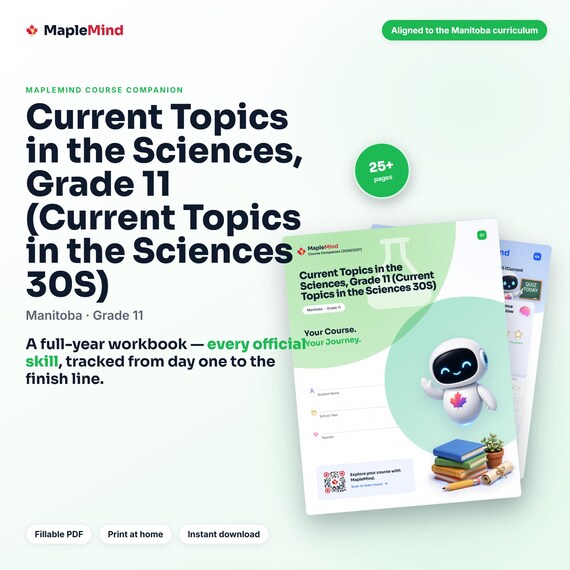
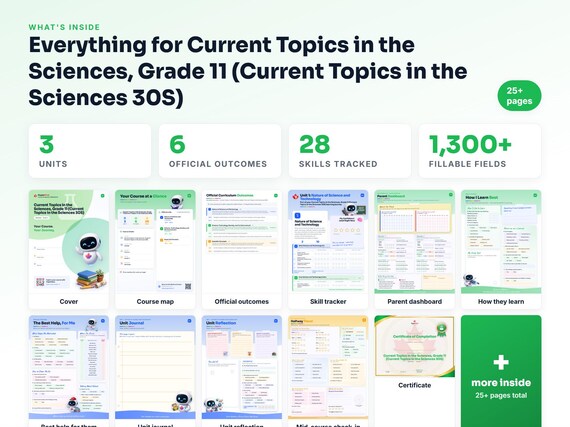
A Current Topics in the Sciences, Grade 11 (Current Topics in the Sciences 30S) workbook worth keeping
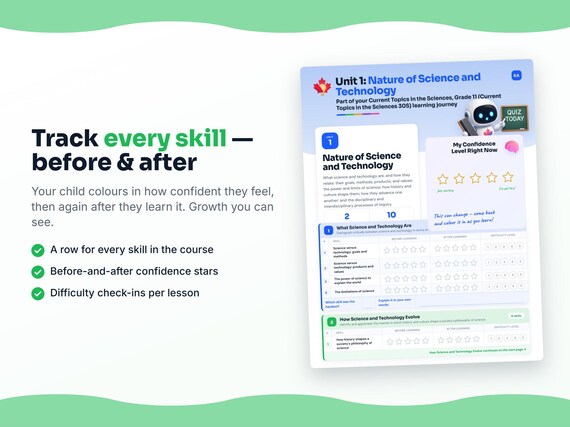
Built from the same official curriculum as this page. Before and after each skill above, your student colours in how sure they feel — so the two of you can see, on one page, what's clicking and what needs another look. It's a quiet way to follow how the year is really going.
By June it's full of their own handwriting: units worked through, confidence grown, a mid-year check-in, notes from parent-teacher night, and a certificate at the end. Less a worksheet, more a record of the year worth keeping on the shelf.
Instant download · see every page, reviews and the full description · five or more workbooks are $2.99 each
What it looks like in the app
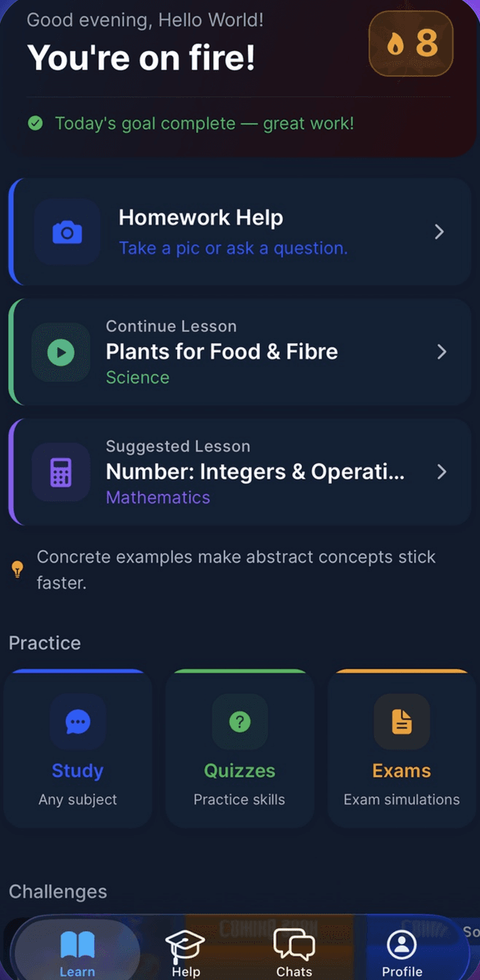
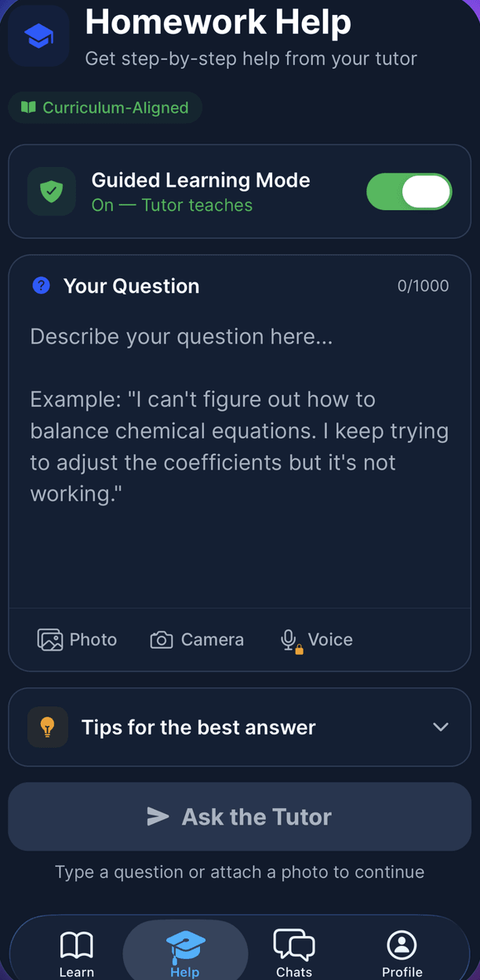
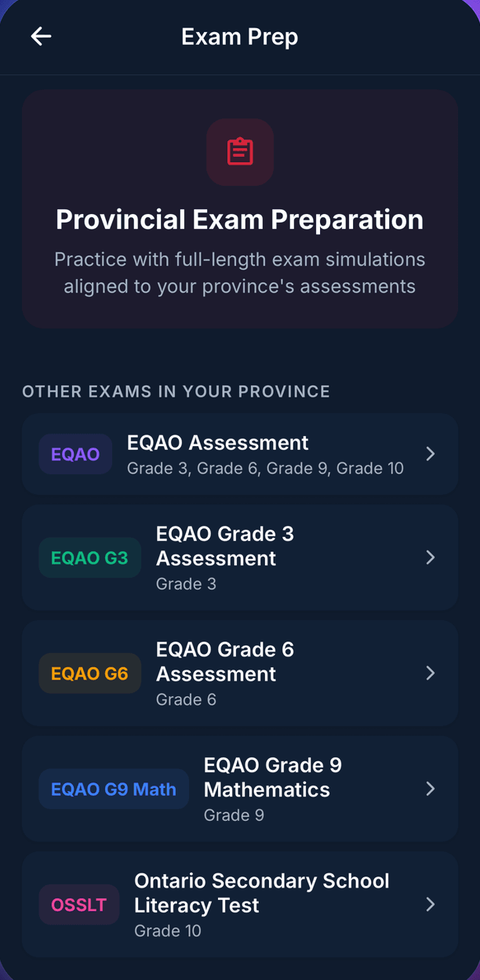
Common questions
Can MapleMind help me with Current Topics in the Sciences, Grade 11 (Current Topics in the Sciences 30S)?
Yes. MapleMind's AI tutor covers all 28 skills in Manitoba's Current Topics in the Sciences, Grade 11 (Current Topics in the Sciences 30S) — you pick the exact skill, and the tutor teaches it step by step: a short lesson, a worked example, solving together, then a skill check to show it stuck.
Is MapleMind aligned to Manitoba's official curriculum?
Yes. Every skill in this course maps to an official outcome code from Manitoba's Grade 11 Science curriculum, and the ministry's own wording is quoted under each unit on this page — with the official government source linked so you can check it yourself.
What does MapleMind cost?
It's free to start — 5 tutoring chats and a practice quiz every day, no credit card. A Pro subscription ($9.99/month or $49.99/year CAD, 7-day free trial) unlocks unlimited tutoring, practice, and exam simulations.
What if I'm stuck on just one topic?
That's the point of skill-level tutoring: open Current Topics in the Sciences, Grade 11 (Current Topics in the Sciences 30S) in the app, tap the exact skill from the list on this page, and the tutor teaches just that — no wading through lessons you don't need.
Does MapleMind work in French or other languages?
Yes — 14 languages, including French. Both the app and the tutor's explanations switch to the language you choose.
Where can I see the official Manitoba curriculum for Current Topics in the Sciences, Grade 11 (Current Topics in the Sciences 30S)?
The official source is linked on this page — Manitoba's official curriculum. The outline here follows it: every MapleMind skill carries its official outcome code, and the ministry's own wording is quoted under each unit.
Keep exploring
Ready when you are
Pick a skill from this page and see it taught properly — free, in the browser, in under a minute.