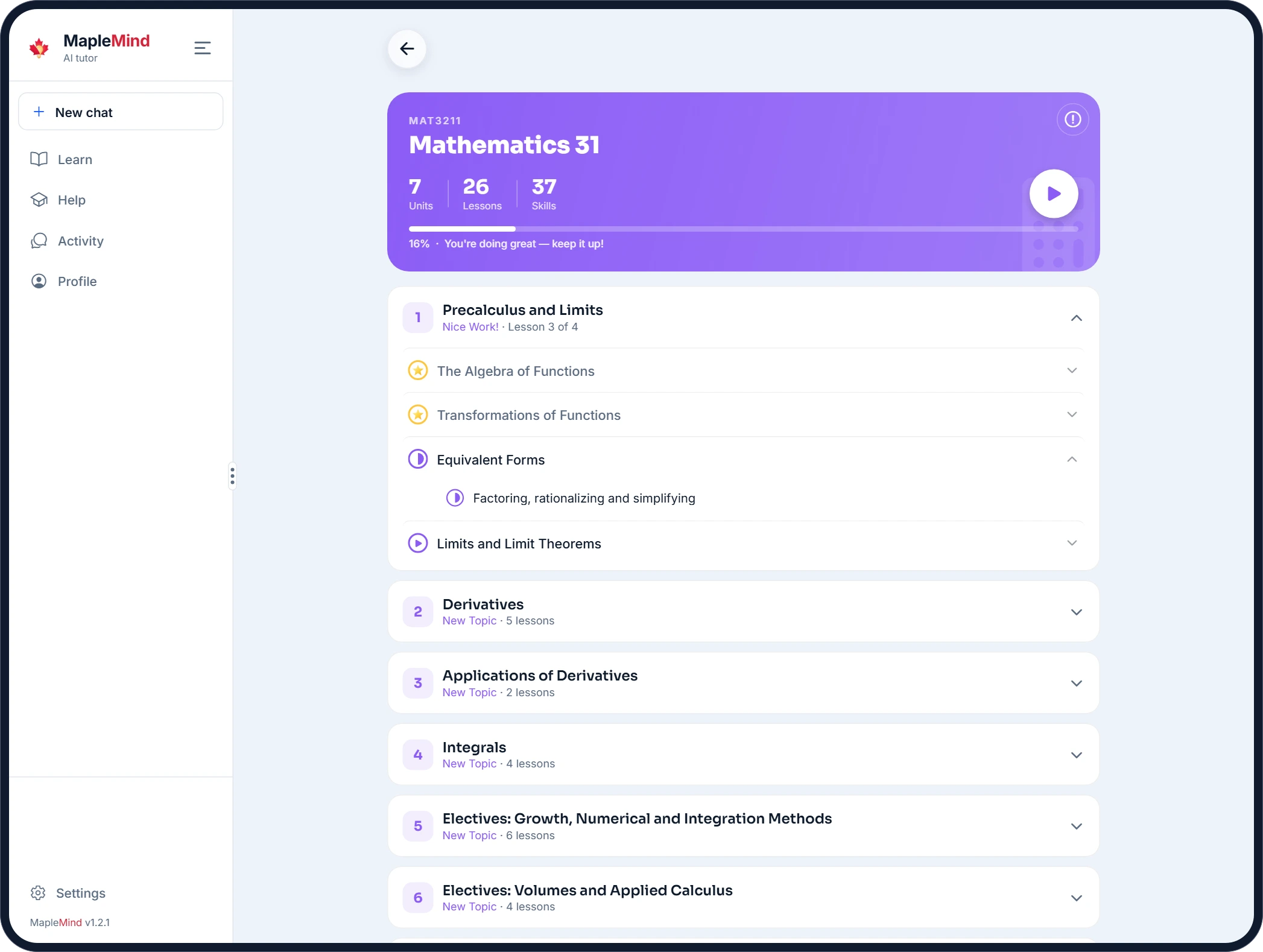
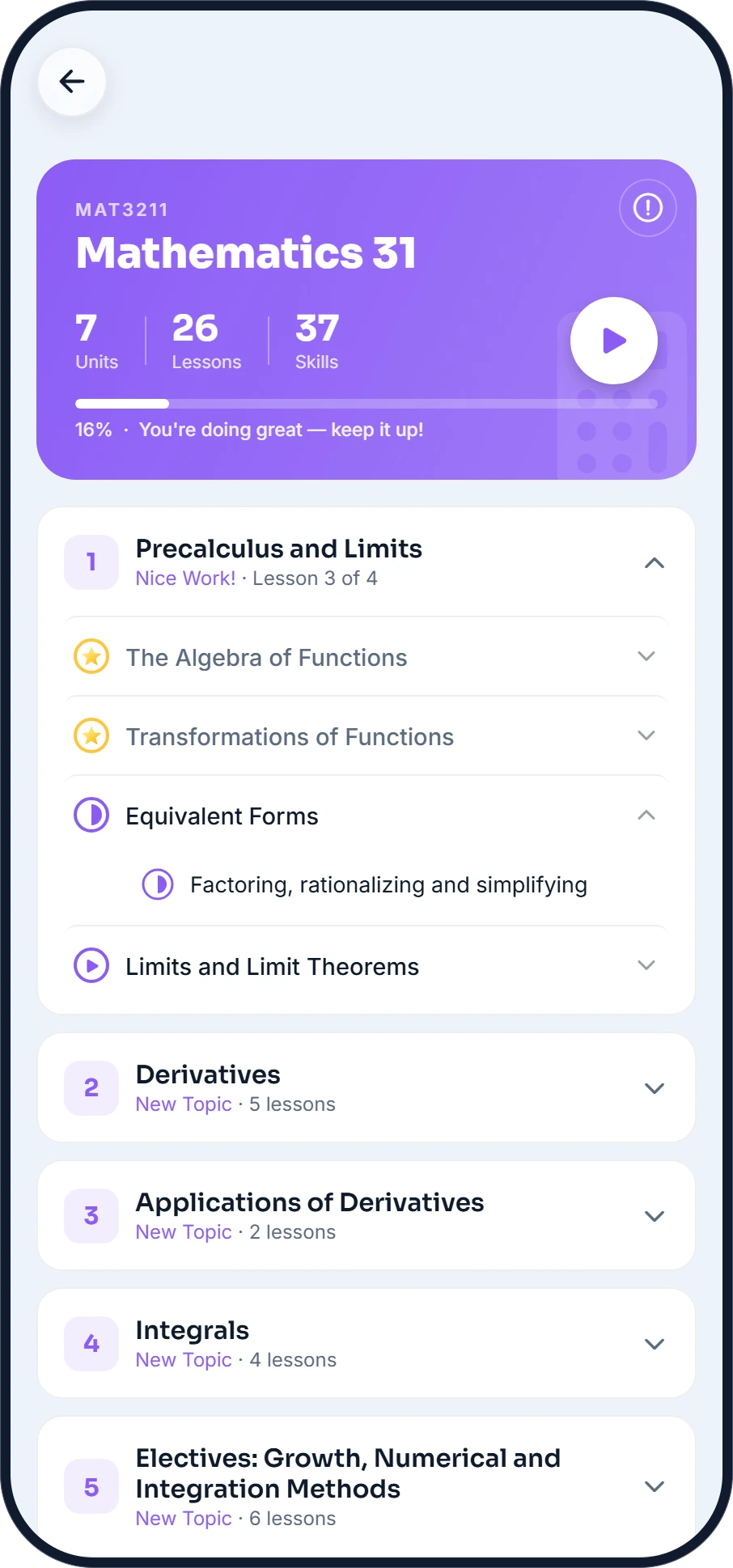
Mathematics 3
Unit 1
Number
Ten of one place make one of the next place to the left, all the way up: 10 ones make a ten, 10 tens a hundred, 10 hundreds a thousand, 10 thousands a ten thousand, and 10 ten thousands a hundred thousand.
- Reading and writing numbers to 100 000
- Digit values and ways to build a number
- Comparing and ordering numbers to 100 000
28 more skills
- Rounding numbers
- Counting coins in cents
- Counting dollars
- Strategies for three-digit numbers
- Adding with the standard algorithm
- Subtracting with the standard algorithm
- Estimating sums and differences
- Adding and subtracting to solve problems
- Multiplication as equal groups
- Arrays, area and the order of factors
- Division as equal sharing
- Division as grouping and repeated subtraction
- Writing multiplication and division sentences
- Multiplying and dividing with 0 and 1
- Fact families and inverse operations
- Patterns in the multiplication table
- Multiplication strategies
- Division strategies
- Multiplication and division facts
- Remainders
- Missing numbers in multiplication and division
- Problems with multiplying and dividing
- Fractions made of unit fractions
- Writing fractions with numbers
- One fraction, many models
- Comparing fractions
- Fractions on a number line
- Comparing fractions with 0, one-half and 1
Unit 2
Algebra
An equation says that two expressions name the same number: in 6 + 2 = 5 + 3 both sides are 8, and the equal sign joins them.
- Equations and the equal sign
- Finding the unknown in an equation
- Solving problems with equations
Unit 3
Geometry
A polygon is a closed flat shape with straight sides, named by its number of sides: a triangle has 3, a quadrilateral 4, a pentagon 5, a hexagon 6 and an octagon 8.
- Naming polygons
- Parallel, perpendicular and equal sides
- Right angles and equal angles
3 more skills
- Regular and irregular polygons
- Sorting polygons by their properties
- Translations, rotations and reflections
Unit 4
Measurement
The metre is the basic unit of length in the metric system, and the other metric units of length are named as parts of it: the decimetre, the centimetre and the millimetre.
- Metres, decimetres, centimetres and millimetres
- Choosing the unit for a length
- Measuring straight and curved lengths
9 more skills
- Perimeter of polygons
- Finding a missing side from the perimeter
- Referents and estimating length
- Inches, feet and yards
- Metric and imperial lengths compared
- What an angle is
- Angles around us
- Comparing angles
- Referents for a right angle
Unit 5
Patterns
A sequence is a list of numbers, called terms, written in a certain order: in 5, 10, 15, 20 the first term is 5 and the fourth term is 20.
- Sequences and positions
- Finite and infinite sequences
- The change from term to term
1 more skill
- Skip-counting sequences and missing terms
Unit 6
Time
Clocks are standard tools for measuring time, and the basic unit of time is the second, about as long as it takes to say one thousand one.
- Seconds, minutes and hours
- Reading an analog clock
- Analog and digital time
2 more skills
- a.m. and p.m.
- The 24-hour clock
Unit 7
Statistics
A statistical question is answered by collecting data that varies: how many pets does each classmate have? gets different answers, while how many legs does a dog have? has only one.
- Statistical questions and predictions
- First-hand and second-hand data
- Dot plots and bar graphs
3 more skills
- The story a graph tells
- Answering the question with data
- First Nations, Métis and Inuit representations of data