Get help with Mi'kmaw Studies 11
Most tutoring makes you sit through material you already know. MapleMind flips that: pick the exact skill that's causing trouble — any of the 21 below — and the tutor teaches just that one, step by step, as many times as it takes. Ask questions in plain words, any time of day, in English, French, or 12 other languages.
The official Nova Scotia Mi'kmaw Studies 11 curriculum
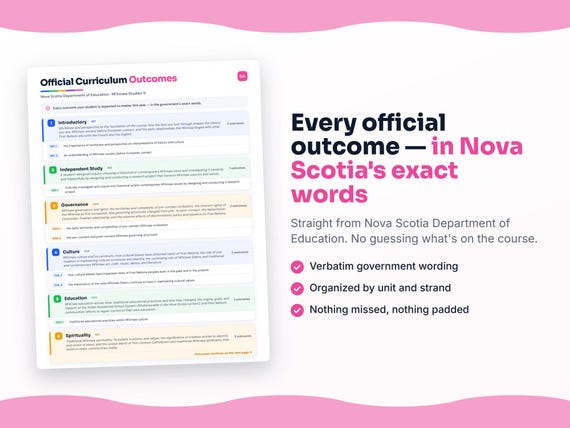
Nova Scotia defines Mi'kmaw Studies 11 by strands and outcomes. MapleMind teaches the same curriculum reorganized for one-skill-at-a-time tutoring — the table shows exactly where every official strand lands, and the ministry's own wording is quoted under each unit below.
Official source Nova Scotia's official curriculumRead it on the government site — curriculum.novascotia.ca ↗| Official strand | Outcomes | Where MapleMind teaches it |
|---|---|---|
| Strand I | 3 | Introductory |
| Strand IS | 1 | Independent Study |
| Strand G | 5 | Governance |
| Strand C | 4 | Culture |
| Strand E | 3 | Education |
| Strand S | 3 | Spirituality |
Every skill below, taught one on one.
 Try the first session free
How MapleMind teaches Mi'kmaw Studies 11 — every unit, lesson, and skill
Every skill below runs as a short session: a plain-words lesson, a worked example, solving it together, then a five-question skill check that earns up to three stars. Guided Mode keeps it teaching instead of answer-handing — turning it off needs a parent's password.
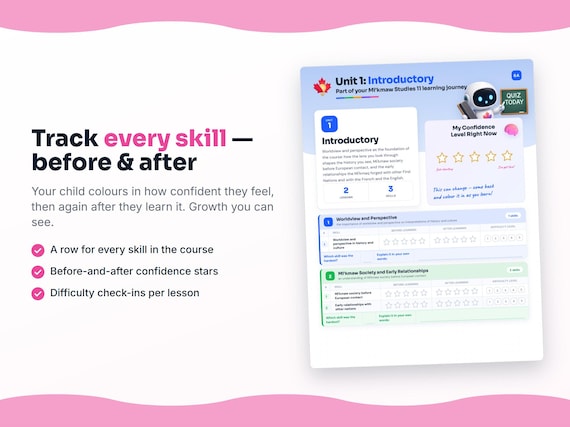
Unit 1IntroductoryOfficial strand · Strand I
Worldview and perspective as the foundation of the course: how the lens you look through shapes the history you see, Mi'kmaw society before European contact, and the early relationships the Mi'kmaq forged with other First Nations and with the French and the English.
Worldview and Perspective
- Worldview and perspective in history and cultureI1 — Explain how worldview and perspective shape the way history and culture are interpreted, and why centring the Mi'kmaw worldview matters in this course.
Mi'kmaw Society and Early Relationships
- Mi'kmaw society before European contactI2 — Describe how Mi'kmaw society was organized before European contact - its seasonal way of life, technology, trade, and social structure - as a complete and sophisticated nation.
- Early relationships with other nationsI3 — Explain the different relationships the Mi'kmaq forged with other First Nations and with the French and the English, and how the Mi'kmaq acted as deliberate partners in trade and alliance.
The official wording — 3 outcomes in this unit
- I1
the importance of worldview and perspective on interpretations of history and culture
- I2
an understanding of Mi'kmaw society before European contact
- I3
the different relationships that were forged by the Mi'kmaq with other First Nations and with the French and the English
Unit 2Independent StudyOfficial strand · Strand IS
A student-designed inquiry: choosing a historical or contemporary Mi'kmaw issue and investigating it carefully and respectfully by designing and conducting a research project that honours Mi'kmaw sources and voices.
Designing a Mi'kmaw Inquiry
- Designing and conducting a Mi'kmaw research projectIS1 — Design and conduct a research project that critically investigates a historical or contemporary Mi'kmaw issue, using respectful research methods and Mi'kmaw sources.
The official wording — 1 outcome in this unit
- IS1
Critically investigate and inquire into historical and/or contemporary Mi'kmaw issues by designing and conducting a research project
Unit 3GovernanceOfficial strand · Strand G
Mi'kmaw governance and rights: the territories and complexity of pre-contact civilization, the inherent rights of the Mi'kmaq as first occupants, how governing structures changed from pre- to post-contact, the Nationhood-Concordat-Treaties relationship, and the adverse effects of discriminatory policy and injustice on First Nations.
Territories, Complexity, and Inherent Rights
- Pre-contact territories and civilizationG1 — Investigate the early territories and complexity of pre-contact Mi'kmaw civilization, including the districts of Mi'kma'ki and their governance.
- Inherent rights as first occupantsG2 — Investigate the inherent rights of the Mi'kmaq as the first occupants of the land, and explain how these rights differ from rights granted by a government.
Governing Structures, Nationhood, and Treaties
- Comparing pre- and post-contact governanceG3 — Compare pre-contact Mi'kmaw governing structures with the post-contact structures imposed under colonial rule, especially the Indian Act band system.
- Pre-Contact Mi'kmaq NationhoodG4 — Investigate the concept of pre-Contact Mi'kmaq Nationhood - that the Mi'kmaq were a self-governing nation before European contact.
- The Concordat of 1610G4 — Investigate the Concordat of 1610 as an early nation-to-nation relationship between the Mi'kmaq and a European power, and its meaning for the Mi'kmaq.
- The Peace and Friendship TreatiesG4 — Investigate the Treaties of Peace and Friendship (1725-1779), what they did and did not surrender, and how they make Nova Scotians 'all treaty people' today.
The official wording — 5 outcomes in this unit
- G1
the early territories and complexities of pre-contact Mi'kmaw civilization
- G2
the inherent rights of the Mi'kmaq as the first occupants of the land
- G3
the pre-contact and post-contact Mi'kmaw governing structures
- G4
the concept of pre-Contact Mi'kmaq Nationhood
- G5
the adverse effects of discriminatory policies, legislation, and social injustices (including those faced by women and veterans) on First Nations in Canada
Unit 4CultureOfficial strand · Strand C
Mi'kmaw culture and its continuity: how cultural biases have distorted views of First Nations, the role of oral tradition in maintaining cultural continuity and identity, the continuing role of Mi'kmaw Elders, and traditional and contemporary Mi'kmaw art, craft, music, dance, and literature.
Cultural Bias and Oral Tradition
- Cultural bias and views of First NationsC1 — Analyze how cultural biases have shaped and distorted views of First Nations peoples in the past and present, and how to recognize and challenge them.
- Oral tradition and cultural continuityC2 — Investigate the role oral tradition plays in maintaining Mi'kmaw cultural continuity and identity across generations.
Elders and Cultural Expression
- The continuing role of Mi'kmaw EldersC3 — Explain the importance of the roles Mi'kmaw Elders continue to have in maintaining cultural values and passing on knowledge.
- Traditional and contemporary cultural expressionC4 — Explore traditional and contemporary expressions of Mi'kmaw art, crafts, music, dance, and literature as a living, growing culture.
The official wording — 4 outcomes in this unit
- C1
how cultural biases have impacted views of First Nations peoples both in the past and in the present
- C2
the role oral tradition plays in the maintenance of Mi'kmaw cultural continuity and identity
- C3
the importance of the roles Mi'kmaw Elders continue to have in maintaining cultural values
- C4
traditional and contemporary expressions of Mi'kmaw art, crafts, music, dance, and literature
Unit 5EducationOfficial strand · Strand E
Mi'kmaw education across time: traditional educational practices and how they changed, the origins, goals, and impacts of the Indian Residential School System (Shubenacadie in the Nova Scotia context), and First Nations communities' efforts to regain control of their own education.
Traditional Learning and the Residential School System
- Traditional education and how it changedE1 — Investigate traditional educational practices within Mi'kmaw culture and how those practices changed over time.
- The Indian Residential School SystemE2 — Investigate the origins, goals, and impacts of the Indian Residential School System, including the Shubenacadie school in Nova Scotia, studied truthfully and with care.
- Regaining control of educationE3 — Explain the efforts of First Nations communities to regain control of their own education, including Mi'kmaw-led education in Nova Scotia.
The official wording — 3 outcomes in this unit
- E1
traditional educational practices within Mi'kmaw culture
- E2
the origins, goals, and impacts of the Indian Residential School System
- E3
the efforts of First Nations communities to regain control of their own education
Unit 6SpiritualityOfficial strand · Strand S
Traditional Mi'kmaw spirituality: its beliefs, customs, and values; the significance of creation stories to identity and sense of place; and the unique blend of 17th-century Catholicism and traditional Mi'kmaw spirituality that exists in many communities today.
Traditional Spirituality and Creation Stories
- Traditional Mi'kmaw spiritualityS1 — Explain the beliefs, customs, and values of traditional Mi'kmaw spirituality and how it connects people, land, and all relations.
- Creation stories, identity, and sense of placeS2 — Explain the significance of creation stories within Mi'kmaw spirituality, identity, and sense of place in the world.
A Blend of Two Traditions
- The blend of Catholicism and Mi'kmaw spiritualityS3 — Compare 17th-century Catholicism and traditional Mi'kmaw spirituality to understand the unique blend of the two found in many Mi'kmaw communities today.
The official wording — 3 outcomes in this unit
- S1
the beliefs, customs, and values of traditional Mi'kmaw spirituality
- S2
the significance of the creation stories within Mi'kmaw spirituality, identity, and sense of place in the world
- S3
traditional Mi'kmaw spirituality so as to better understand the unique blend of the two that exists in many communities today
Printable workbook · A keepsake of the year
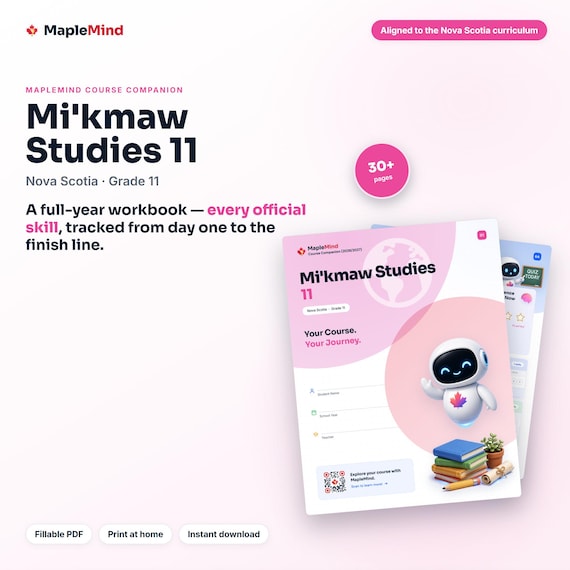
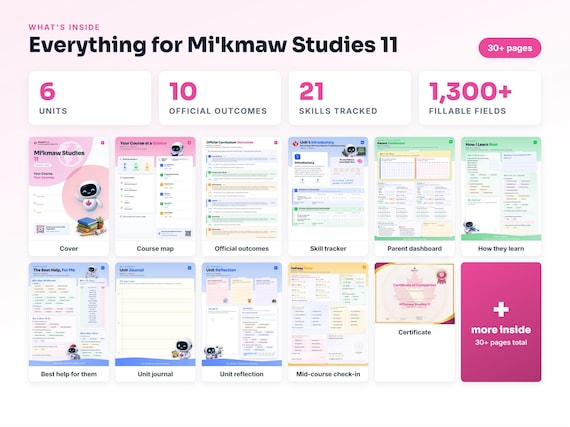
A Mi'kmaw Studies 11 workbook worth keeping
Built from the same official curriculum as this page. Before and after each skill above, your student colours in how sure they feel — so the two of you can see, on one page, what's clicking and what needs another look. It's a quiet way to follow how the year is really going.
By June it's full of their own handwriting: units worked through, confidence grown, a mid-year check-in, notes from parent-teacher night, and a certificate at the end. Less a worksheet, more a record of the year worth keeping on the shelf.
Instant download · see every page, reviews and the full description · five or more workbooks are $2.99 each
What it looks like in the app
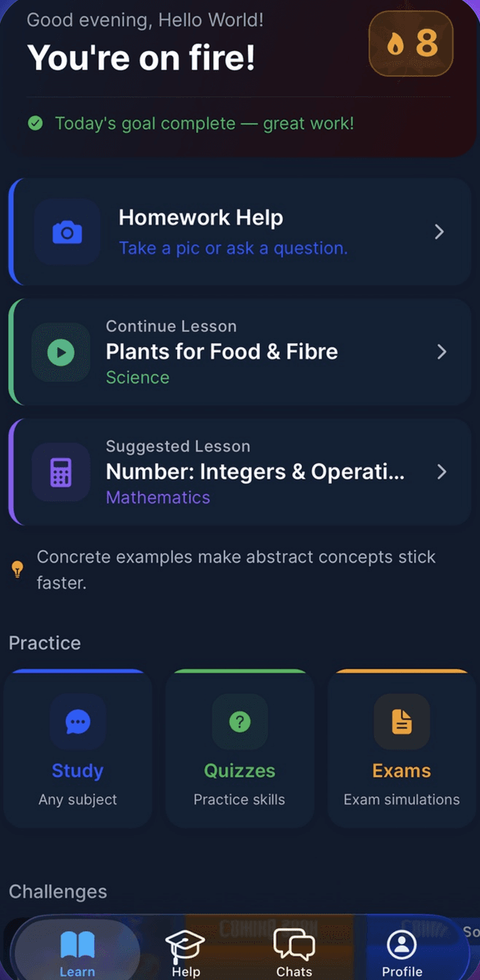
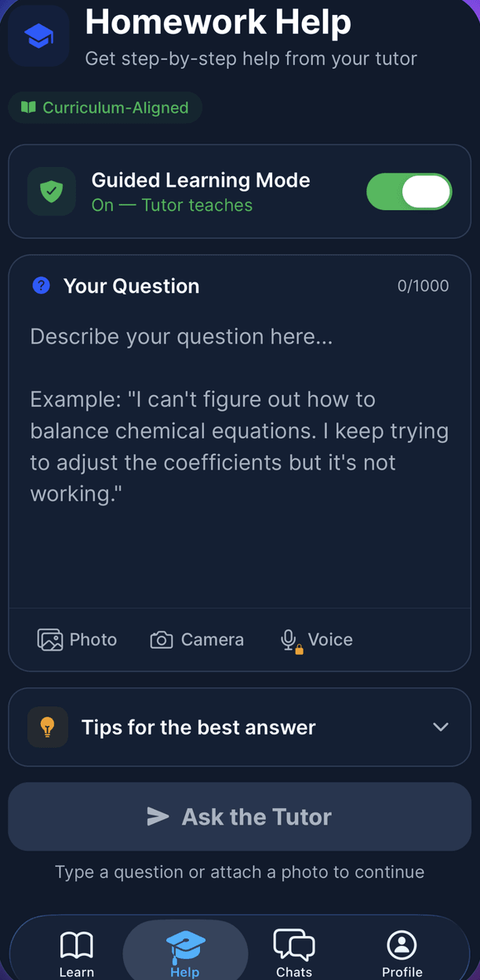
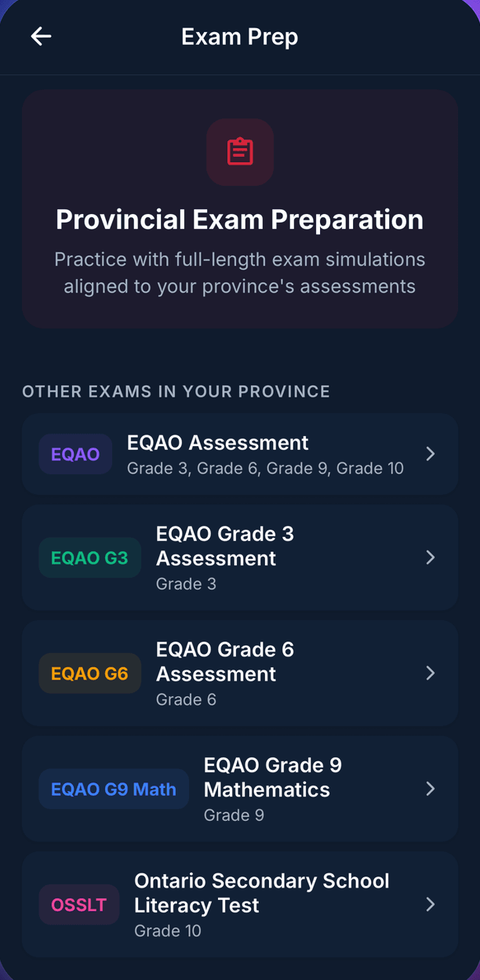
Common questions
Can MapleMind help me with Mi'kmaw Studies 11?
Yes. MapleMind's AI tutor covers all 21 skills in Nova Scotia's Mi'kmaw Studies 11 — you pick the exact skill, and the tutor teaches it step by step: a short lesson, a worked example, solving together, then a skill check to show it stuck.
Is MapleMind aligned to Nova Scotia's official curriculum?
Yes. Every skill in this course maps to an official outcome code from Nova Scotia's Grade 11 Social Studies curriculum, and the ministry's own wording is quoted under each unit on this page — with the official government source linked so you can check it yourself.
What does MapleMind cost?
It's free to start — 5 tutoring chats and a practice quiz every day, no credit card. A Pro subscription ($9.99/month or $49.99/year CAD, 7-day free trial) unlocks unlimited tutoring, practice, and exam simulations.
What if I'm stuck on just one topic?
That's the point of skill-level tutoring: open Mi'kmaw Studies 11 in the app, tap the exact skill from the list on this page, and the tutor teaches just that — no wading through lessons you don't need.
Does MapleMind work in French or other languages?
Yes — 14 languages, including French. Both the app and the tutor's explanations switch to the language you choose.
Where can I see the official Nova Scotia curriculum for Mi'kmaw Studies 11?
The official source is linked on this page — Nova Scotia's official curriculum. The outline here follows it: every MapleMind skill carries its official outcome code, and the ministry's own wording is quoted under each unit.
Keep exploring
Ready when you are
Pick a skill from this page and see it taught properly — free, in the browser, in under a minute.