Get help with Newfoundland and Labrador Studies 2205
Most tutoring makes you sit through material you already know. MapleMind flips that: pick the exact skill that's causing trouble — any of the 22 below — and the tutor teaches just that one, step by step, as many times as it takes. Ask questions in plain words, any time of day, in English, French, or 12 other languages.
The official Newfoundland and Labrador Newfoundland and Labrador Studies 2205 curriculum
Newfoundland and Labrador defines Newfoundland and Labrador Studies 2205 by strands and outcomes. MapleMind teaches the same curriculum reorganized for one-skill-at-a-time tutoring — the table shows exactly where every official strand lands, and the ministry's own wording is quoted under each unit below.
Official source Newfoundland and Labrador's official curriculumRead it on the government site — gov.nl.ca ↗| Official strand | Outcomes | Where MapleMind teaches it |
|---|---|---|
| Strand 1 | 1 | Social Studies Concepts and Skills - 1. Culture and Diversity |
| Strand 2 | 1 | Social Studies Concepts and Skills - 2. Inquiry and Research |
| Strand 3 | 1 | Anthropology - 3. Culture and Diversity |
| Strand 4 | 1 | History - 4. People, Place, and Environment |
| Strand 5 | 2 | History - 5. Individuals, Societies, and Economic Decisions |
| Strand 6 | 2 | History - 6. Time, Continuity, and Change |
Every skill below, taught one on one.
 Try the first session free
How MapleMind teaches Newfoundland and Labrador Studies 2205 — every unit, lesson, and skill
Every skill below runs as a short session: a plain-words lesson, a worked example, solving it together, then a five-question skill check that earns up to three stars. Guided Mode keeps it teaching instead of answer-handing — turning it off needs a parent's password.
Unit 1Social Studies Concepts and Skills - 1. Culture and DiversityOfficial strand · Strand 1
Using the arts and principles of artistic inquiry to explore and express ideas about culture, heritage, and identity in Newfoundland and Labrador.
The Arts, Culture, and Identity
- Examining creative works through artistic inquiryNL-SS-2205.1 — Apply principles of artistic inquiry to examine creative works in drama, music, and the visual arts as sources of knowledge about culture, heritage, and identity.
- Creating art to express identityNL-SS-2205.1 — Engage in the creative process to produce works of art that express your understanding of Newfoundland and Labrador culture, heritage, and identity.
The official wording — 1 outcome in this unit
- NL-SS-2205.1
how the arts may be used to express ideas related to culture, heritage and identity
Unit 2Social Studies Concepts and Skills - 2. Inquiry and ResearchOfficial strand · Strand 2
Applying an issues-analysis model and second-order social science concepts to explore economic, political, and social issues in Newfoundland and Labrador, past and present.
Analysing Issues in Newfoundland and Labrador
- Applying an issues-analysis modelNL-SS-2205.2 — Apply an issues-analysis model to Newfoundland and Labrador issues: identify the issue, examine data, reach an argued conclusion, respond to counter-arguments, and acknowledge weaknesses.
The official wording — 1 outcome in this unit
- NL-SS-2205.2
economic, political and social issues related to Newfoundland and Labrador, both past and present
Unit 3Anthropology - 3. Culture and DiversityOfficial strand · Strand 3
The concept of culture - its elements, the factors that shape it, and the factors that change it - as it applies to Newfoundland and Labrador.
The Concept of Culture
- The elements of cultureNL-SS-2205.3 — Examine the elements of culture - artifacts, mentifacts, and sociofacts - and how expressions of culture can be local, regional, national, or popular, and contemporary or traditional.
- Factors that shape cultureNL-SS-2205.3 — Examine how economy, geography, government, and history shape culture, applied to Newfoundland and Labrador.
- Factors that change cultureNL-SS-2205.3 — Examine the process, significance, and sources of cultural change - and the factors that contribute to constancy.
The official wording — 1 outcome in this unit
- NL-SS-2205.3
the concept of culture
Unit 4History - 4. People, Place, and EnvironmentOfficial strand · Strand 4
The peopling of Newfoundland and Labrador to the mid-1700s - the earliest inhabitants, the establishment of European migratory fisheries, and their consequences for First Nations and Inuit.
The Peopling of Newfoundland and Labrador to the mid-1700s
- The earliest peoples of Newfoundland and LabradorNL-SS-2205.4 — Examine the migrations of peoples into Newfoundland and Labrador beginning about 9000 BP, and the First Nations and Inuit who occupied the region just before European arrival - their adaptations, technologies, and ways of life.
- The rise of the European migratory fisheriesNL-SS-2205.4 — Examine the factors - site, situation, and the demand for fish - that made Newfoundland and Labrador desirable to European fishing nations (England, France, Spain, Portugal).
- The migratory fishery and its consequencesNL-SS-2205.4 — Examine how the English and French migratory fisheries were conducted, why extensive settlement was not needed, and the early relationships between First Nations, Inuit, and Europeans.
The official wording — 1 outcome in this unit
- NL-SS-2205.4
the peopling of Newfoundland and Labrador to the mid-1700s
Unit 5History - 5. Individuals, Societies, and Economic DecisionsOfficial strand · Strand 5
How the fishery influenced Newfoundland and Labrador from the mid-1700s to the late 1800s, and how economic issues influenced its peopling from the late 1800s to 1934.
The Fishery from the mid-1700s to the late 1800s
- The emergence of the resident fisheryNL-SS-2205.5 — Examine the transition from temporary to permanent settlement - the causes, the English and Irish (and French) immigration, and the push and pull factors and internal migration.
- The resident fishery, its consequences, and remembering the BeothukNL-SS-2205.5 — Examine the 19th-century resident fishery - the Labrador, seal, and Bank fisheries, the role of merchants and women, and the effects of increased European settlement on First Nations and Inuit, remembering the Beothuk with care.
- The colony's evolving political statusNL-SS-2205.5 — Examine the evolution from naval governors to representative and then responsible government, and why Newfoundland did not confederate with Canada in the last half of the 1800s.
Economic Issues from the late 1800s to 1934
- Economic diversificationNL-SS-2205.6 — Examine why the colony diversified beyond the fishery - the problems in the fishing industry, the railway, and the new forestry, mining, and agriculture industries.
- Changing lifestyles and culturesNL-SS-2205.6 — Examine how diversification changed population distribution and ways of life, including immigration from China, Lebanon, and Eastern Europe, and the changing lifestyles of Inuit, Innu, and Mi'kmaq.
- Significant experiences to 1934NL-SS-2205.6 — Examine significant experiences from the late 1800s to 1934 - the Great War, the Great Depression, the labour movement and women's enfranchisement - and the accumulated debt that led to the loss of responsible government.
The official wording — 2 outcomes in this unit
- NL-SS-2205.5
how the fishery influenced Newfoundland and Labrador from the mid-1700s to the late 1800s
- NL-SS-2205.6
how economic issues influenced the peopling of Newfoundland and Labrador from the late 1800s to 1934
Unit 6History - 6. Time, Continuity, and ChangeOfficial strand · Strand 6
Economic, political, and social change in Newfoundland and Labrador from 1934 to the end of the Smallwood Administration, and since 1972.
Change from 1934 to the End of the Smallwood Administration
- Entry into ConfederationNL-SS-2205.7 — Examine the forces that led Newfoundland and Labrador into Confederation on March 31, 1949 - the Commission of Government, the National Convention, the referendums, and the Terms of Union.
- Challenges of the Smallwood administrationNL-SS-2205.7 — Examine the challenges the Smallwood administration faced in the 1950s and 1960s - the 'develop or perish' vision, megaprojects, resettlement, and the fishery.
- Changing lifestyles and cultures under SmallwoodNL-SS-2205.7 — Examine how modernization changed lifestyles - population shifts, rural-to-urban migration, women's work, infrastructure, formal education, and the decline of the churches.
Change Since 1972
- Changes in the economy since 1972NL-SS-2205.8 — Examine major economic changes since 1972 - the Churchill Falls Agreement, the cod moratorium, offshore oil, and mill closures - and their consequences for lifestyle and culture.
- Challenges of governance since 1972NL-SS-2205.8 — Examine governance challenges since the early 1970s - offshore jurisdiction, denominational schools, resource royalties, the lower Churchill, and land claims with the Indigenous peoples of the province.
- Changing lifestyles and cultures since 1972NL-SS-2205.8 — Examine how globalization and popular culture have changed lifestyles since 1972, and how groups - including Irish, French, and Indigenous - work to preserve the province's cultural identity.
The official wording — 2 outcomes in this unit
- NL-SS-2205.7
economic, political and social change in Newfoundland and Labrador from 1934 to the end of the Smallwood Administration
- NL-SS-2205.8
economic, political and social change in Newfoundland and Labrador since 1972
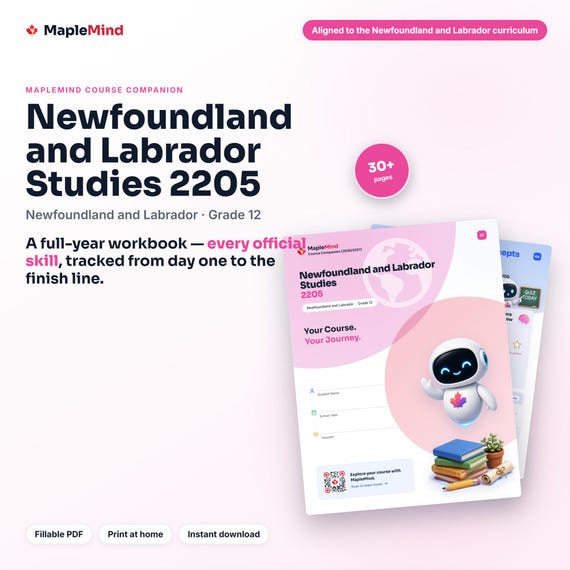
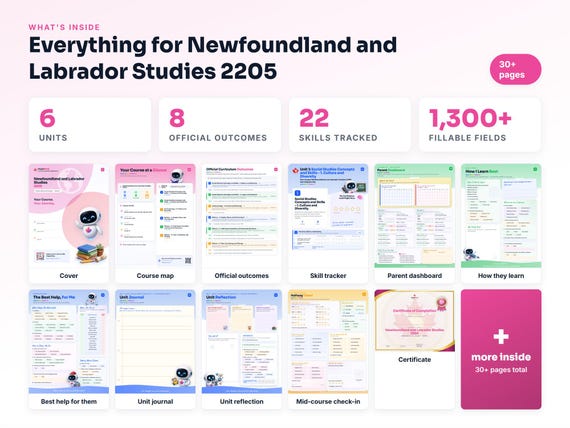
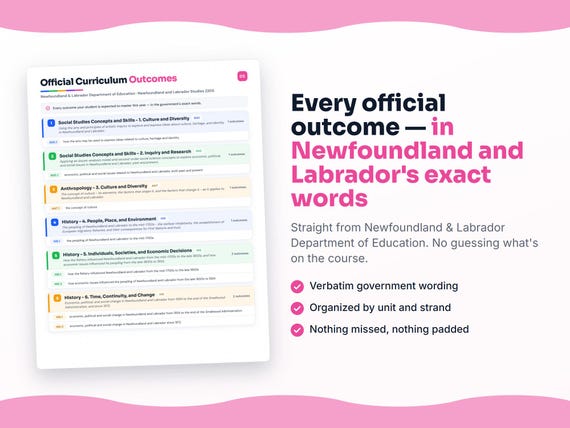
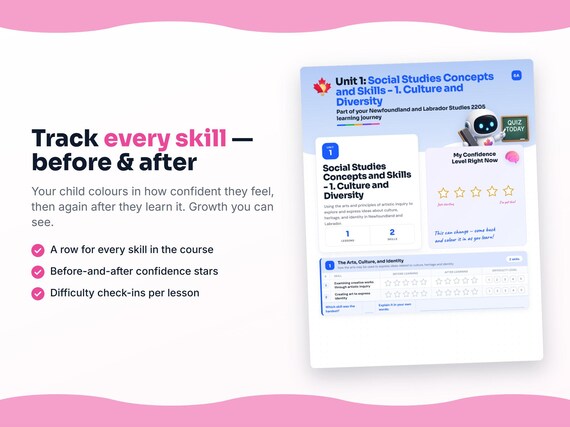
Printable workbook · A keepsake of the year
A Newfoundland and Labrador Studies 2205 workbook worth keeping
Built from the same official curriculum as this page. Before and after each skill above, your student colours in how sure they feel — so the two of you can see, on one page, what's clicking and what needs another look. It's a quiet way to follow how the year is really going.
By June it's full of their own handwriting: units worked through, confidence grown, a mid-year check-in, notes from parent-teacher night, and a certificate at the end. Less a worksheet, more a record of the year worth keeping on the shelf.
Instant download · see every page, reviews and the full description · five or more workbooks are $2.99 each
What it looks like in the app
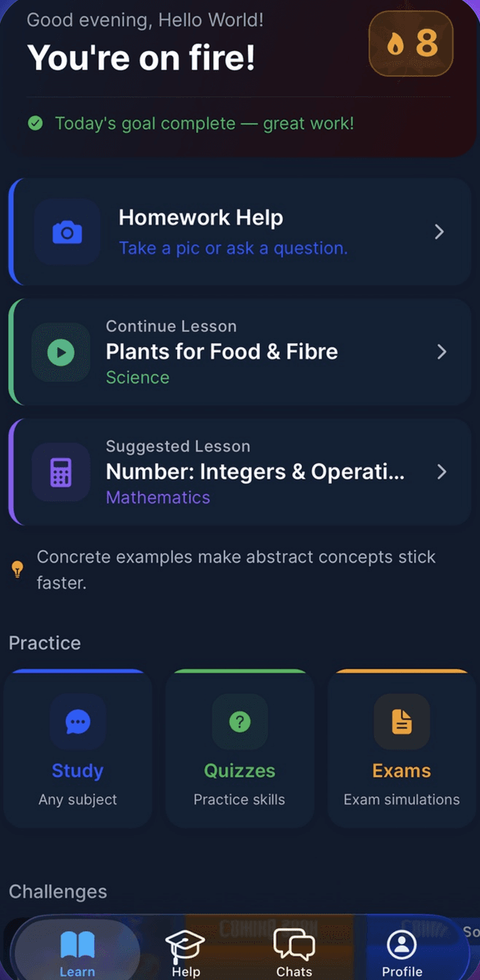
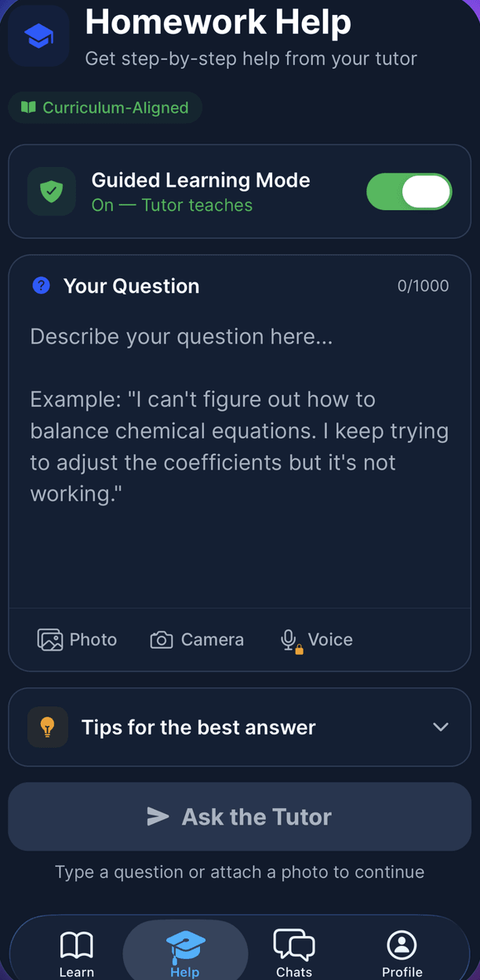
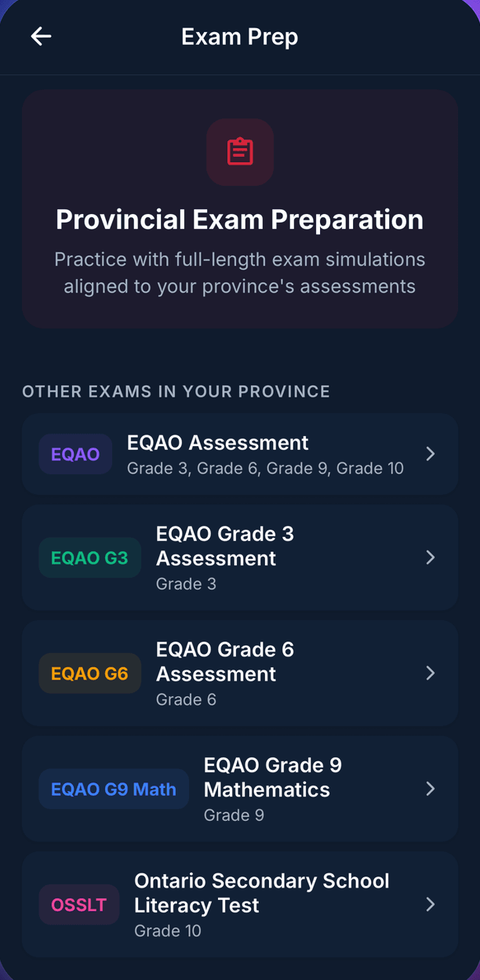
Common questions
Can MapleMind help me with Newfoundland and Labrador Studies 2205?
Yes. MapleMind's AI tutor covers all 22 skills in Newfoundland and Labrador's Newfoundland and Labrador Studies 2205 — you pick the exact skill, and the tutor teaches it step by step: a short lesson, a worked example, solving together, then a skill check to show it stuck.
Is MapleMind aligned to Newfoundland and Labrador's official curriculum?
Yes. Every skill in this course maps to an official outcome code from Newfoundland and Labrador's Grade 12 Social Studies curriculum, and the ministry's own wording is quoted under each unit on this page — with the official government source linked so you can check it yourself.
What does MapleMind cost?
It's free to start — 5 tutoring chats and a practice quiz every day, no credit card. A Pro subscription ($9.99/month or $49.99/year CAD, 7-day free trial) unlocks unlimited tutoring, practice, and exam simulations.
What if I'm stuck on just one topic?
That's the point of skill-level tutoring: open Newfoundland and Labrador Studies 2205 in the app, tap the exact skill from the list on this page, and the tutor teaches just that — no wading through lessons you don't need.
Does MapleMind work in French or other languages?
Yes — 14 languages, including French. Both the app and the tutor's explanations switch to the language you choose.
Where can I see the official Newfoundland and Labrador curriculum for Newfoundland and Labrador Studies 2205?
The official source is linked on this page — Newfoundland and Labrador's official curriculum. The outline here follows it: every MapleMind skill carries its official outcome code, and the ministry's own wording is quoted under each unit.
Keep exploring
Ready when you are
Pick a skill from this page and see it taught properly — free, in the browser, in under a minute.