Diploma exam · Alberta
Biology 30 Diploma Exam
Biology 30 Diploma Examination
- Grade 12
- SCN3230
Dates and details can change. We do our best to keep this page up to date, but check the official sources before relying on it.
- Total time
- 3 h
- Marked questions
- 60
- Counts for
- 30% of the final mark
- Calculator
- Approved models
- Format
- Paper and computer
Biology 30 Diploma practice test
The whole exam or the parts you choose, in its own format, on the clock.
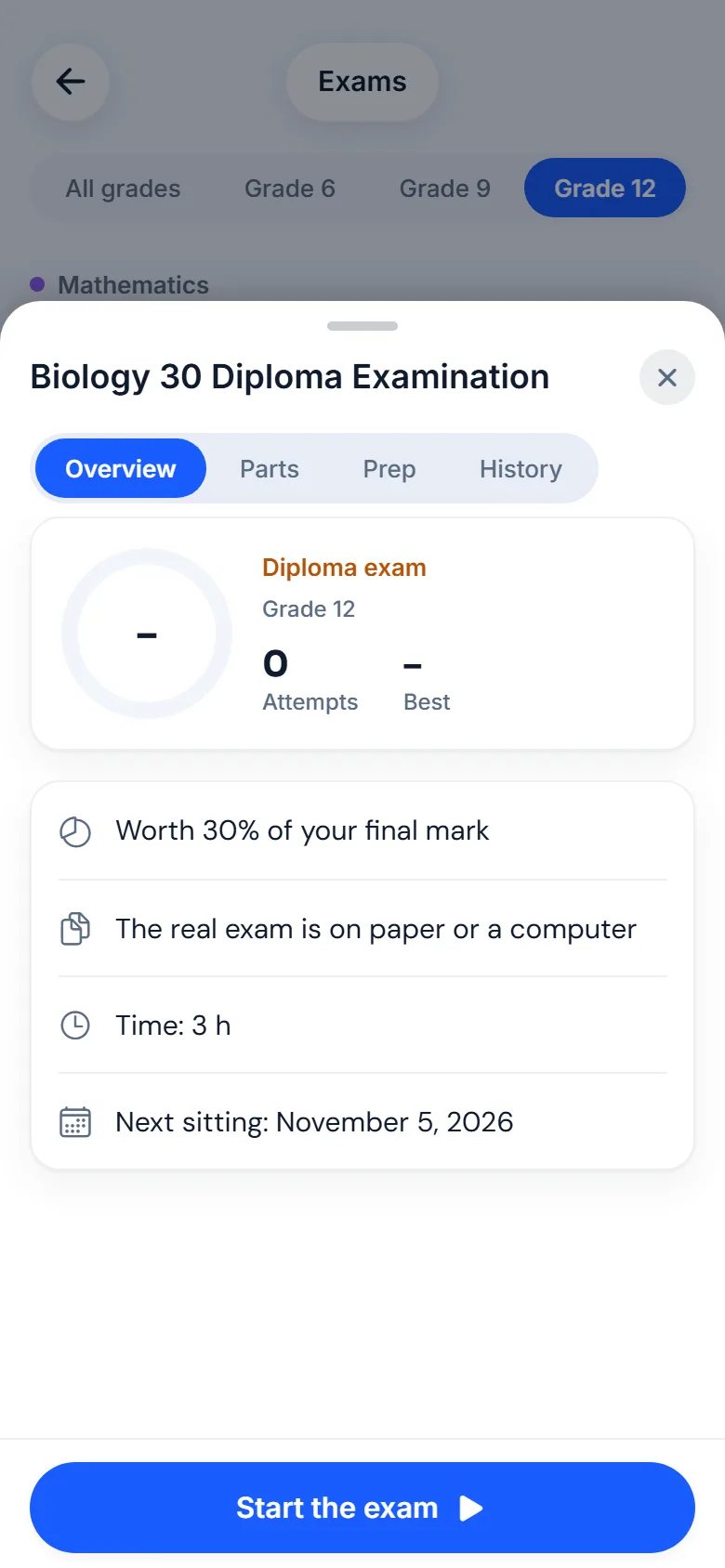 The exam in the app
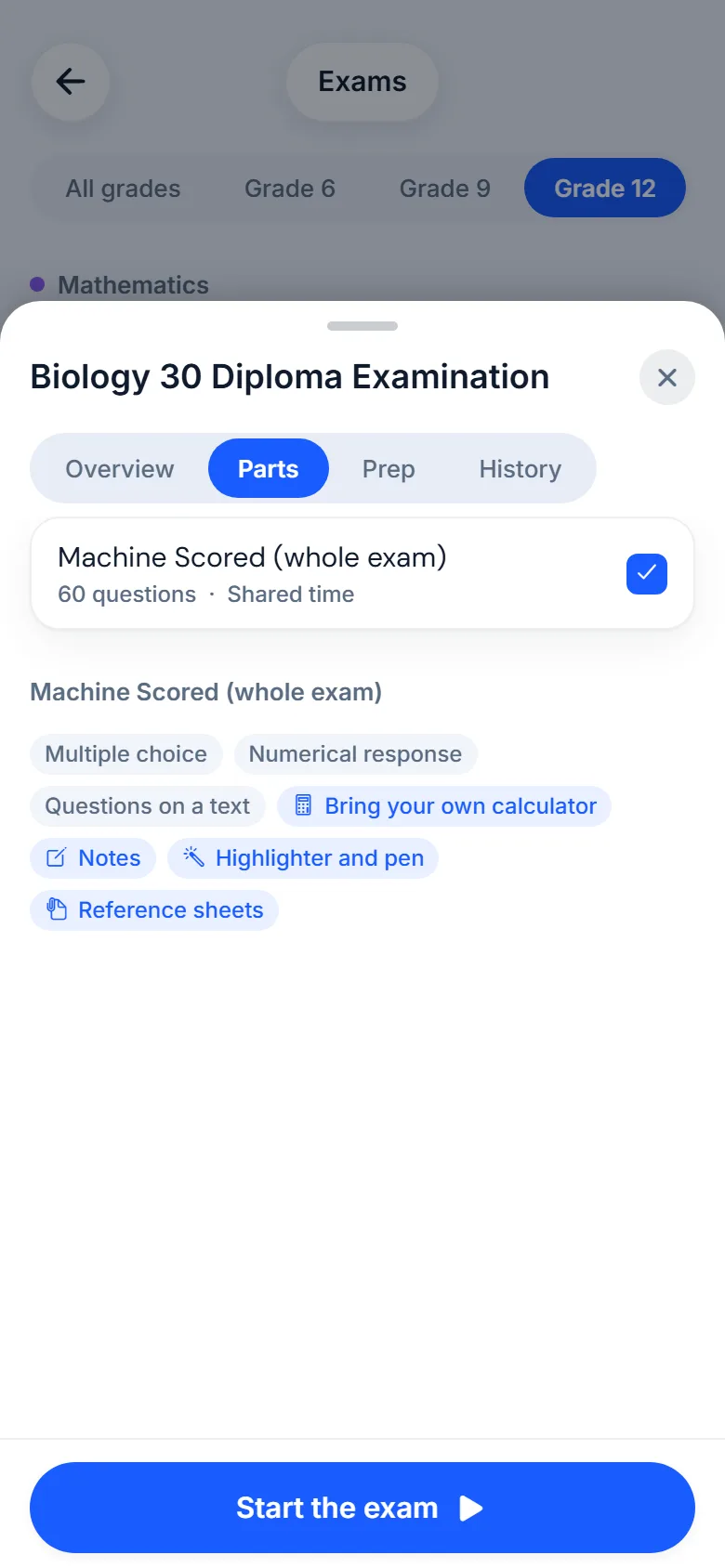 Its parts, and what you can use in each
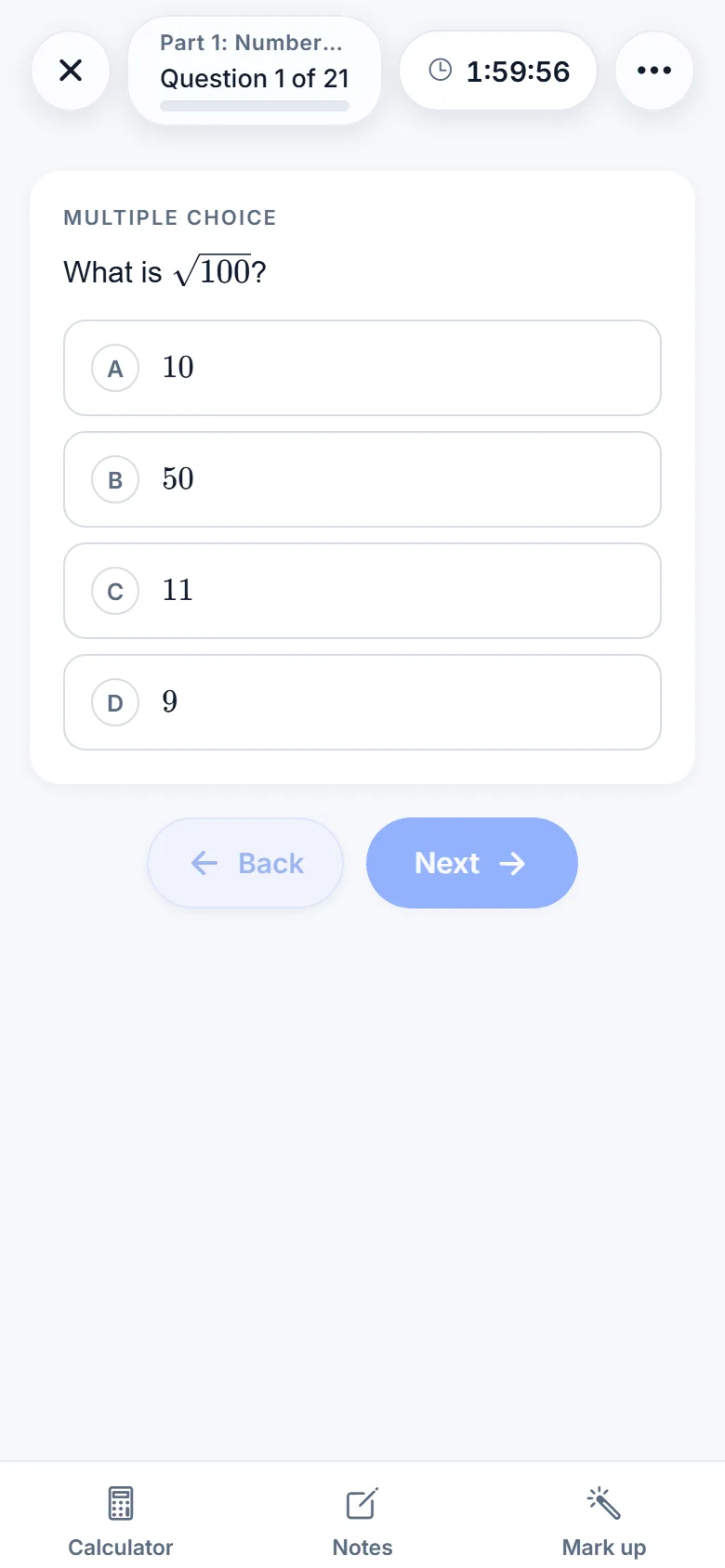 A question, timed, with the exam’s tools
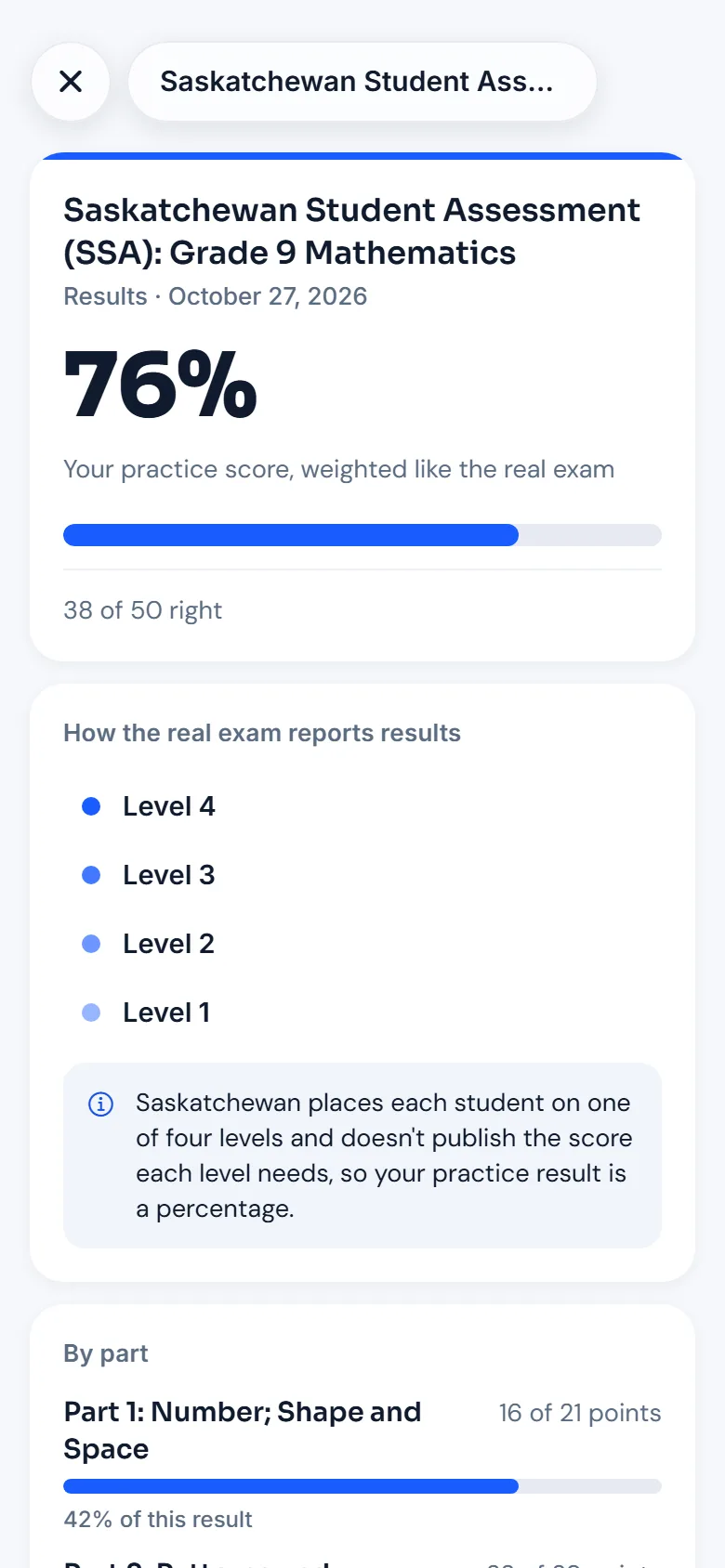 The marked result, part by part
A practice run of Saskatchewan’s Grade 9 math assessment.
Free with a MapleMind account
When
5 sessions this school year: November, January, April, June and August.
November 2026
- Thursday, November 5, 20261:00–4:00 PM
January 2027
- Monday, January 25, 20279:00 AM–12:00 PM
April 2027
- Tuesday, April 13, 20279:00 AM–12:00 PM
June 2027
- Wednesday, June 23, 20279:00 AM–12:00 PM
August 2027
- Tuesday, August 10, 20279:00 AM–12:00 PM
The dates are Alberta’s own, read on September 28, 2026. See the official schedule (alberta.ca)
What’s on it
6 topics. Unit C — Cell Division, Genetics and Molecular Biology counts most, at 25–30%.
- Unit A — Nervous and Endocrine Systems20–25%GO A1, A2
- Unit B — Reproduction and Development10–15%GO B1, B2
- Unit B — GO B35–10%
- Unit C — Cell Division, Genetics and Molecular Biology25–30%GO C1, C2
- Unit C — GO C310–15%
- Unit D — Population and Community Dynamics15–20%GO D1, D2, D3
The skills it tests · 55 skills
- Applying Hardy-Weinberg
- Carrying capacity and growth math
- Cell transformation
- Central & peripheral nervous systems
- Chromosome number
- Chromosomes, hormones and sex determination
- Comparing endocrine and nervous control
- Comparing mitosis and meiosis
- Consequences of hormone imbalance
- Crossing over and nondisjunction
- Defence mechanisms
- Discovery of DNA structure
- Diversity of reproductive strategies
- DNA evidence for relationships
- DNA information and replication
- Ecological succession
- Environmental factors in development
- Factors in population growth
- Factors that change the gene pool
- Fertilization, pregnancy and birth
- Fraternal and identical offspring
- Gametes and supporting structures
- Gene linkage and crossing over
- Genotype and phenotype ratios
- Germ layers and tissue differentiation
- Hormones and feedback
- Hormones and sex characteristics
- Hormones of the menstrual cycle
- Male reproductive hormones
- Meiosis
- Mendel's evidence and laws
- Metabolic roles of hormones
- Molecular basis of gene-pool change
- Mutation and genetic variability
- Nerves and reflex arcs
- Neurons and the action potential
- Number of genes and variability
- Other human senses
- Population growth patterns
- r-selected and K-selected organisms
- Reproductive technologies
- Restriction enzymes and ligases
- Sensing the internal environment
- Sex-linked inheritance
- Species interactions and symbiosis
- Stages of development
- STIs and fertility
- Structure and function of the ear
- Structure and function of the eye
- The cell cycle and mitosis
- The female reproductive system
- The Hardy-Weinberg principle
- The male reproductive system
- The principal endocrine glands
- Transcription and translation
How it’s built
- Machine Scored (whole exam)
- Questions
- 60
- Marks
- 60
- Of the marks
- 100%
- Multiple choice
- Numerical response
- Questions in sets
Multiple-choice and numerical-response questions in sets around shared information, such as diagrams and data. For a numerical response you work out the answer and enter it as digits.
How it’s marked
- Below the acceptable standardUnder 50%
- Acceptable standard50% to 79%
- Standard of excellence80% and up
A computer marks every question. Your exam mark is 30% of your final Biology 30 mark, and your school mark is the other 70%. You need a final mark of at least 50% for the credit; 80% meets the standard of excellence.
On the day
- Calculator
- Bring your own calculator from Alberta Education's approved list.
- Provided
- Biology 30 Data Pages
One sitting of 3 hours, and everyone may take up to double the time, 6 hours. The exam booklet has tear-out data pages to use as you work.
Getting ready
1 official document to practise with, and 4 tips.
Official practice
Tips from the people who write it
- Most multiple-choice questions depend on the information given with them, so read it carefully.
- Questions come in sets around shared information, so practise reading linked material.
- Know the kinds of numerical-response questions: calculating values, writing ratios, matching from diagrams, and putting events in order. Each has its own way of recording the answer.
- Practise with the data pages, so finding things on them is quick.
The mark you need
Your class mark counts for 70% of the final mark, the exam for 30%.
You need
59% on the exam
With 75% in class, your final mark lands between 52.5% (0 on the exam) and 82.5% (100% on it).
After the exam
- Results
Your marks are posted on myPass: your school mark, your exam mark and your blended final mark. A final mark of 48% or 49% is raised to 50%.
- November 2026November 19, 2026
- January 2027February 12, 2027
- April 2027April 30, 2027
- June 2027July 16, 2027
- August 2027August 20, 2027
- Re-marking
Ask for a rescore on myPass by the deadline: November 26, February 25, May 6, August 3 or August 27, by sitting. It costs $35, refunded if your mark rises 5% or more. Teachers re-mark the written part without seeing the first marks; the machine-scored part isn’t rescored. The new mark stands, even if it’s lower.
- Writing it again
You can rewrite at any later sitting: register on myPass and pay $35 (Alberta students). An exam with two parts is rewritten whole. Every mark stays on your record, but only your highest exam mark goes on your transcript. Retaking the course for a new school mark doesn’t mean rewriting the exam.
- If you miss it
If illness, a death in the family or another emergency keeps you from writing, your school applies to Alberta Education: either an exemption, where your school mark stands in for the exam, or a later sitting. A planned trip or work isn’t a reason; you write at a later sitting. Without a passing school mark, an exemption doesn’t help you.
From General Information Bulletin 2026–2027, Diploma Examinations Program (alberta.ca), read on October 27, 2026.
More for you
Students
Start with the topics worth the most marks, then write full practice exams under the real time limit.
Practise itParents
Put the dates on the family calendar. The Parent Dashboard shows each practice exam’s result and the skills that need another look.
See the Parent DashboardEducators
The topic weights and the official practice above make a review plan. Students can practise each skill on its own in MapleMind, free with daily limits.
For schools
Questions about this exam
When is the Biology 30 Diploma Exam in 2026–27?
The next sitting is January 25, 2027, 9:00 AM–12:00 PM. This school year it’s written in November 2026, January 2027, April 2027, June 2027 and August 2027.
How long is the Biology 30 Diploma Exam?
It takes 3 hours in all, over 1 part.
How many questions are on the Biology 30 Diploma Exam?
It has 60 marked questions.
Can you use a calculator on the Biology 30 Diploma Exam?
Yes, a calculator from the approved list.
How much does the Biology 30 Diploma Exam count?
It’s worth 30% of the final mark in Biology 30.
How are Biology 30 Diploma Exam results reported?
At 3 levels: Below the acceptable standard (under 50%), Acceptable standard (50% and up) and Standard of excellence (80% and up).
When do Biology 30 Diploma Exam results come out?
For 2026–27: the November 2026 sitting on November 19, 2026, the January 2027 sitting on February 12, 2027, the April 2027 sitting on April 30, 2027, the June 2027 sitting on July 16, 2027 and the August 2027 sitting on August 20, 2027.
Where can I find practice tests for the Biology 30 Diploma Exam?
Alberta publishes Biology 30 released items + digital Practice Test. MapleMind also builds a full practice exam in its format, free with an account.

Practise for the Biology 30 Diploma Exam
Every skill on the Biology 30 Diploma Exam, taught one at a time, then practised on questions written like the real ones.


