

Get help with History 30: Canadian Studies
Most tutoring makes you sit through material you already know. MapleMind flips that: pick the exact skill that's causing trouble — any of the 27 below — and the tutor teaches just that one, step by step, as many times as it takes. Ask questions in plain words, any time of day, in English, French, or 12 other languages.
The official Saskatchewan History 30: Canadian Studies curriculum
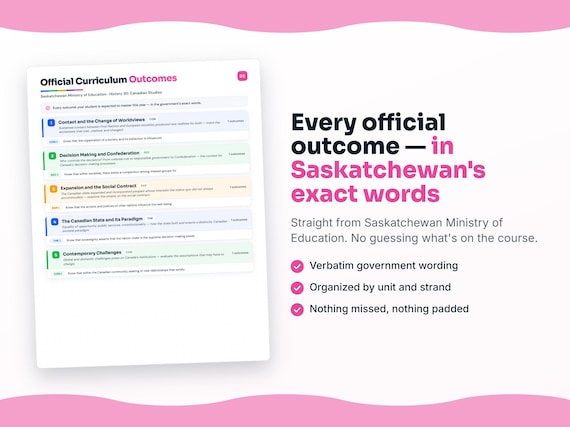
Saskatchewan defines History 30: Canadian Studies by strands and outcomes. MapleMind teaches the same curriculum reorganized for one-skill-at-a-time tutoring — the table shows exactly where every official strand lands, and the ministry's own wording is quoted under each unit below.
Official source Saskatchewan's official curriculumRead it on the government site — curriculum.gov.sk.ca ↗| Official strand | Outcomes | Where MapleMind teaches it |
|---|---|---|
| Strand U1 | 6 | Contact and the Change of Worldviews |
| Strand U2 | 5 | Decision Making and Confederation |
| Strand U3 | 5 | Expansion and the Social Contract |
| Strand U4 | 5 | The Canadian State and Its Paradigm |
| Strand U5 | 6 | Contemporary Challenges |
Every skill below, taught one on one.
 Try the first session free
How MapleMind teaches History 30: Canadian Studies — every unit, lesson, and skill
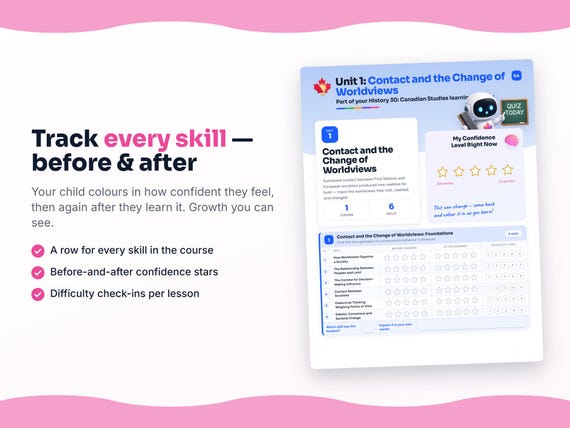
Every skill below runs as a short session: a plain-words lesson, a worked example, solving it together, then a five-question skill check that earns up to three stars. Guided Mode keeps it teaching instead of answer-handing — turning it off needs a parent's password.
Unit 1Contact and the Change of WorldviewsOfficial strand · Strand U1
Sustained contact between First Nations and European societies produced new realities for both — trace the worldviews that met, clashed, and changed.
Contact and the Change of Worldviews: Foundations
- How Worldviews Organize a SocietyHIST30-U1-FO1 — Know that the organization of a society and its behaviour is influenced by a number of assumptions that surround certain relationships.
- The Relationship Between Peoples and LandHIST30-U1-FO2 — Know that every society will evolve assumptions and practices that surround the key societal relationship between the peoples and the "land".
- The Contest for Decision-Making InfluenceHIST30-U1-FO3 — Know that within every society, there will exist a contest among groups to gain influence over the societal decision making processes.
- Contact Between SocietiesHIST30-U1-FO4 — Know that the well being of every society will be influenced by sustained contact with other societies.
- Dialectical Thinking: Weighing Points of ViewHIST30-U1-FO5 — Know that dialectical thinking is a system of reasoned exchange between points of view in which the merits of each case (thesis) are discussed and evaluated. Dialectical Evaluation .Know that dialectical evaluation is the process of: defining relevant viewpoints within the information; : testing the viewpoints for factual accuracy;
- Debate, Consensus and Societal ChangeHIST30-U1-FO6 — Know that every society will evolve, through debate and consensus, assumptions and practices concerning key societal relationships. Know that within each society, there exists a divergence of views concerning key societal relationships, Including: : whether relations between peoples within the society should be governed by the principles of accommodation or assimilation;
The official wording — 6 outcomes in this unit
- HIST30-U1-FO1
Know that the organization of a society and its behaviour is influenced
- HIST30-U1-FO2
Know that every society will evolve assumptions and practices that surround the
- HIST30-U1-FO3
Know that within every society, there will exist a contest among groups
- HIST30-U1-FO4
Kuow that the well-being of every society will be influenced by sustained
- HIST30-U1-FO5
Know that dialectical thinking is a system of reasoned exchange between points
- HIST30-U1-FO6
: Know that every society will evolve, through debate and consensus, assumptions
Unit 2Decision Making and ConfederationOfficial strand · Strand U2
Who controls the decisions? From colonial rule to responsible government to Confederation — the contest for Canada's decision-making processes.
Decision Making and Confederation: Foundations
- Interest Groups and Decision MakingHIST30-U2-FO1 — Know that within societies, there exists a competition among interest groups for influence over the society s decision making processes, and that those groups will vary in terms of their ability to influence those processes.
- Canada's Export EconomyHIST30-U2-FO2 — Know that the nation s economic well being depended on the exporting of Canadian products to foreign markets and the development of a national consumer economy.
- External Forces in Canadian HistoryHIST30-U2-FO3 — Know that the history of the Canadian peoples has been greatly influenced by external forces alnd events.
- Dialectical Thinking: Confederation DebatesHIST30-U2-FO4 — Know that dialectical thinking is a system of reasoned exchange between points of view in which the merits of each case (thesis) are discussed and evaluated. Dialectic Evaluation o Know that dialectical evaluation is the process of: defining relevant viewpoints within the information; 。 testing the viewpoints for factual accuracy;
- Debate and Consensus in the New DominionHIST30-U2-FO5 — Know that every society will evolve, through debate and consensus, assumptions and practices concerning certain key societal relationships. Know that within every society, there will exist a divergence of views concerning key societal relationships, including: whether individuals, groups, and regions within:the nation, possess the mieans to influence societal and national decision making in a manner to benefit their respective well being; and,
The official wording — 5 outcomes in this unit
- HIST30-U2-FO1
Know that within societies, there exists a competition among interest groups for
- HIST30-U2-FO2
Know that the nation's economic well-being depended on the exporting of Canadian
- HIST30-U2-FO3
Know that the history of the Canadian peoples has been greatly influenced
- HIST30-U2-FO4
Know that dialectical thinking is a system of reasoned exchange between points
- HIST30-U2-FO5
Know that every society will evolve, through debate and consensus, assumptions and
Unit 3Expansion and the Social ContractOfficial strand · Strand U3
The Canadian state expanded and incorporated peoples whose interests the status quo did not always accommodate — examine the strains on the social contract.
Expansion and the Social Contract: Foundations
- Other Nations' Actions and Canadian Well-BeingHIST30-U3-FO1 — Know that the actions and policies of other nations influence the well being of the Canadian people and nation.
- The Foreign Policy DebateHIST30-U3-FO2 — Know that the conduct of Canadian foreign policy has generated, -and continues to generate debate within the Canadian community.
- Ideologies and the Role of GovernmentHIST30-U3-FO3 — Know that various ideologies have articulated differing views about the role' of government in securing the well being of the citizenry.
- Dialectical Thinking: Expansion DebatesHIST30-U3-FO4 — Know that dialectical thinking is a system of reasoned exchange between points of view in which the merits of each case (thesis) are discussed and evaluated. Dialectic Evaluation : ,Know that dialectical evaluation is the process of: : gathering information; defining the issues within the information;
- Debate and Consensus in an Expanding CanadaHIST30-U3-FO5 — Know that every society will evolve,.through debate and consensus, assumptions and practices concerning certain key societal relationships. : Know that within each society, a divergence of views exists concerning key societal relationships, including: o whether external forces threaten the ability of Canadians to control the societal decision making processes that affect the well being of the Canadian nation;
The official wording — 5 outcomes in this unit
- HIST30-U3-FO1
Know that the actions and policies of other nations influence the well-being
- HIST30-U3-FO2
Know that the conduct of Canadian foreign policy has generated, -and continues
- HIST30-U3-FO3
Know that various ideologies-have articulated differing views about the role' of government
- HIST30-U3-FO4
Know that dialectical thinking is a systen of reasoned exchange between points
- HIST30-U3-FO5
Know that every society will evolve,.through debate and consensus, assumptions and practices
Unit 4The Canadian State and Its ParadigmOfficial strand · Strand U4
Equality of opportunity, public services, constitutionality — how the state built and enacts a distinctly Canadian societal paradigm.
The Canadian State and Its Paradigm: Foundations
- Sovereignty and the Nation-StateHIST30-U4-FO1 — Know that sovereignty asserts that the nation state is the supreme decision making power within a delineated territory and is subject to external authority only by its consent.
- National Unity and BelongingHIST30-U4-FO2 — Know that the unity and well being of the nation will be influenced by the extent to which significant populations feel that their interests and well being are being enhanced and secured within the existing political structure.
- Regional Interests and the Nation's FutureHIST30-U4-FO3 — Know that the future of the nation will, in part, depend on how well the interests of the regions are perceived to be addressed by the populations of those regions. Core:Concepts Regional Disparity Know that there is regional disparity in terms of resources, population, economic well being, and : political and economic influence over national decision making.:
- Dialectical Thinking: State and Paradigm DebatesHIST30-U4-FO4 — Know that dialectical thinking is a system of reasoned exchange between points of view in which the merits of each case (thesis) are discussed and evaluated. Dialectical Evaluation α Know that dialectical evaluation is the process of: . gathering information; : : ● defining the issues within the information;
- Debate and Consensus in the Modern StateHIST30-U4-FO5 — Know that 'every society will evolve, through debate and consensus, assumptions and practices concerning certain key societal relationships. o Know that within each society, a divergent views will exist concerning key societal relationships, including: o whether it is possible for nations, of vastly unequal power and resources, to sustain a relationship based on equality;
The official wording — 5 outcomes in this unit
- HIST30-U4-FO1
Know that sovereignty asserts that the nation-state is the supreme decision-making power
- HIST30-U4-FO2
Know that the unity and well-being of the nation will be influenced
- HIST30-U4-FO3
Know that the future of the nation will, in part, depend on
- HIST30-U4-FO4
Know that dialectical thinking is a system.of reasoned exchange between points of
- HIST30-U4-FO5
Know that 'every society will evolve, through debate and consensus, assumptions and
Unit 5Contemporary ChallengesOfficial strand · Strand U5
Global and domestic challenges press on Canada's institutions — evaluate the assumptions that may have to change.
Contemporary Challenges: Foundations
- New Relationships in a Diverse CanadaHIST30-U5-FO1 — Know that within the Canadian community, seeking of new relationships that satisfy the needs of an increasingly diverse society is proving to be a difficult process.
- Institutions Meeting New ChallengesHIST30-U5-FO2 — Know that Canadian 'society and its 'institutions are seeking to meet the challenges that arise: within an increasingly diverse society.
- The Debate Over Government's RoleHIST30-U5-FO3 — Know that there is a debate over the role of government in securing the well being of members of the society.
- International Forces and Canadian SovereigntyHIST30-U5-FO4 — Know that international forces represent a challenge to the ability of Canadians to exercise sovereignty over national and societal decision making.
- Dialectical Thinking: Contemporary DebatesHIST30-U5-FO5 — Know that dialectical thinking is a system of reasoned exchange between points of view in which the merits of each case (thesis) are discussed and evaluated. Dialectical Evaluation : Know that dialectical evaluation is the process of: : gathering information; defining the issues within the information;
- Debate and Consensus in a Diverse CanadaHIST30-U5-FO6 — Know that every society will evolve, through debate and consensus, assumptions and practices concerning certain key societal relationships. : Know that within each society, there will exist a divergence of views concerning key societal relationships, including: 。 whether it is valid for a society to apply contemporary values and beliefs in the process of evaluating the values and beliefs of past generations and societies;
The official wording — 6 outcomes in this unit
- HIST30-U5-FO1
Know that within the Canadian community, seeking of new relationships that satisfy
- HIST30-U5-FO2
Know that Canadian 'society and its 'institutions are'seeking-to meet the challenges.that arise:.
- HIST30-U5-FO3
Know that there is a debate over the role of government in
- HIST30-U5-FO4
Know that international forces represent a challenge to the ability of Canadians
- HIST30-U5-FO5
Know that dialectical thinking is a system of reasoned exchange between points
- HIST30-U5-FO6
Know that-every society will evolve, through debate and consensus, assumptions and practices
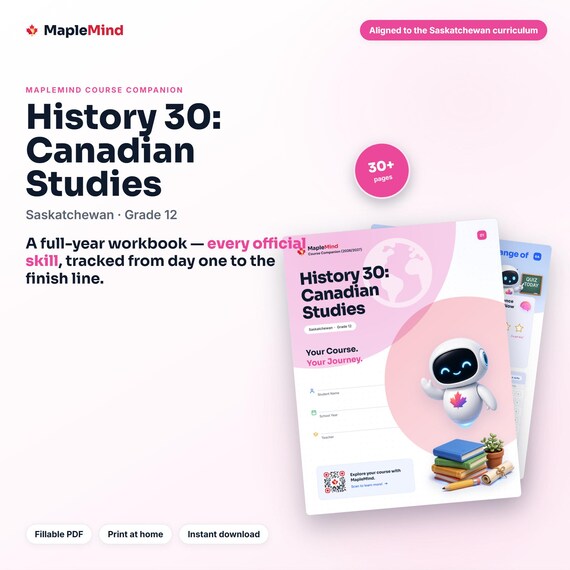
Printable workbook · A keepsake of the year
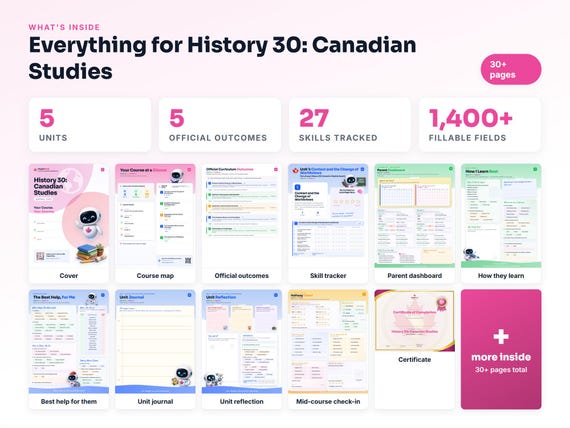
A History 30: Canadian Studies workbook worth keeping
Built from the same official curriculum as this page. Before and after each skill above, your student colours in how sure they feel — so the two of you can see, on one page, what's clicking and what needs another look. It's a quiet way to follow how the year is really going.
By June it's full of their own handwriting: units worked through, confidence grown, a mid-year check-in, notes from parent-teacher night, and a certificate at the end. Less a worksheet, more a record of the year worth keeping on the shelf.
Instant download · see every page, reviews and the full description · five or more workbooks are $2.99 each
What it looks like in the app
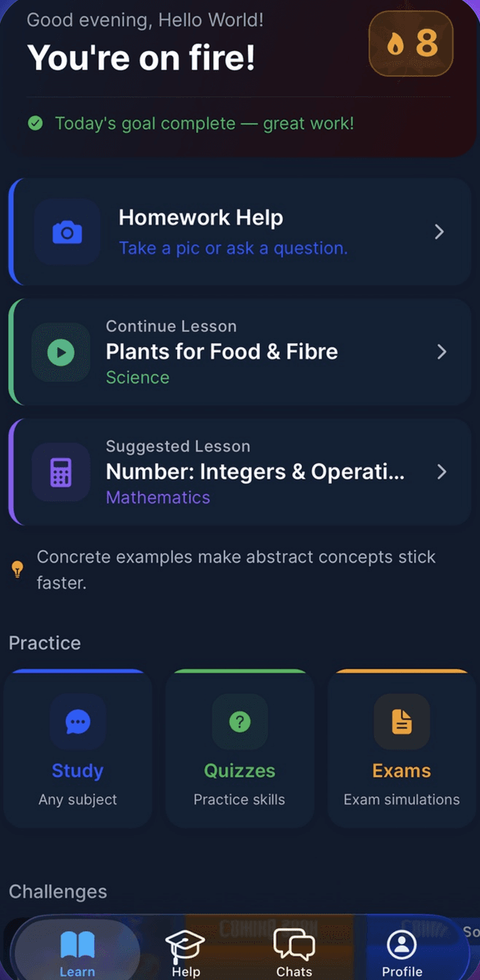
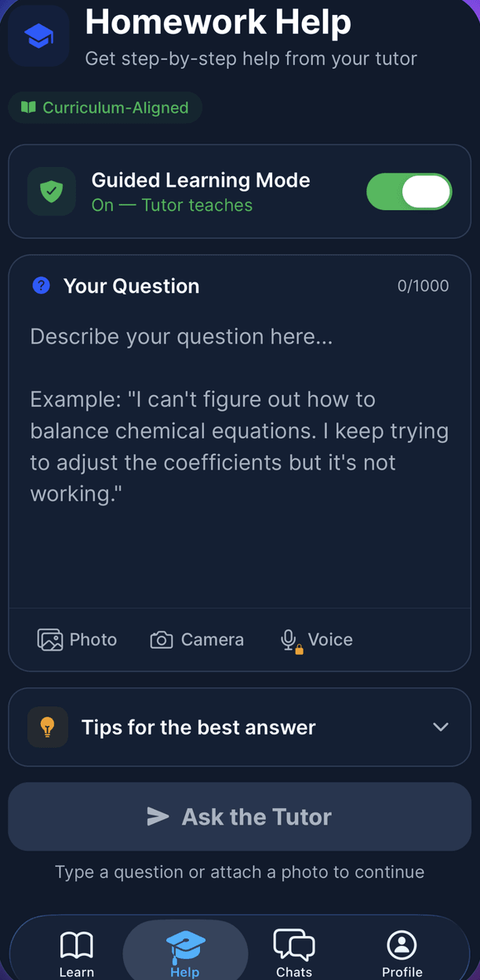
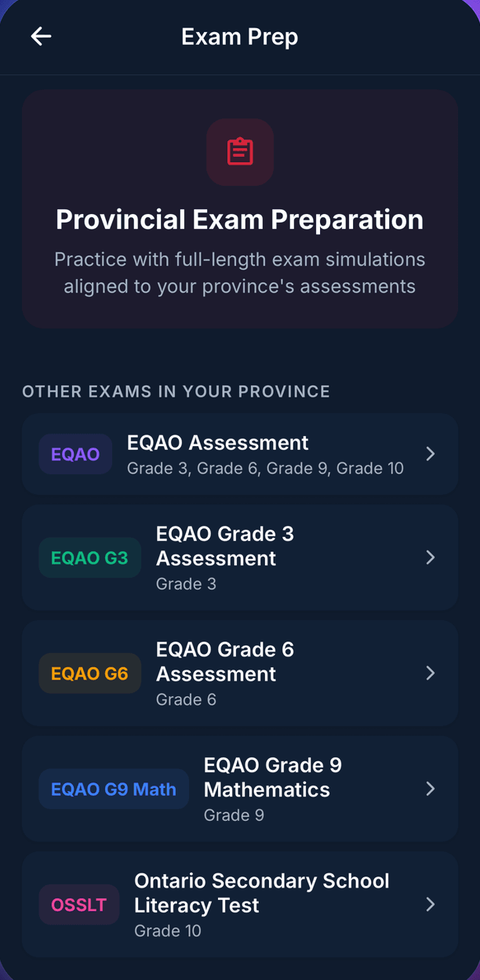
Common questions
Can MapleMind help me with History 30: Canadian Studies?
Yes. MapleMind's AI tutor covers all 27 skills in Saskatchewan's History 30: Canadian Studies — you pick the exact skill, and the tutor teaches it step by step: a short lesson, a worked example, solving together, then a skill check to show it stuck.
Is MapleMind aligned to Saskatchewan's official curriculum?
Yes. Every skill in this course maps to an official outcome code from Saskatchewan's Grade 12 Social Studies curriculum, and the ministry's own wording is quoted under each unit on this page — with the official government source linked so you can check it yourself.
What does MapleMind cost?
It's free to start — 5 tutoring chats and a practice quiz every day, no credit card. A Pro subscription ($9.99/month or $49.99/year CAD, 7-day free trial) unlocks unlimited tutoring, practice, and exam simulations.
What if I'm stuck on just one topic?
That's the point of skill-level tutoring: open History 30: Canadian Studies in the app, tap the exact skill from the list on this page, and the tutor teaches just that — no wading through lessons you don't need.
Does MapleMind work in French or other languages?
Yes — 14 languages, including French. Both the app and the tutor's explanations switch to the language you choose.
Where can I see the official Saskatchewan curriculum for History 30: Canadian Studies?
The official source is linked on this page — Saskatchewan's official curriculum. The outline here follows it: every MapleMind skill carries its official outcome code, and the ministry's own wording is quoted under each unit.
Keep exploring
Ready when you are
Pick a skill from this page and see it taught properly — free, in the browser, in under a minute.