Get help with World Issues 120
Most tutoring makes you sit through material you already know. MapleMind flips that: pick the exact skill that's causing trouble — any of the 15 below — and the tutor teaches just that one, step by step, as many times as it takes. Ask questions in plain words, any time of day, in English, French, or 12 other languages.
The official New Brunswick World Issues 120 curriculum
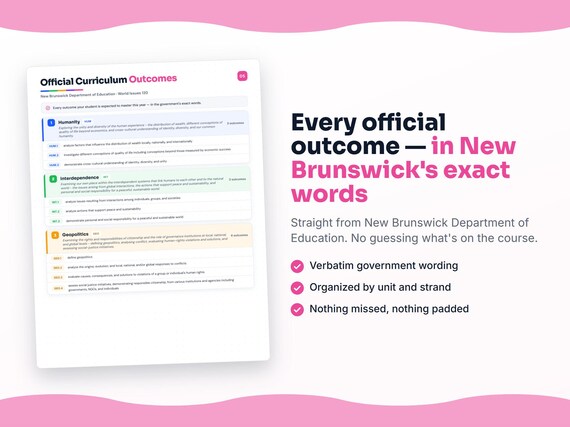
New Brunswick defines World Issues 120 by strands and outcomes. MapleMind teaches the same curriculum reorganized for one-skill-at-a-time tutoring — the table shows exactly where every official strand lands, and the ministry's own wording is quoted under each unit below.
Official source New Brunswick's official K-12 education resourcesRead it on the government site — www2.gnb.ca ↗| Official strand | Outcomes | Where MapleMind teaches it |
|---|---|---|
| Strand 1 | 3 | Humanity |
| Strand 2 | 3 | Interdependence |
| Strand 3 | 4 | Geopolitics |
Every skill below, taught one on one.
 Try the first session free
How MapleMind teaches World Issues 120 — every unit, lesson, and skill
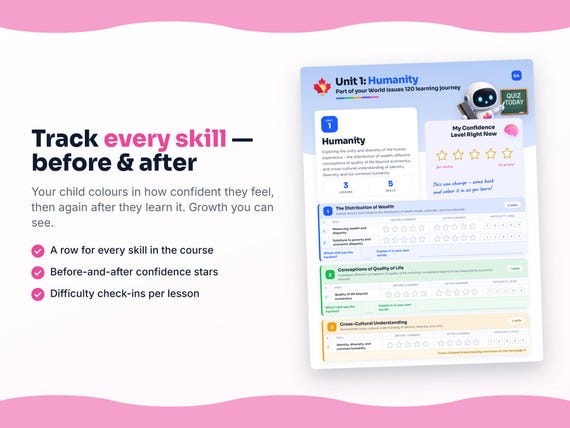
Every skill below runs as a short session: a plain-words lesson, a worked example, solving it together, then a five-question skill check that earns up to three stars. Guided Mode keeps it teaching instead of answer-handing — turning it off needs a parent's password.
Unit 1HumanityOfficial strand · Strand 1
Exploring the unity and diversity of the human experience - the distribution of wealth, different conceptions of quality of life beyond economics, and cross-cultural understanding of identity, diversity, and our common humanity.
The Distribution of Wealth
- Measuring wealth and disparity1.1 — Analyse the factors that influence how wealth is distributed using demographic data and human-development measures such as GDP, GNI per capita, HDI, life expectancy, and literacy.
- Solutions to poverty and economic disparity1.1 — Discuss, problem-solve, and propose solutions to alleviate poverty and counter economic disparity within and across nations, distinguishing equality from equity.
Conceptions of Quality of Life
- Quality of life beyond economics1.2 — Investigate conceptions of quality of life beyond economic success, using the UN Sustainable Development Goals to consider disparities between and within groups.
Cross-Cultural Understanding
- Identity, diversity, and common humanity1.3 — Demonstrate cross-cultural understanding of identity, diversity, and unity - why issues arise between cultural groups and how all peoples share a common humanity.
- Analysing rights documents1.3 — Analyse legal documents regarding rights and responsibilities, including the Canadian Charter of Rights and Freedoms and the UN Declaration of Human Rights.
The official wording — 3 outcomes in this unit
- 1.1
analyze factors that influence the distribution of wealth locally, nationally, and internationally
- 1.2
investigate different conceptions of quality of life including conceptions beyond those measured by economic success
- 1.3
demonstrate cross-cultural understanding of identity, diversity, and unity
Unit 2InterdependenceOfficial strand · Strand 2
Examining our own place within the interdependent systems that link humans to each other and to the natural world - the issues arising from global interactions, the actions that support peace and sustainability, and personal and social responsibility for a peaceful, sustainable world.
Issues from Global Interactions
- Globalization and the global village2.1 — Analyse how globalization links societies into an interdependent global village, including food security and the roles of the UN and NGOs in global issues.
- Media, bias, and fake news2.1 — Determine credible media sources and identify bias and fake news in media coverage of global issues.
Actions for Peace and Sustainability
- Actions and movements for peace and sustainability2.2 — Analyse actions that support peace and sustainability, using UN Sustainable Development Goal case studies and movements seeking peace, justice, and equality.
Personal and Social Responsibility
- Taking responsible action as a global citizen2.3 — Demonstrate personal and social responsibility for a peaceful and sustainable world by promoting an initiative, engaging in sustainable action, and proposing solutions as a global citizen.
The official wording — 3 outcomes in this unit
- 2.1
analyze issues resulting from interactions among individuals, groups, and societies
- 2.2
analyze actions that support peace and sustainability
- 2.3
demonstrate personal and social responsibility for a peaceful and sustainable world
Unit 3GeopoliticsOfficial strand · Strand 3
Examining the rights and responsibilities of citizenship and the role of governance institutions at local, national, and global levels - defining geopolitics, analysing conflict, evaluating human-rights violations and solutions, and assessing social-justice initiatives.
Defining Geopolitics
- What geopolitics is3.1 — Define geopolitics by identifying key players, geographical locations, and motivations, and break a geopolitical issue into its political, environmental, social, and economic components.
The Origins and Evolution of Conflict
- Origins and evolution of conflict3.2 — Analyse the origins and evolution of a conflict and identify the patterns and attributes that conflicts have in common.
- Strategies to defuse conflict3.2 — Analyse the local, national, and global responses used to defuse conflict, including sanctions, embargoes, diplomacy, military intervention, and UN Security Council resolutions.
Human Rights: Violations and Solutions
- Human-rights violations, including Indigenous rights3.3 — Evaluate the causes and consequences of human-rights violations around the world, including Indigenous rights, treaties and land rights, and cultural genocide.
- Advocating and solving human-rights violations3.3 — Compare how people and organizations advocate for human rights and evaluate the institutions that work to solve human-rights violations, such as the NB Human Rights Commission and NGOs.
Assessing Social Justice Initiatives
The official wording — 4 outcomes in this unit
- 3.1
define geopolitics
- 3.2
analyze the origins; evolution; and local, national, and/or global responses to conflicts
- 3.3
evaluate causes, consequences, and solutions to violations of a group or individual's human rights
- 3.4
assess social justice initiatives, demonstrating responsible citizenship, from various institutions and agencies including governments, NGOs, and individuals
Printable workbook · A keepsake of the year
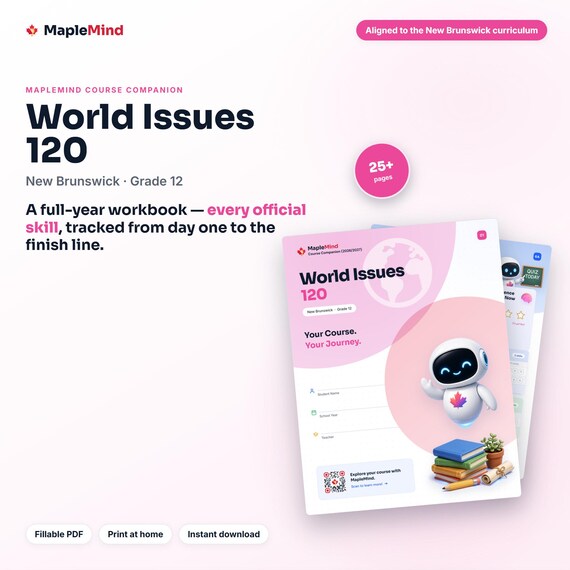
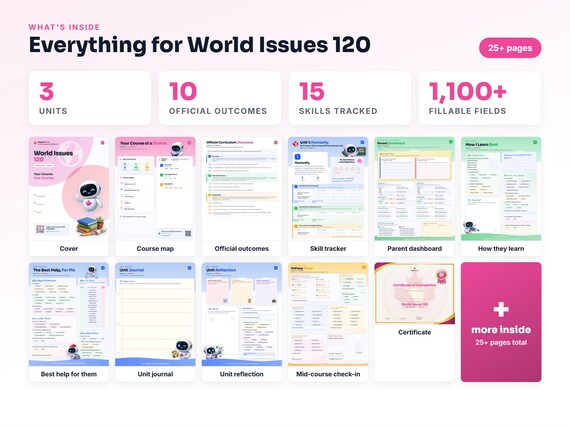
A World Issues 120 workbook worth keeping
Built from the same official curriculum as this page. Before and after each skill above, your student colours in how sure they feel — so the two of you can see, on one page, what's clicking and what needs another look. It's a quiet way to follow how the year is really going.
By June it's full of their own handwriting: units worked through, confidence grown, a mid-year check-in, notes from parent-teacher night, and a certificate at the end. Less a worksheet, more a record of the year worth keeping on the shelf.
Instant download · see every page, reviews and the full description · five or more workbooks are $2.99 each
What it looks like in the app
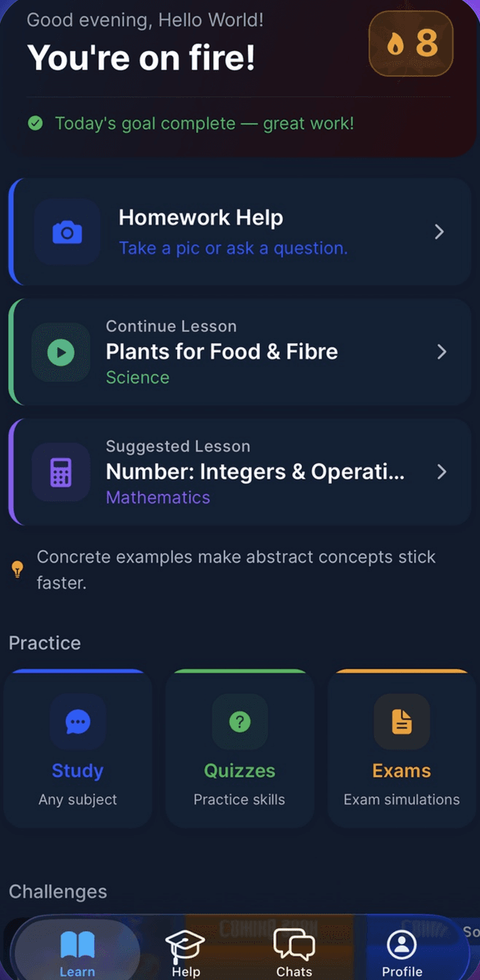
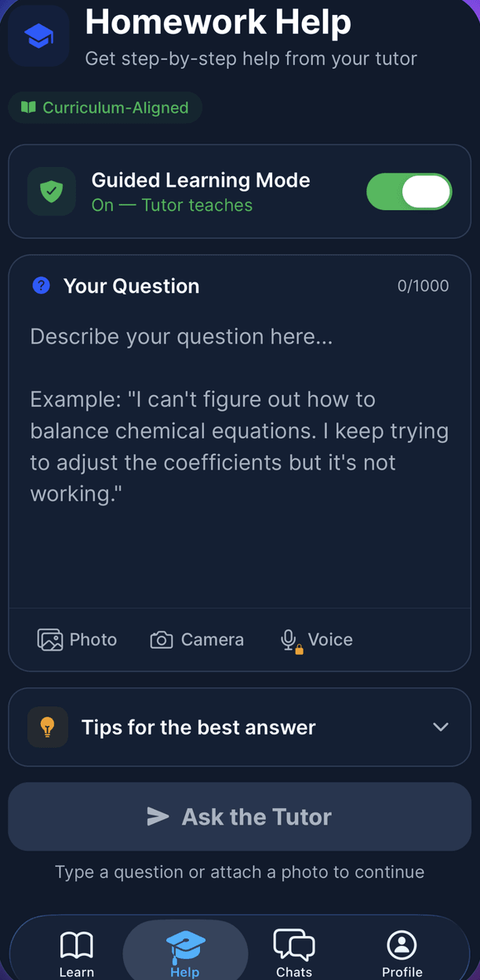
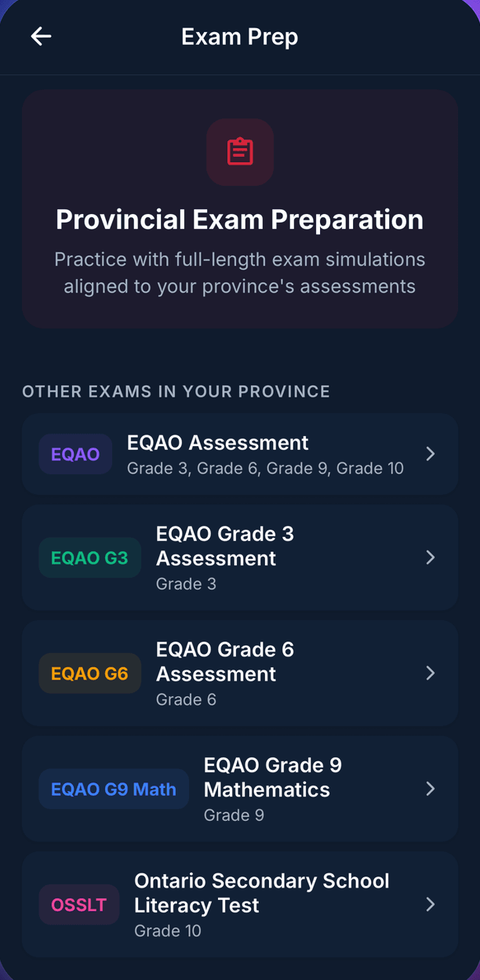
Common questions
Can MapleMind help me with World Issues 120?
Yes. MapleMind's AI tutor covers all 15 skills in New Brunswick's World Issues 120 — you pick the exact skill, and the tutor teaches it step by step: a short lesson, a worked example, solving together, then a skill check to show it stuck.
Is MapleMind aligned to New Brunswick's official curriculum?
Yes. Every skill in this course maps to an official outcome code from New Brunswick's Grade 12 Social Studies curriculum, and the ministry's own wording is quoted under each unit on this page — with the official government source linked so you can check it yourself.
What does MapleMind cost?
It's free to start — 5 tutoring chats and a practice quiz every day, no credit card. A Pro subscription ($9.99/month or $49.99/year CAD, 7-day free trial) unlocks unlimited tutoring, practice, and exam simulations.
What if I'm stuck on just one topic?
That's the point of skill-level tutoring: open World Issues 120 in the app, tap the exact skill from the list on this page, and the tutor teaches just that — no wading through lessons you don't need.
Does MapleMind work in French or other languages?
Yes — 14 languages, including French. Both the app and the tutor's explanations switch to the language you choose.
Where can I see the official New Brunswick curriculum for World Issues 120?
The official source is linked on this page — New Brunswick's official K-12 education resources. The outline here follows it: every MapleMind skill carries its official outcome code, and the ministry's own wording is quoted under each unit.
Keep exploring
Ready when you are
Pick a skill from this page and see it taught properly — free, in the browser, in under a minute.