Provincial assessment · Ontario
EQAO Primary Division Assessment: Reading, Writing and Mathematics
EQAO Primary Division Assessment (Grade 3): Reading, Writing and Mathematics
- Grade 3
Dates and details can change. We do our best to keep this page up to date, but check the official sources before relying on it.
- Total time
- 4 h 10 min
- Marked questions
- 69
- Parts
- 3
- Calculator
- In some parts
- Format
- On a computer
EQAO Grade 3 practice test
The whole exam or the parts you choose, in its own format, on the clock.
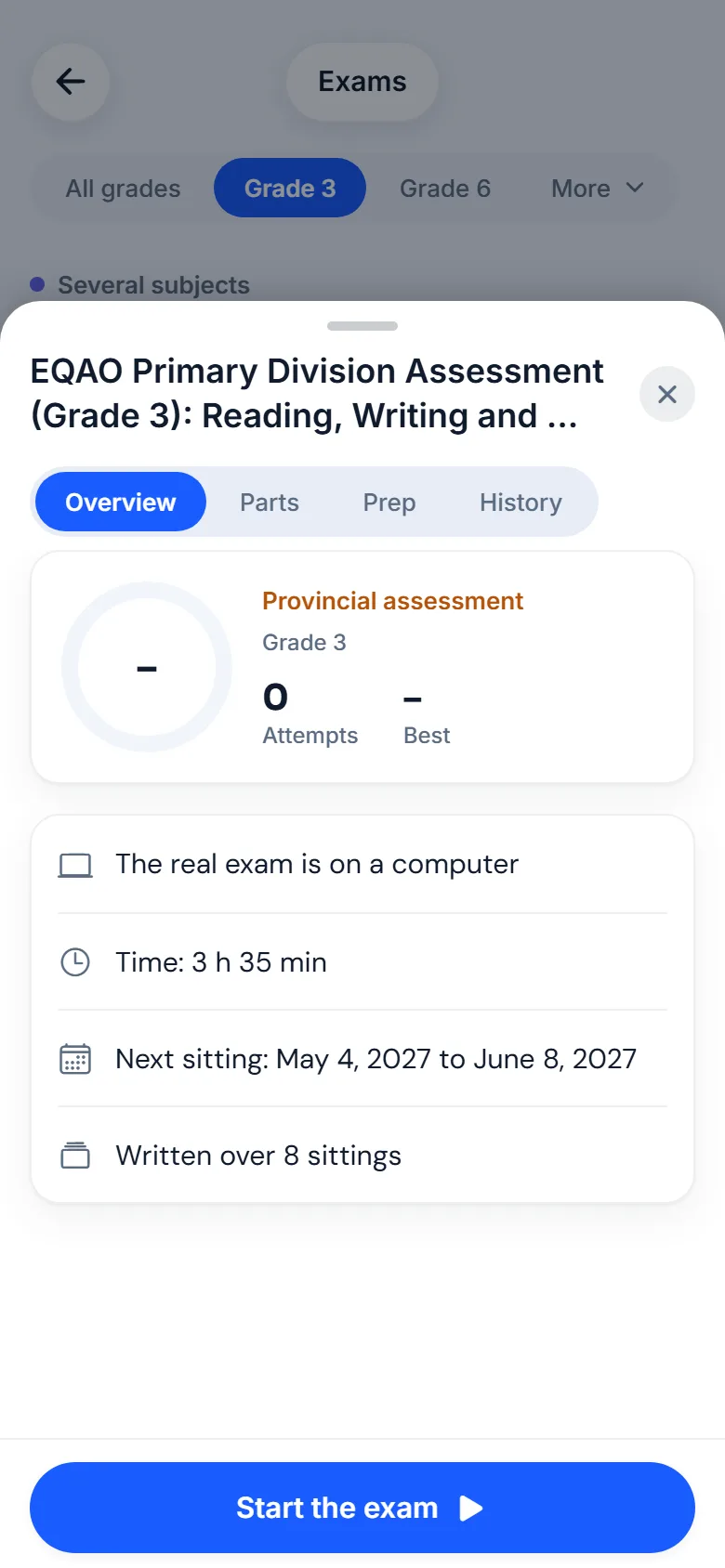 The exam in the app
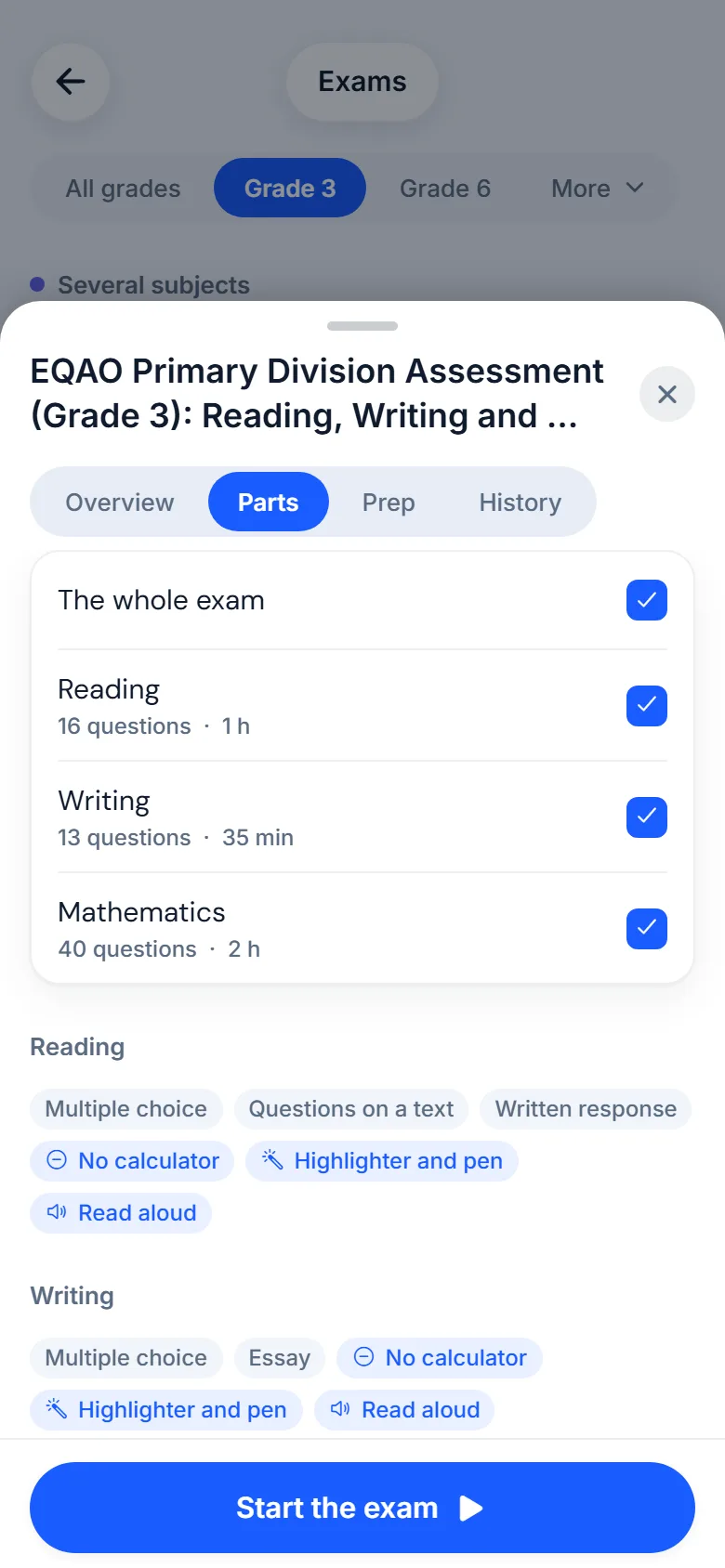 Its parts, and what you can use in each
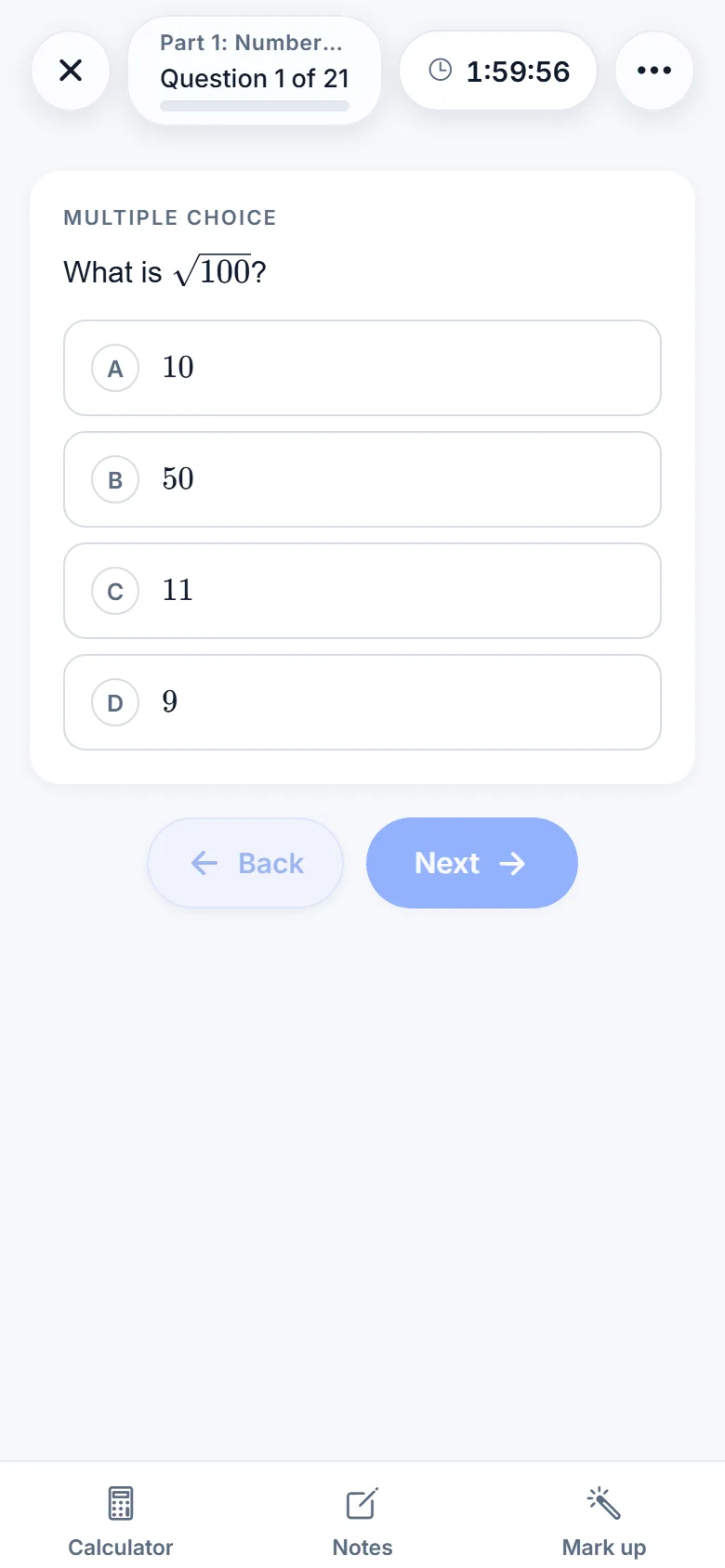 A question, timed, with the exam’s tools
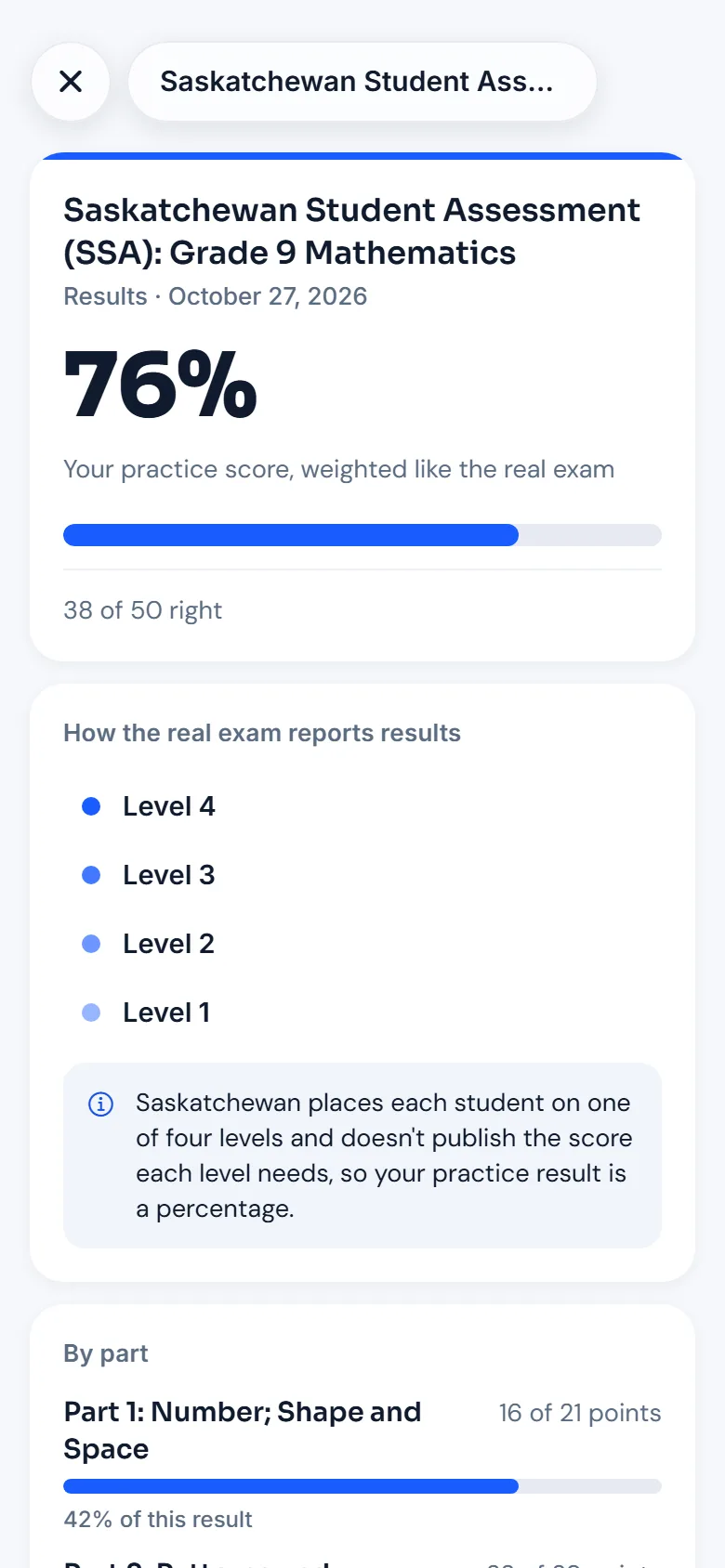 The marked result, part by part
A practice run of Saskatchewan’s Grade 9 math assessment.
Free with a MapleMind account
When
Spring 2027
- May 4 to June 8, 20276:00 a.m.–6:00 p.m. ET · Language sessions A–D and mathematics stages 1–4
The dates are Ontario’s own, read on September 28, 2026. See the official schedule (eqao.com)
What’s on it
- Reading16 scored questions, 27 raw score points; reported on its own (levels 1–4)
- Writing13 scored questions, 20 raw score points; reported on its own (levels 1–4)
Mathematics
- Number and Financial Literacy35%14 of 40
- Algebra20%8 of 40
- Data20%8 of 40
- Spatial Sense25%10 of 40
The skills it tests · 86 skills
- Adding-to and taking-away stories to 1000
- Are these four-operation expressions equal?
- Asking and answering questions about data in frequency tables and scaled graphs
- Asking questions with which, whose, and how
- Building and breaking apart numbers to 1000
- Building and breaking apart structures to find shapes inside
- Building complex sentences with adverbial clauses
- Building prisms, pyramids, cylinders and cones
- Building shapes with a given perimeter
- Building simple, compound, and complex sentences
- Capital letters in dialogue and titles
- Checking if 3D objects match exactly (congruent)
- Collecting qualitative and quantitative data and using frequency tables
- Coming up with and building on ideas
- Commas and quotation marks for talking and quoting
- Comparing and ordering numbers to 1000
- Comparing and sequencing text parts
- Comparing areas by matching, covering, and decomposing shapes
- Connecting a text to my life, other texts, and the world
- Connecting First Nations, Métis, and Inuit stories to today
- Counting to 1000 by 50s, 100s, and 200s
- Describing and using variables
- Describing likelihood: unlikely, equally likely, and likely
- Describing story texts and information texts
- Digital clocks, seconds and timers
- Editing and proofreading my writing
- Equal groups of one half, one fourth and one third
- Estimating and calculating change for cash purchases
- Figuring out clues the text doesn't say
- Finding equal ways to make the same number to 1000
- Finding equivalent fractions through fair sharing
- Finding pattern rules for repeating elements and operations
- Finding the main idea and important details
- Finding the mean and the mode of a data set
- Giving and following multistep directions with half- and quarter-turns
- Guessing what happens next and adjusting
- How multiplication and division connect
- How pictures and design connect to meaning
- Improving my writing with feedback
- Joining words with apostrophes
- Learning and using new words
- Linking verbs and actions happening now
- Making and re-showing patterns, including with tables of values
- Measuring and comparing perimeters
- Measuring area in square centimetres and square metres
- Measuring area with non-standard units
- Measuring capacity with non-standard units
- Measuring mass with a pan balance
- Mental math to add and subtract within 1000
- Metaphor and assonance in texts
- Millimetres, centimetres, metres, and kilometres, with benchmarks
- Multiplication and division facts for 2, 5, and 10
- Noticing how a text sounds and feels
- Noticing symbols, language, and values in texts
- Predicting if the mean and mode will match in a different group
- Putting my ideas in order
- Putting-together and comparing stories to 1000
- Reading and changing code with repeating loops
- Reading and showing numbers to 1000
- Reading and understanding a range of texts
- Reading and viewing First Nations, Métis, and Inuit stories
- Rounding to the nearest ten or hundred
- Seeing a fraction's numerator as repeated addition of a unit fraction
- Sharing fairly among many friends, up to 20 items
- Showing data with pictographs and bar graphs using scales
- Showing division to 100 ÷ 10 with arrays
- Showing multiplication to 10 × 10 with arrays
- Showing ownership with possessive nouns
- Solving multiplication and division stories
- Sorting and naming prisms, pyramids, cylinders, and cones
- Sorting data by two or three features
- Spotting repeating elements and operations in patterns
- Telling time on analog clocks
- Understanding the addition algorithm
- Understanding the subtraction algorithm
- Using different-sized units to measure the same attribute
- Using headings, an index, and text patterns
- Using patterns to show how numbers to 1000 relate
- Using place value to describe multi-digit numbers
- Using ratios of 1 to 2, 1 to 5, and 1 to 10 to scale numbers
- Where things are and sudden feelings
- Whose perspective is being shown?
- Whose voice is telling the story?
- Word parts that change meaning
- Writing a first try of my text
- Writing and running code that repeats with loops
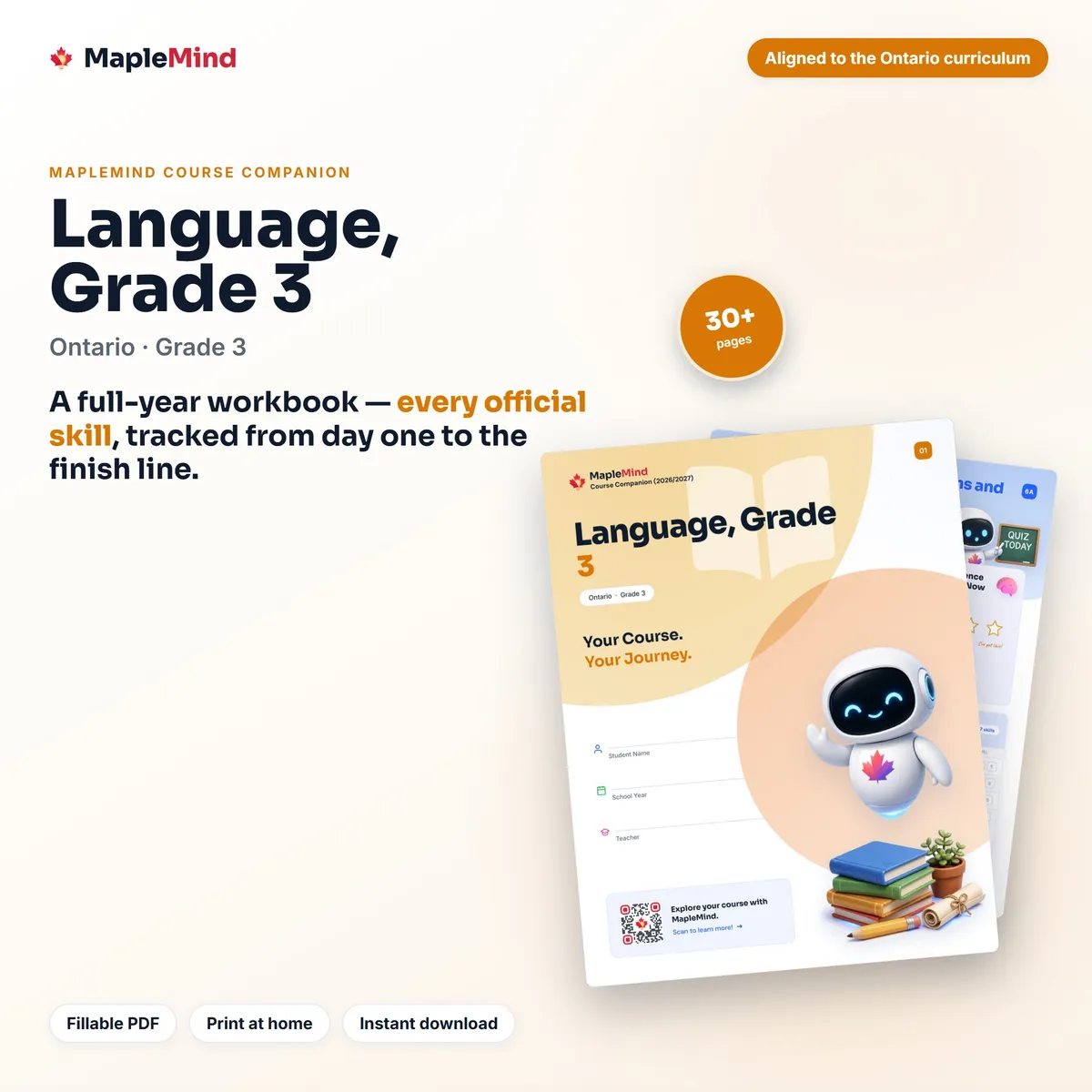
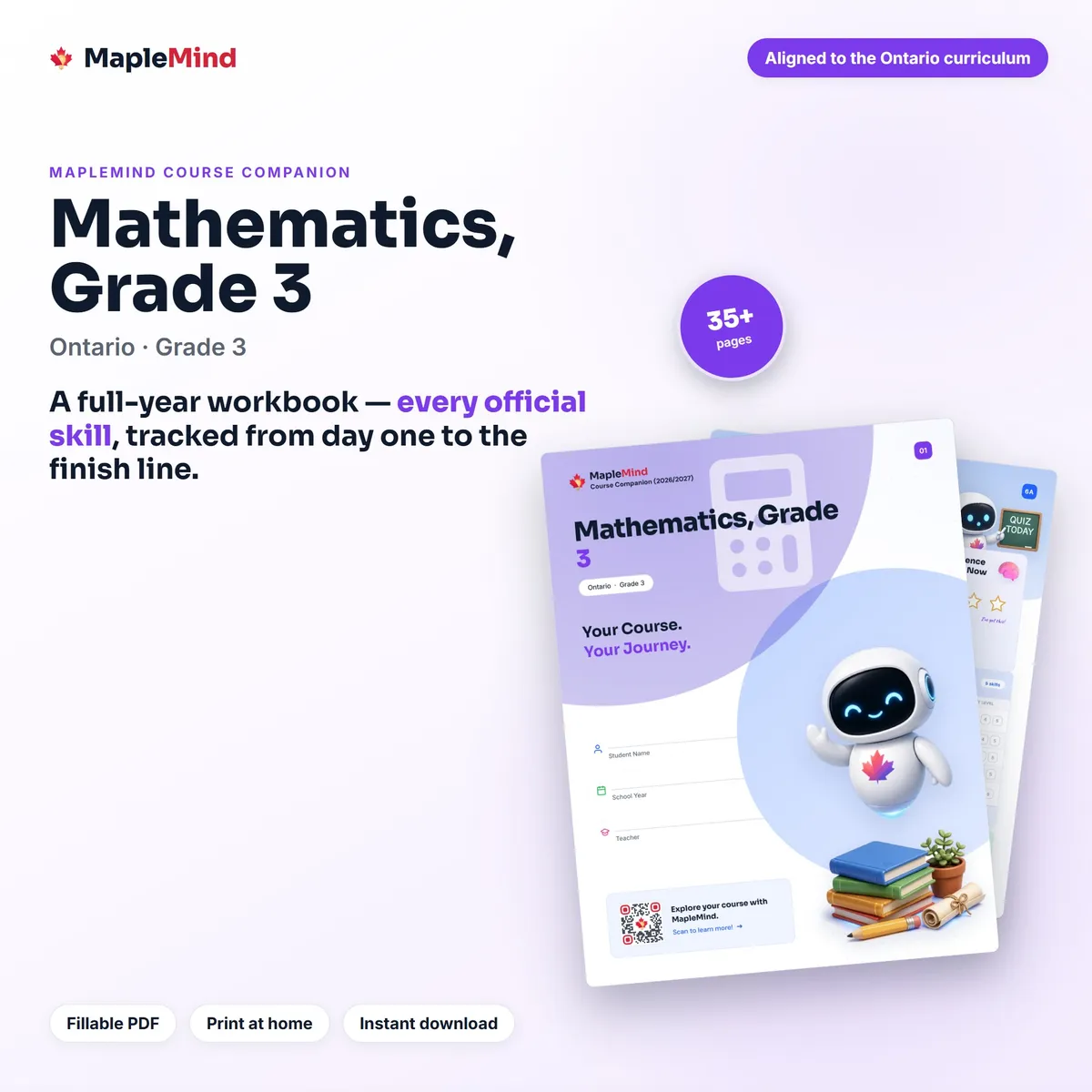
How it’s built
Multiple-choice questions, questions in sets, written answers and an essay.
- Reading
- Time
- 60 min
- Questions
- 16
- Marks
- 27
- Of the marks
- 33%
- Multiple choice
- Questions in sets
- Written answers
Read a story and an informational text, and answer questions: choose one or more answers, drag and drop, drop-down menus, and written answers.
- Writing
- Time
- 35 min
- Questions
- 13
- Marks
- 20
- Of the marks
- 33%
- Multiple choice
- Essay
Questions on planning, organizing and editing writing, and on spelling, grammar and punctuation. Then write one piece on a prompt, marked as a first draft.
- Mathematics
- Time
- 120 min
- Questions
- 40
- Marks
- 40
- Of the marks
- 34%
- Multiple choice
Math questions in four stages: drag and drop, putting things in order, drop-down menus, and choosing one or more answers. A calculator is built in.
How it’s marked
- Level 1
- Level 2
- Level 3
- Level 4
A computer marks the choice questions, and trained teachers mark your written answers. There's no pass or fail: you get a level from 1 to 4 in reading, writing and math, and Level 3 is the provincial standard.
On the day
- Over several daysYour school spreads eight short sessions across the window.
- Language sessions A to DReading in A (25 minutes) and C (35), writing in B (35), and reading or writing in D (35).
- Math stages 1 to 4About 30 minutes each.
Short online sessions that your school spreads over several days: four language sessions of 25 to 35 minutes, and four math stages of about 30 minutes. The platform has text-to-speech, zoom and a highlighter, and a calculator for math.
Getting ready
2 official documents to practise with, and 3 tips.
Official practice
Tips from the people who write it
- The sessions are short and spread out, so practise in short, focused bursts.
- Try EQAO's sample tests on the platform to get used to drag-and-drop and choose-all-that-apply questions.
- Use the tools: text-to-speech, zoom and the highlighter are there for everyone.
After the exam
- Results
Your child’s Individual Student Report comes from the school by the end of September 2027.
- Marks
The results aren’t part of report card marks. EQAO says no preparation is needed beyond regular classwork.
- If you miss it
The last two days of the window are kept for students who missed their sessions. Some students are exempted if they meet EQAO’s criteria; the principal can say who.
From EQAO, Primary Division (Grade 3) (eqao.com) and EQAO, Navigating EQAO Assessments: A Friendly Guide for Parents and Guardians (eqao.com), read on October 27, 2026.
More for you
Students
Start with the topics worth the most marks, then write full practice exams under the real time limit.
Practise itParents
Put the dates on the family calendar. The Parent Dashboard shows each practice exam’s result and the skills that need another look.
See the Parent DashboardEducators
The topic weights and the official practice above make a review plan. Students can practise each skill on its own in MapleMind, free with daily limits.
For schools
Questions about this exam
When is the EQAO Primary Division Assessment: Reading, Writing and Mathematics in 2026–27?
The next sitting is May 4 to June 8, 2027.
How long is the EQAO Primary Division Assessment: Reading, Writing and Mathematics?
It takes 4 hours 10 minutes in all, over 3 parts.
How many questions are on the EQAO Primary Division Assessment: Reading, Writing and Mathematics?
It has 69 marked questions: 16 in Reading, 13 in Writing and 40 in Mathematics.
Can you use a calculator on the EQAO Primary Division Assessment: Reading, Writing and Mathematics?
In some parts only: Mathematics.
How are EQAO Primary Division Assessment: Reading, Writing and Mathematics results reported?
At 4 levels: Level 1, Level 2, Level 3 and Level 4.
Where can I find practice tests for the EQAO Primary Division Assessment: Reading, Writing and Mathematics?
Ontario publishes Released math questions 2025. MapleMind also builds a full practice exam in its format, free with an account.

Practise for the EQAO Primary Division Assessment: Reading, Writing and Mathematics
Every skill on the EQAO Primary Division Assessment: Reading, Writing and Mathematics, taught one at a time, then practised on questions written like the real ones.