Get help with Français, langue d’enseignement, 4e secondaire
Most tutoring makes you sit through material you already know. MapleMind flips that: pick the exact skill that's causing trouble — any of the 91 below — and the tutor teaches just that one, step by step, as many times as it takes. Ask questions in plain words, any time of day, in English, French, or 12 other languages.
The official Quebec Français, langue d’enseignement, 4e secondaire curriculum
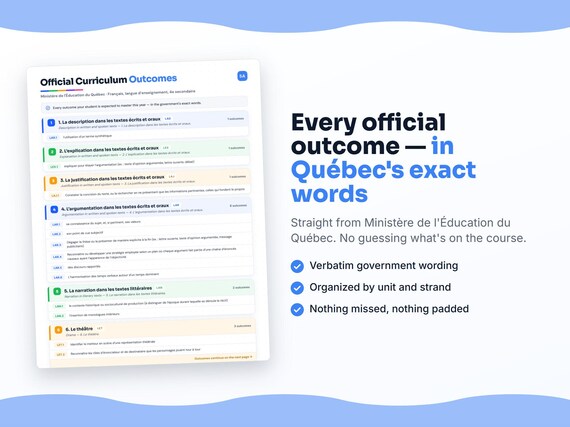
Quebec defines Français, langue d’enseignement, 4e secondaire by strands and outcomes. MapleMind teaches the same curriculum reorganized for one-skill-at-a-time tutoring — the table shows exactly where every official strand lands, and the ministry's own wording is quoted under each unit below.
Official source Québec's official education programRead it on the government site — quebec.ca ↗| Official strand | Outcomes | Where MapleMind teaches it |
|---|---|---|
| Strand S1 | 2 | 1. La description dans les textes écrits et oraux |
| Strand S2 | 4 | 2. L’explication dans les textes écrits et oraux |
| Strand S3 | 3 | 3. La justification dans les textes écrits et oraux |
| Strand S4 | 22 | 4. L’argumentation dans les textes écrits et oraux |
| Strand S5 | 8 | 5. La narration dans les textes littéraires |
| Strand S6 | 11 | 6. Le théâtre |
| Strand S7 | 5 | 7. La poésie |
| Strand S8 | 13 | 1. Les ressources de la langue pour nommer et caractériser |
| Strand S9 | 7 | 2. Les ressources de la langue pour situer dans le temps |
| S10 | 6 | 3. Les ressources de la langue pour introduire des discours rapportés (DR) |
| S11 | 10 | 4. Les ressources de la langue pour modaliser |
Every skill below, taught one on one.
 Try the first session free
How MapleMind teaches Français, langue d’enseignement, 4e secondaire — every unit, lesson, and skill
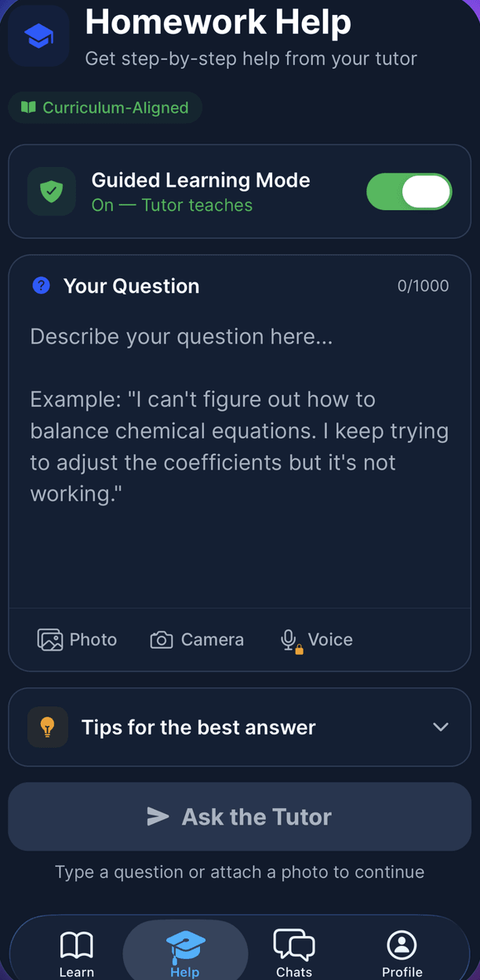
Every skill below runs as a short session: a plain-words lesson, a worked example, solving it together, then a five-question skill check that earns up to three stars. Guided Mode keeps it teaching instead of answer-handing — turning it off needs a parent's password.
Unit 11. La description dans les textes écrits et orauxOfficial strand · Strand S1
Description in written and spoken texts — 1. La description dans les textes écrits et oraux.
La concision dans la description (concision in description)
- Les procédés de reprise — l’utilisation d’un terme synthétique (reprise (reference-chaining) devices)S1.54 — Maîtrise autonome de « Les procédés de reprise » (reprise (reference-chaining) devices) au Secondaire 4 en Français L1 — registre secondaire francophone natif.
- La phrase subordonnée — l’enchâssement de phrases (subordinate clauses)S1.64 — Maîtrise autonome de « La phrase subordonnée » (subordinate clauses) au Secondaire 4 en Français L1 — registre secondaire francophone natif.
The official wording — 2 outcomes in this unit
- S1.54
l’utilisation d’un terme synthétique
- S1.64
l’enchâssement de phrases
Unit 22. L’explication dans les textes écrits et orauxOfficial strand · Strand S2
Explanation in written and spoken texts — 2. L’explication dans les textes écrits et oraux.
Expliquer pour étayer l’argumentation (explaining to support an argument)
- L’explication : causes et conséquences — expliquer pour étayer l’argumentation (explaining causes and consequences)S2.14 — Maîtrise autonome de « L’explication : causes et conséquences » (explaining causes and consequences) au Secondaire 4 en Français L1 — registre secondaire francophone natif.
- L’explication : causes et conséquences — la constatation d’une conception inadéquate… (explaining causes and consequences)S2.29 — Maîtrise autonome de « L’explication : causes et conséquences » (explaining causes and consequences) au Secondaire 4 en Français L1 — registre secondaire francophone natif.
- La phrase subordonnée — la phrase subordonnée corrélative à valeur de… (subordinate clauses)S2.40 — Maîtrise autonome de « La phrase subordonnée » (subordinate clauses) au Secondaire 4 en Français L1 — registre secondaire francophone natif.
- La cohérence et la reprise de l’information — Les organisateurs textuels (textual coherence and cohesion devices)S2.61 — Maîtrise autonome de « La cohérence et la reprise de l’information » (textual coherence and cohesion devices) au Secondaire 4 en Français L1 — registre secondaire francophone natif.
The official wording — 4 outcomes in this unit
- S2.14
expliquer pour étayer l’argumentation (ex. : texte d’opinion argumentée, lettre ouverte, débat)
- S2.29
la constatation d’une conception inadéquate (incomplète, dépassée, fausse) ou justification du besoin d’explication
- S2.40
la phrase subordonnée corrélative à valeur de conséquence et de comparaison
- S2.61
Les organisateurs textuels :
Unit 33. La justification dans les textes écrits et orauxOfficial strand · Strand S3
Justification in written and spoken texts — 3. La justification dans les textes écrits et oraux.
Insérer et resserrer la justification (inserting and tightening a justification)
- La justification : propos et raisons — Constater la concision du texte, ou la rechercher… (justifying a stance (propos + reasons))S3.46 — Maîtrise autonome de « La justification : propos et raisons » (justifying a stance (propos + reasons)) au Secondaire 4 en Français L1 — registre secondaire francophone natif.
- La cohérence et la reprise de l’information — Les organisateurs textuels (textual coherence and cohesion devices)S3.54 — Maîtrise autonome de « La cohérence et la reprise de l’information » (textual coherence and cohesion devices) au Secondaire 4 en Français L1 — registre secondaire francophone natif.
- L’insertion de séquences — Insérer une séquence justificative dans un texte… (inserting secondary sequences into a text)S3.63 — Maîtrise autonome de « L’insertion de séquences » (inserting secondary sequences into a text) au Secondaire 4 en Français L1 — registre secondaire francophone natif.
The official wording — 3 outcomes in this unit
- S3.46
Constater la concision du texte, ou la rechercher en ne présentant que les informations pertinentes, celles qui fondent le propos
- S3.54
Les organisateurs textuels
- S3.63
Insérer une séquence justificative dans un texte argumentatif
Unit 44. L’argumentation dans les textes écrits et orauxOfficial strand · Strand S4
Argumentation in written and spoken texts — 4. L’argumentation dans les textes écrits et oraux.
Analyser la situation d’une argumentation en réception (analysing the communication situation of an argument)
- Prendre en compte son destinataire — sa connaissance du sujet, et, si pertinent, ses… (taking the addressee into account)S4.3 — Maîtrise autonome de « Prendre en compte son destinataire » (taking the addressee into account) au Secondaire 4 en Français L1 — registre secondaire francophone natif.
- L’argumentation : thèse et arguments — son point de vue subjectif (building and structuring an argument)S4.4 — Maîtrise autonome de « L’argumentation : thèse et arguments » (building and structuring an argument) au Secondaire 4 en Français L1 — registre secondaire francophone natif.
- Prendre en compte son destinataire — sa connaissance du sujet, son intérêt pour le… (taking the addressee into account)S4.7 — Maîtrise autonome de « Prendre en compte son destinataire » (taking the addressee into account) au Secondaire 4 en Français L1 — registre secondaire francophone natif.
- L’analyse et la production du genre — ses connaissances, ses intérêts, son expérience,… (analysing and producing a text genre)S4.10 — Maîtrise autonome de « L’analyse et la production du genre » (analysing and producing a text genre) au Secondaire 4 en Français L1 — registre secondaire francophone natif.
Préparer son argumentation : situation et point de vue (planning an argument: situation and stance)
- L’argumentation : thèse et arguments — son point de vue subjectif (building and structuring an argument)S4.12 — Maîtrise autonome de « L’argumentation : thèse et arguments » (building and structuring an argument) au Secondaire 4 en Français L1 — registre secondaire francophone natif.
- Le contexte de production et de réception — date, lieu, support (context of production and reception)S4.16 — Maîtrise autonome de « Le contexte de production et de réception » (context of production and reception) au Secondaire 4 en Français L1 — registre secondaire francophone natif.
- L’analyse et la production du genre — Tenir compte des conditions de réalisation de la… (analysing and producing a text genre)S4.18 — Maîtrise autonome de « L’analyse et la production du genre » (analysing and producing a text genre) au Secondaire 4 en Français L1 — registre secondaire francophone natif.
- Les figures de style — Reconnaître ou introduire le sujet de la… (figures of speech (comparison, metaphor, etc.))S4.22 — Maîtrise autonome de « Les figures de style » (figures of speech (comparison, metaphor, etc.)) au Secondaire 4 en Français L1 — registre secondaire francophone natif.
Le titre accrocheur et la thèse explicite (hooking titles and explicit thesis)
- L’argumentation : thèse et arguments — la thèse ou la présenter de manière explicite à la… (building and structuring an argument)S4.25 — Maîtrise autonome de « L’argumentation : thèse et arguments » (building and structuring an argument) au Secondaire 4 en Français L1 — registre secondaire francophone natif.
- L’argumentation : thèse et arguments — les contre-arguments sont d’abord réfutés, puis la… (building and structuring an argument)S4.29 — Maîtrise autonome de « L’argumentation : thèse et arguments » (building and structuring an argument) au Secondaire 4 en Français L1 — registre secondaire francophone natif.
- L’argumentation : thèse et arguments — les procédés de réfutation comme déclarer la thèse… (building and structuring an argument)S4.32 — Maîtrise autonome de « L’argumentation : thèse et arguments » (building and structuring an argument) au Secondaire 4 en Français L1 — registre secondaire francophone natif.
- L’argumentation : thèse et arguments — les marqueurs de relation d’opposition et… (building and structuring an argument)S4.34 — Maîtrise autonome de « L’argumentation : thèse et arguments » (building and structuring an argument) au Secondaire 4 en Français L1 — registre secondaire francophone natif.
La stratégie de l’explication argumentative (the argumentative-explanation strategy)
- L’argumentation : thèse et arguments — une stratégie employée selon un plan où chaque… (building and structuring an argument)S4.37 — Maîtrise autonome de « L’argumentation : thèse et arguments » (building and structuring an argument) au Secondaire 4 en Français L1 — registre secondaire francophone natif.
- La précision du vocabulaire — les procédés explicatifs et le lexique propre à… (precise and appropriate vocabulary)S4.39 — Maîtrise autonome de « La précision du vocabulaire » (precise and appropriate vocabulary) au Secondaire 4 en Français L1 — registre secondaire francophone natif.
- La phrase subordonnée — la phrase subordonnée corrélative de comparaison (subordinate clauses)S4.41 — Maîtrise autonome de « La phrase subordonnée » (subordinate clauses) au Secondaire 4 en Français L1 — registre secondaire francophone natif.
- L’argumentation : thèse et arguments — Contenu : croyance, expérience, fait vérifiable… (building and structuring an argument)S4.44 — Maîtrise autonome de « L’argumentation : thèse et arguments » (building and structuring an argument) au Secondaire 4 en Français L1 — registre secondaire francophone natif.
Étayer les arguments : sources et marqueurs (supporting arguments: sources and connectors)
- L’analyse et la production du genre — des discours rapportés (analysing and producing a text genre)S4.46 — Maîtrise autonome de « L’analyse et la production du genre » (analysing and producing a text genre) au Secondaire 4 en Français L1 — registre secondaire francophone natif.
- L’argumentation : thèse et arguments — ou présenter une conclusion Constater… (building and structuring an argument)S4.54 — Maîtrise autonome de « L’argumentation : thèse et arguments » (building and structuring an argument) au Secondaire 4 en Français L1 — registre secondaire francophone natif.
- La cohérence et la reprise de l’information — les marqueurs de relation (textual coherence and cohesion devices)S4.50 — Maîtrise autonome de « La cohérence et la reprise de l’information » (textual coherence and cohesion devices) au Secondaire 4 en Français L1 — registre secondaire francophone natif.
- L’analyse et la production du genre — les phrases (je le reconnais volontiers) ou groupes… (analysing and producing a text genre)S4.52 — Maîtrise autonome de « L’analyse et la production du genre » (analysing and producing a text genre) au Secondaire 4 en Français L1 — registre secondaire francophone natif.
La continuité et la progression de l’argumentation (cohesion and progression in an argument)
- Les temps verbaux et leurs valeurs — L’harmonisation des temps verbaux autour d’un temps… (tenses and their values)S4.58 — Maîtrise autonome de « Les temps verbaux et leurs valeurs » (tenses and their values) au Secondaire 4 en Français L1 — registre secondaire francophone natif.
- L’analyse et la production du genre — La division en paragraphes (analysing and producing a text genre)S4.61 — Maîtrise autonome de « L’analyse et la production du genre » (analysing and producing a text genre) au Secondaire 4 en Français L1 — registre secondaire francophone natif.
The official wording — 22 outcomes in this unit
- S4.3
sa connaissance du sujet, et, si pertinent, ses valeurs
- S4.4
son point de vue subjectif
- S4.7
sa connaissance du sujet, son intérêt pour le sujet, ses valeurs
- S4.10
ses connaissances, ses intérêts, son expérience, ses valeurs
- S4.12
son point de vue subjectif
- S4.16
date, lieu, support (ex. : journal, revue, Internet)
- S4.18
Tenir compte des conditions de réalisation de la tâche (ex. : temps, résumé de la documentation, règles relatives à l’écoute et à la prise de parole pour le débat)
- S4.22
Reconnaître ou introduire le sujet de la controverse Identifier le sujet ou l’introduire par la présentation de questions et d’opinions qui entourent la controverse (champ lexical
- S4.25
Dégager la thèse ou la présenter de manière explicite à la fin (ex. : lettre ouverte, texte d’opinion argumentée, message publicitaire)
- S4.29
les contre-arguments sont d’abord réfutés, puis la thèse exposée ainsi que les arguments qui l’étayent
- S4.32
les procédés de réfutation comme déclarer la thèse adverse dépassée ou y déceler des contradictions, opposer une exception, pousser un raisonnement à l’absurde, avancer des
- S4.34
les marqueurs de relation d’opposition et d’hypothèse; la ponctuation appropriée
- S4.37
Reconnaître ou développer une stratégie employée selon un plan où chaque argument fait partie d’une chaîne d’énoncés causaux ayant l’apparence de l’objectivité
- S4.39
les procédés explicatifs et le lexique propre à l’explication, en particulier celui exprimant la cause, la conséquence et la comparaison (ex. : texte d’opinion argumentée)
- S4.41
la phrase subordonnée corrélative de comparaison (ex. : autant… que, moins Dét + N + que) ou de conséquence (ex. : si, tellement + Adj + que)
- S4.44
Contenu : croyance, expérience, fait vérifiable (indication des sources), valeur, vérité scientifique
- S4.46
des discours rapportés
- S4.54
Dégager ou présenter une conclusion Constater l’irrecevabilité de la thèse réfutée et l’intérêt de la thèse défendue
- S4.50
les marqueurs de relation (ex. : bien sûr, en dépit de, certes, même si)
- S4.52
les phrases (je le reconnais volontiers) ou groupes (à tout le moins) incidents
- S4.58
L’harmonisation des temps verbaux autour d’un temps dominant
- S4.61
La division en paragraphes
Unit 55. La narration dans les textes littérairesOfficial strand · Strand S5
Narration in literary texts — 5. La narration dans les textes littéraires.
Le récit dans son contexte de production (a narrative in its context of production)
- Le contexte de production et de réception — le contexte historique ou socioculturel de… (context of production and reception)S5.15 — Maîtrise autonome de « Le contexte de production et de réception » (context of production and reception) au Secondaire 4 en Français L1 — registre secondaire francophone natif.
- La construction de l’univers narratif — le processus d’édition : de la création à la… (building the narrative world (setting, characters, time))S5.18 — Maîtrise autonome de « La construction de l’univers narratif » (building the narrative world (setting, characters, time)) au Secondaire 4 en Français L1 — registre secondaire francophone natif.
- La construction de l’univers narratif — omniscient (connaît tout de ses personnages) non… (building the narrative world (setting, characters, time))S5.25 — Maîtrise autonome de « La construction de l’univers narratif » (building the narrative world (setting, characters, time)) au Secondaire 4 en Français L1 — registre secondaire francophone natif.
- La construction de l’univers narratif — vocabulaire exprimant les sentiments, les émotions,… (building the narrative world (setting, characters, time))S5.39 — Maîtrise autonome de « La construction de l’univers narratif » (building the narrative world (setting, characters, time)) au Secondaire 4 en Français L1 — registre secondaire francophone natif.
Dialogues et monologues intérieurs dans le récit (dialogue and interior monologue in a narrative)
- Le discours direct — l’insertion de monologues intérieurs (direct reported speech)S5.45 — Maîtrise autonome de « Le discours direct » (direct reported speech) au Secondaire 4 en Français L1 — registre secondaire francophone natif.
- L’insertion de séquences — l’insertion de séquences argumentatives (inserting secondary sequences into a text)S5.75 — Maîtrise autonome de « L’insertion de séquences » (inserting secondary sequences into a text) au Secondaire 4 en Français L1 — registre secondaire francophone natif.
- La construction de l’univers narratif — Une correspondance étroite entre les… (building the narrative world (setting, characters, time))S5.91 — Maîtrise autonome de « La construction de l’univers narratif » (building the narrative world (setting, characters, time)) au Secondaire 4 en Français L1 — registre secondaire francophone natif.
- Découverte guidée : La phrase subordonnée — enchaînement ou entrelacement de déclencheurs,… (subordinate clauses)S5.69 — Découverte guidée de « La phrase subordonnée » (subordinate clauses) au Secondaire 4 en Français L1 — registre secondaire francophone natif.
The official wording — 8 outcomes in this unit
- S5.15
le contexte historique ou socioculturel de production (à distinguer de l’époque durant laquelle se déroule le récit)
- S5.18
le processus d’édition : de la création à la publication (maison d’édition, année de publication, 1 édition, réédition; formats : texte intégral/extrait; recueil/collection; texte
- S5.25
omniscient (connaît tout de ses personnages) non participant à l’histoire (ex. : La chèvre de monsieur Séguin, Alphonse Daudet)
- S5.39
vocabulaire exprimant les sentiments, les émotions, les valeurs, les croyances ou d’autres caractéristiques sociales et culturelles
- S5.45
l’insertion de monologues intérieurs
- S5.75
l’insertion de séquences argumentatives (ex. : La Peste, Albert Camus)
- S5.91
Une correspondance étroite entre les caractéristiques des personnages, le cadre spatiotemporel, les actions, les évènements et le genre du récit
- S5.69
enchaînement ou entrelacement de déclencheurs, d’actions et d’évènements, de dénouements secondaires ou parallèles; histoires enchâssées (ex. : Les braconniers d’histoires, Nancy
Unit 66. Le théâtreOfficial strand · Strand S6
Drama — 6. Le théâtre.
Analyser la situation de communication au théâtre (analysing the communication situation of a play)
- La lecture du texte de théâtre — le metteur en scène d’une représentation théâtrale (reading and analysing drama)S6.4 — Maîtrise autonome de « La lecture du texte de théâtre » (reading and analysing drama) au Secondaire 4 en Français L1 — registre secondaire francophone natif.
- Prendre en compte son destinataire — ses caractéristiques : ses champs d’intérêt, ses… (taking the addressee into account)S6.6 — Maîtrise autonome de « Prendre en compte son destinataire » (taking the addressee into account) au Secondaire 4 en Français L1 — registre secondaire francophone natif.
- Le contexte de production et de réception — la date de production ou de publication, le lieu (context of production and reception)S6.9 — Maîtrise autonome de « Le contexte de production et de réception » (context of production and reception) au Secondaire 4 en Français L1 — registre secondaire francophone natif.
- Le titre neutre ou évocateur — Comprendre le titre (neutral or evocative title)S6.13 — Maîtrise autonome de « Le titre neutre ou évocateur » (neutral or evocative title) au Secondaire 4 en Français L1 — registre secondaire francophone natif.
Les séquences dialogales et l’univers dramatique (dialogue sequences and the dramatic world)
- L’identification des énonciateurs — Reconnaître les rôles d’énonciateur et de… (identifying the speakers in reported speech)S6.15 — Maîtrise autonome de « L’identification des énonciateurs » (identifying the speakers in reported speech) au Secondaire 4 en Français L1 — registre secondaire francophone natif.
- Le discours direct — Reconstruire l’univers dramatique Cerner les… (direct reported speech)S6.18 — Maîtrise autonome de « Le discours direct » (direct reported speech) au Secondaire 4 en Français L1 — registre secondaire francophone natif.
- La lecture du texte de théâtre — les moments clés de l’histoire (reading and analysing drama)S6.22 — Maîtrise autonome de « La lecture du texte de théâtre » (reading and analysing drama) au Secondaire 4 en Français L1 — registre secondaire francophone natif.
- L’insertion de séquences — les séquences secondaires : narrative (inserting secondary sequences into a text)S6.24 — Maîtrise autonome de « L’insertion de séquences » (inserting secondary sequences into a text) au Secondaire 4 en Français L1 — registre secondaire francophone natif.
Thèmes, valeurs et vision du monde au théâtre (themes, values and world view in drama)
- La précision du vocabulaire — Mettre en relation les situations vécues, les… (precise and appropriate vocabulary)S6.27 — Maîtrise autonome de « La précision du vocabulaire » (precise and appropriate vocabulary) au Secondaire 4 en Français L1 — registre secondaire francophone natif.
- La lecture du texte de théâtre — Reconnaître les marques d’organisation du texte Le… (reading and analysing drama)S6.29 — Maîtrise autonome de « La lecture du texte de théâtre » (reading and analysing drama) au Secondaire 4 en Français L1 — registre secondaire francophone natif.
- La lecture du texte de théâtre — changement de temps, de lieux et de décor (reading and analysing drama)S6.31 — Maîtrise autonome de « La lecture du texte de théâtre » (reading and analysing drama) au Secondaire 4 en Français L1 — registre secondaire francophone natif.
The official wording — 11 outcomes in this unit
- S6.4
Identifier le metteur en scène d’une représentation théâtrale
- S6.6
ses caractéristiques : ses champs d’intérêt, ses repères culturels
- S6.9
la date de production ou de publication, le lieu
- S6.13
Comprendre le titre
- S6.15
Reconnaître les rôles d’énonciateur et de destinataire que les personnages jouent tour à tour
- S6.18
Reconstruire l’univers dramatique Cerner les personnages (aspects physiques et caractéristiques socioculturelles, relations entre les personnages, rôles) en ayant recours aux
- S6.22
les moments clés de l’histoire
- S6.24
les séquences secondaires : narrative (ex. : personnage qui résume un épisode), justificative (ex. : personnage qui justifie un comportement) ou argumentative (ex. : personnage
- S6.27
Mettre en relation les situations vécues, les sujets abordés, les propos énoncés (et leur contexte : aparté, tirade, etc.) avec ce qui est évoqué par les manières de s’exprimer
- S6.29
Reconnaître les marques d’organisation du texte Le découpage en actes, scènes et tableaux
- S6.31
changement de temps, de lieux et de décor
Unit 77. La poésieOfficial strand · Strand S7
Poetry — 7. La poésie.
Créer un poème : situation, vers et imaginaire (creating a poem: situation, verse and imagination)
- La structure du poème — traduire son imaginaire, ses émotions, ses opinions… (the structure of a poem)S7.11 — Maîtrise autonome de « La structure du poème » (the structure of a poem) au Secondaire 4 en Français L1 — registre secondaire francophone natif.
- Le contexte de production et de réception — le contexte historique ou socioculturel de… (context of production and reception)S7.15 — Maîtrise autonome de « Le contexte de production et de réception » (context of production and reception) au Secondaire 4 en Français L1 — registre secondaire francophone natif.
- La structure du poème — réguliers (même nombre de pieds) ou libres (the structure of a poem)S7.32 — Maîtrise autonome de « La structure du poème » (the structure of a poem) au Secondaire 4 en Français L1 — registre secondaire francophone natif.
- La structure du poème — les éléments qui traduisent une prise de position… (the structure of a poem)S7.47 — Maîtrise autonome de « La structure du poème » (the structure of a poem) au Secondaire 4 en Français L1 — registre secondaire francophone natif.
La voix de l’énonciateur dans le langage poétique (the speaker’s voice in poetic language)
- L’identification des énonciateurs — Choisir de se manifester ou non comme énonciateur… (identifying the speakers in reported speech)S7.60 — Maîtrise autonome de « L’identification des énonciateurs » (identifying the speakers in reported speech) au Secondaire 4 en Français L1 — registre secondaire francophone natif.
The official wording — 5 outcomes in this unit
- S7.11
traduire son imaginaire, ses émotions, ses opinions en utilisant la langue de façon imagée
- S7.15
le contexte historique ou socioculturel de production de l’œuvre (liens avec d’autres œuvres littéraires et picturales)
- S7.32
réguliers (même nombre de pieds) ou libres
- S7.47
les éléments qui traduisent une prise de position ou un engagement
- S7.60
Choisir de se manifester ou non comme énonciateur en privilégiant certains moyens : un ton, une écriture à la première ou à la troisième personne, des choix lexicaux ou autres qui
Unit 81. Les ressources de la langue pour nommer et caractériserOfficial strand · Strand S8
Language resources for naming and describing — 1. Les ressources de la langue pour nommer et caractériser.
La majuscule des noms d’institutions et d’évènements (capitals for institutions and events)
- Le nom et son sens — pour les noms d’établissements, d’évènements, de… (the noun (common / proper) and its sense)S8.9 — Maîtrise autonome de « Le nom et son sens » (the noun (common / proper) and its sense) au Secondaire 4 en Français L1 — registre secondaire francophone natif.
- Le nom et son sens — distinction entre l’emploi à l’oral et l’emploi à… (the noun (common / proper) and its sense)S8.30 — Maîtrise autonome de « Le nom et son sens » (the noun (common / proper) and its sense) au Secondaire 4 en Français L1 — registre secondaire francophone natif.
- Le nom et son sens — emprunt (the noun (common / proper) and its sense)S8.34 — Maîtrise autonome de « Le nom et son sens » (the noun (common / proper) and its sense) au Secondaire 4 en Français L1 — registre secondaire francophone natif.
- Le groupe nominal et ses expansions — accord de l’adjectif avec un groupe nominal dont le… (the noun group and its expansions)S8.98 — Maîtrise autonome de « Le groupe nominal et ses expansions » (the noun group and its expansions) au Secondaire 4 en Français L1 — registre secondaire francophone natif.
Le groupe prépositionnel : construction et fonctions (the prepositional group: construction and functions)
- L’usage du dictionnaire — sens et choix de la préposition : recours au… (using dictionaries (print and electronic))S8.104 — Maîtrise autonome de « L’usage du dictionnaire » (using dictionaries (print and electronic)) au Secondaire 4 en Français L1 — registre secondaire francophone natif.
- Les compléments du verbe — Les groupes dans la fonction d’attribut du… (verb complements (direct / indirect))S8.120 — Maîtrise autonome de « Les compléments du verbe » (verb complements (direct / indirect)) au Secondaire 4 en Français L1 — registre secondaire francophone natif.
- Le nom et son sens — substitué à une partie de texte (the noun (common / proper) and its sense)S8.143 — Maîtrise autonome de « Le nom et son sens » (the noun (common / proper) and its sense) au Secondaire 4 en Français L1 — registre secondaire francophone natif.
- Le nom et son sens — avec déterminant indéfini (the noun (common / proper) and its sense)S8.150 — Maîtrise autonome de « Le nom et son sens » (the noun (common / proper) and its sense) au Secondaire 4 en Français L1 — registre secondaire francophone natif.
La reprise pour caractériser (reprise as characterising device)
- Les relations de sens entre les mots — par un terme générique qui reprend une partie de… (sense relations (synonym, antonym, families of words))S8.157 — Maîtrise autonome de « Les relations de sens entre les mots » (sense relations (synonym, antonym, families of words)) au Secondaire 4 en Français L1 — registre secondaire francophone natif.
- La phrase subordonnée — subordonnée qui remplit la fonction de modificateur… (subordinate clauses)S8.178 — Maîtrise autonome de « La phrase subordonnée » (subordinate clauses) au Secondaire 4 en Français L1 — registre secondaire francophone natif.
- Le nom et son sens — Les constructions possibles d’un mot : ce avec quoi… (the noun (common / proper) and its sense)S8.195 — Maîtrise autonome de « Le nom et son sens » (the noun (common / proper) and its sense) au Secondaire 4 en Français L1 — registre secondaire francophone natif.
- Découverte guidée : Les figures de style — L’antithèse (figures of speech (comparison, metaphor, etc.))S8.83 — Découverte guidée de « Les figures de style » (figures of speech (comparison, metaphor, etc.)) au Secondaire 4 en Français L1 — registre secondaire francophone natif.
L’hyperbole pour caractériser (hyperbole as characterising device)
- Découverte guidée : Le nom et son sens — L’hyperbole (the noun (common / proper) and its sense)S8.85 — Découverte guidée de « Le nom et son sens » (the noun (common / proper) and its sense) au Secondaire 4 en Français L1 — registre secondaire francophone natif.
The official wording — 13 outcomes in this unit
- S8.9
pour les noms d’établissements, d’évènements, de fêtes, de marques de commerce, de médias d’information, etc. (ex. : la visite du Parlement, la Fête du travail, une Toyota, le
- S8.30
distinction entre l’emploi à l’oral et l’emploi à l’écrit
- S8.34
emprunt (ex. : wapiti, yogourt, rafle) et emploi de régionalismes (ex. : débarbouillette, dispendieux, poutine); emprunt critiqué et anglicisme (ex. : chum, line up, appointement)
- S8.98
accord de l’adjectif avec un groupe nominal dont le noyau est un nom collectif (ex. : un groupe d’électeurs favorables/favorable)
- S8.104
sens et choix de la préposition : recours au dictionnaire
- S8.120
Les groupes dans la fonction d’attribut du complément direct
- S8.143
substitué à une partie de texte
- S8.150
avec déterminant indéfini (ex. : Ma copine collectionne les cactus, mais elle ne retient que certaines variétés.)
- S8.157
par un terme générique qui reprend une partie de phrase ou plus (ex. : Le chômage important qui sévit dans beaucoup de pays en voie de développement → Ce grave problème social)
- S8.178
subordonnée qui remplit la fonction de modificateur du verbe, de l’adjectif, etc. : la corrélative (voir Explication, Argumentation)
- S8.195
Les constructions possibles d’un mot : ce avec quoi un mot peut être associé (ex. : apporter son lunch, mais non son chien; partir à, de, pour, …) (combinatoire lexicale)
- S8.83
L’antithèse (ex. : l’histoire est belle, la réalité l’est moins)
- S8.85
L’hyperbole (ex. : Je suis crevée!; C’est un pic, c’est un cap, c’est une péninsule [pour le nez]!, Edmond Rostand)
Unit 92. Les ressources de la langue pour situer dans le tempsOfficial strand · Strand S9
Language resources for situating in time — 2. Les ressources de la langue pour situer dans le temps.
Structures syntaxiques pour situer dans le temps (syntactic structures for situating in time)
- Les figures de style — l’identification de l’auxiliaire d’aspect : il… (figures of speech (comparison, metaphor, etc.))S9.15 — Maîtrise autonome de « Les figures de style » (figures of speech (comparison, metaphor, etc.)) au Secondaire 4 en Français L1 — registre secondaire francophone natif.
- Les compléments du verbe — cas particuliers le complément direct est le pronom… (verb complements (direct / indirect))S9.27 — Maîtrise autonome de « Les compléments du verbe » (verb complements (direct / indirect)) au Secondaire 4 en Français L1 — registre secondaire francophone natif.
- Le groupe prépositionnel — un GPrép (the prepositional group and its functions)S9.34 — Maîtrise autonome de « Le groupe prépositionnel » (the prepositional group and its functions) au Secondaire 4 en Français L1 — registre secondaire francophone natif.
- La phrase subordonnée — une phrase subordonnée complétive (subordinate clauses)S9.45 — Maîtrise autonome de « La phrase subordonnée » (subordinate clauses) au Secondaire 4 en Français L1 — registre secondaire francophone natif.
Complétives et concordance des temps (complement clauses and the sequence of tenses)
- La phrase subordonnée — la réduction de la subordonnée complétive à un… (subordinate clauses)S9.59 — Maîtrise autonome de « La phrase subordonnée » (subordinate clauses) au Secondaire 4 en Français L1 — registre secondaire francophone natif.
- La concordance des temps — du sens du verbe de la phrase enchâssante : verbe… (sequence of tenses (concordance))S9.71 — Maîtrise autonome de « La concordance des temps » (sequence of tenses (concordance)) au Secondaire 4 en Français L1 — registre secondaire francophone natif.
- Les temps verbaux et leurs valeurs — verbes en –indre et –soudre (tenses and their values)S9.115 — Maîtrise autonome de « Les temps verbaux et leurs valeurs » (tenses and their values) au Secondaire 4 en Français L1 — registre secondaire francophone natif.
The official wording — 7 outcomes in this unit
- S9.15
l’identification de l’auxiliaire d’aspect : il précède le verbe et il exprime la manière dont on envisage l’évènement entre son début et sa fin (ex. : Quand il se mit à jouer de
- S9.27
cas particuliers le complément direct est le pronom en ou le, substitué à une phrase ou une partie de texte
- S9.34
un GPrép (ex. : Elle s’en alla après qu’elle nous eut salués/ après nous avoir salués.)
- S9.45
une phrase subordonnée complétive (ex. : Le fait est qu’il n’est pas venu.)
- S9.59
la réduction de la subordonnée complétive à un verbe à l’infinitif (ex. : Jonathan m’a dit parler le russe.)
- S9.71
du sens du verbe de la phrase enchâssante : verbe de volonté, de sentiment, etc. (ex. : Il exige que tu finisses ton travail.)
- S9.115
verbes en –indre et –soudre (ex. : craindre, peindre, résoudre)
Unit 103. Les ressources de la langue pour introduire des discours rapportés (DR)Official strand · S10
Language resources for reported speech — 3. Les ressources de la langue pour introduire des discours rapportés (DR).
La situation de communication du discours rapporté (the communication situation of reported speech)
- L’identification des énonciateurs — L’énonciateur est générique : les recherches,… (identifying the speakers in reported speech)S10.8 — Maîtrise autonome de « L’identification des énonciateurs » (identifying the speakers in reported speech) au Secondaire 4 en Français L1 — registre secondaire francophone natif.
- L’identification des énonciateurs — Interpréter l’attitude de l’énonciateur (plutôt… (identifying the speakers in reported speech)S10.13 — Maîtrise autonome de « L’identification des énonciateurs » (identifying the speakers in reported speech) au Secondaire 4 en Français L1 — registre secondaire francophone natif.
- Les figures et marques de modalisation — le choix d’autres moyens de modalisation, tels… (figures and marks that modalise)S10.16 — Maîtrise autonome de « Les figures et marques de modalisation » (figures and marks that modalise) au Secondaire 4 en Français L1 — registre secondaire francophone natif.
- Le discours direct — l’aparté, le monologue, le soliloque, la tirade (au… (direct reported speech)S10.22 — Maîtrise autonome de « Le discours direct » (direct reported speech) au Secondaire 4 en Français L1 — registre secondaire francophone natif.
Les marques du discours rapporté, du récit au théâtre (marks of reported speech from narrative to drama)
- La lecture du texte de théâtre — Le retrait à la ligne et le nom des personnages… (reading and analysing drama)S10.31 — Maîtrise autonome de « La lecture du texte de théâtre » (reading and analysing drama) au Secondaire 4 en Français L1 — registre secondaire francophone natif.
- L’identification des énonciateurs — Observer les ressemblances et les différences entre… (identifying the speakers in reported speech)S10.53 — Maîtrise autonome de « L’identification des énonciateurs » (identifying the speakers in reported speech) au Secondaire 4 en Français L1 — registre secondaire francophone natif.
The official wording — 6 outcomes in this unit
- S10.8
L’énonciateur est générique : les recherches, l’histoire, la rumeur, le proverbe, l’opinion publique, etc. (ex. : L’histoire a montré que les inventions ont souvent plusieurs
- S10.13
Interpréter l’attitude de l’énonciateur (plutôt neutre, plutôt subjective) ou choisir de marquer ou non son attitude par rapport au propos rapporté ou à l’auteur du propos La
- S10.16
le choix d’autres moyens de modalisation, tels certains adverbes, certains types et formes de phrases, certains modes et temps verbaux, une ponctuation expressive, la prosodie
- S10.22
l’aparté, le monologue, le soliloque, la tirade (au théâtre)
- S10.31
Le retrait à la ligne et le nom des personnages (pièce de théâtre)
- S10.53
Observer les ressemblances et les différences entre la langue orale et la langue écrite pour une même variété de langue (ex. : à l’oral, un énonciateur peut reprendre
Unit 114. Les ressources de la langue pour modaliserOfficial strand · S11
Language resources for modalisation — 4. Les ressources de la langue pour modaliser.
La présence de l’énonciateur et du destinataire (marks of speaker and addressee presence)
- Prendre en compte son destinataire — Des phrases interrogatives qui ne s’adressent pas… (taking the addressee into account)S11.4 — Maîtrise autonome de « Prendre en compte son destinataire » (taking the addressee into account) au Secondaire 4 en Français L1 — registre secondaire francophone natif.
- La formation des mots — avec suffixe en –ard (word formation (derivation, composition))S11.12 — Maîtrise autonome de « La formation des mots » (word formation (derivation, composition)) au Secondaire 4 en Français L1 — registre secondaire francophone natif.
- La formation des mots — avec les préfixes hyper ou super (word formation (derivation, composition))S11.15 — Maîtrise autonome de « La formation des mots » (word formation (derivation, composition)) au Secondaire 4 en Français L1 — registre secondaire francophone natif.
- Les marques énonciatives — des interjections (enunciative marks (speaker/addressee presence))S11.18 — Maîtrise autonome de « Les marques énonciatives » (enunciative marks (speaker/addressee presence)) au Secondaire 4 en Français L1 — registre secondaire francophone natif.
Les auxiliaires de modalité (modal auxiliaries)
- Les marques énonciatives — l’obligation ou la prescription (enunciative marks (speaker/addressee presence))S11.24 — Maîtrise autonome de « Les marques énonciatives » (enunciative marks (speaker/addressee presence)) au Secondaire 4 en Français L1 — registre secondaire francophone natif.
- Les marques énonciatives — la certitude, le faux, l’incertain (enunciative marks (speaker/addressee presence))S11.27 — Maîtrise autonome de « Les marques énonciatives » (enunciative marks (speaker/addressee presence)) au Secondaire 4 en Français L1 — registre secondaire francophone natif.
- Le pronom — le pronom nous pour montrer l’adhésion de plusieurs… (the pronoun as a naming/reprise device)S11.39 — Maîtrise autonome de « Le pronom » (the pronoun as a naming/reprise device) au Secondaire 4 en Français L1 — registre secondaire francophone natif.
- Les procédés de reprise — l’euphémisme (reprise (reference-chaining) devices)S11.33 — Maîtrise autonome de « Les procédés de reprise » (reprise (reference-chaining) devices) au Secondaire 4 en Français L1 — registre secondaire francophone natif.
Litote et ponctuation expressive pour modaliser (litotes and expressive punctuation as modalisers)
- Les marques énonciatives — litote (enunciative marks (speaker/addressee presence))S11.36 — Maîtrise autonome de « Les marques énonciatives » (enunciative marks (speaker/addressee presence)) au Secondaire 4 en Français L1 — registre secondaire francophone natif.
- Les figures et marques de modalisation — Reconnaître le sens d’une ponctuation expressive ou… (figures and marks that modalise)S11.46 — Maîtrise autonome de « Les figures et marques de modalisation » (figures and marks that modalise) au Secondaire 4 en Français L1 — registre secondaire francophone natif.
The official wording — 10 outcomes in this unit
- S11.4
Des phrases interrogatives qui ne s’adressent pas spécifiquement au destinataire (ex. : Comment est-il possible que ces enfants aient autant de difficulté à décrocher leur
- S11.12
avec suffixe en –ard (ex. : vantard); en –asse (ex. : paperasse)
- S11.15
avec les préfixes hyper ou super (ex. : C’est superintéressant); avec le suffixe –issime (ex. : C’est rarissime)
- S11.18
des interjections (ex. : Hélas!; Bravo!; Ah!; Ho!; Chapeau!; Génial!)
- S11.24
l’obligation ou la prescription (ex. : falloir)
- S11.27
la certitude, le faux, l’incertain (ex. : savoir, paraître, sembler)
- S11.39
le pronom nous pour montrer l’adhésion de plusieurs personnes à son propos
- S11.33
l’euphémisme (ex. : rationalisation de l’entreprise pour congédiements)
- S11.36
litote (ex. : Ça ne sent pas la rose.)
- S11.46
Reconnaître le sens d’une ponctuation expressive ou utiliser une telle ponctuation Le point d’exclamation dans des phrases déclaratives (ex. : Je t’aime!; Elle a une voiture verte

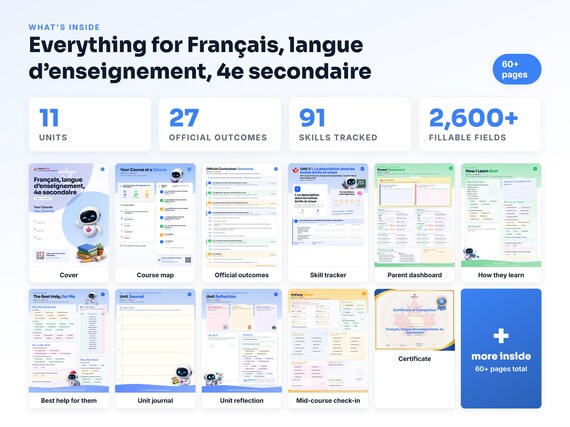

Printable workbook · A keepsake of the year
A Français, langue d’enseignement, 4e secondaire workbook worth keeping
Built from the same official curriculum as this page. Before and after each skill above, your student colours in how sure they feel — so the two of you can see, on one page, what's clicking and what needs another look. It's a quiet way to follow how the year is really going.
By June it's full of their own handwriting: units worked through, confidence grown, a mid-year check-in, notes from parent-teacher night, and a certificate at the end. Less a worksheet, more a record of the year worth keeping on the shelf.
Instant download · see every page, reviews and the full description · five or more workbooks are $2.99 each
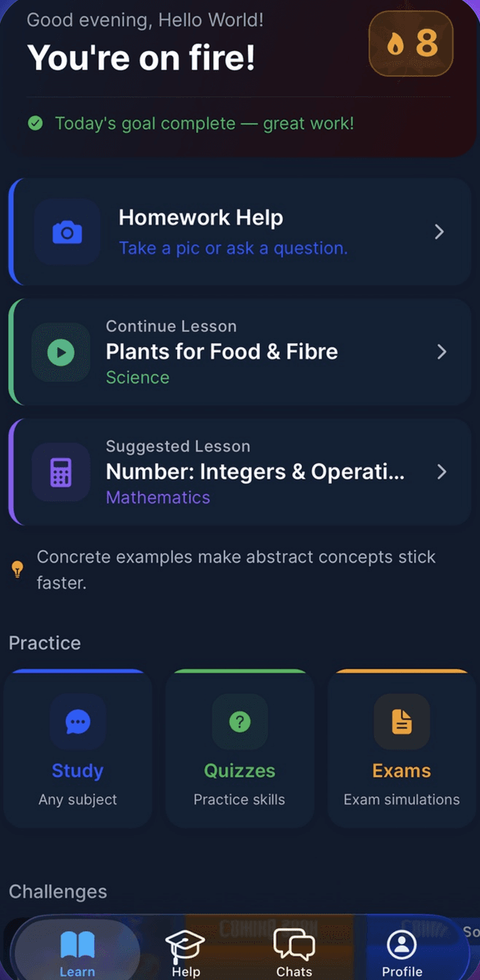
What it looks like in the app
Common questions
Can MapleMind help me with Français, langue d’enseignement, 4e secondaire?
Yes. MapleMind's AI tutor covers all 91 skills in Quebec's Français, langue d’enseignement, 4e secondaire — you pick the exact skill, and the tutor teaches it step by step: a short lesson, a worked example, solving together, then a skill check to show it stuck.
Is MapleMind aligned to Quebec's official curriculum?
Yes. Every skill in this course maps to an official outcome code from Quebec's Secondaire 4 French curriculum, and the ministry's own wording is quoted under each unit on this page — with the official government source linked so you can check it yourself.
What does MapleMind cost?
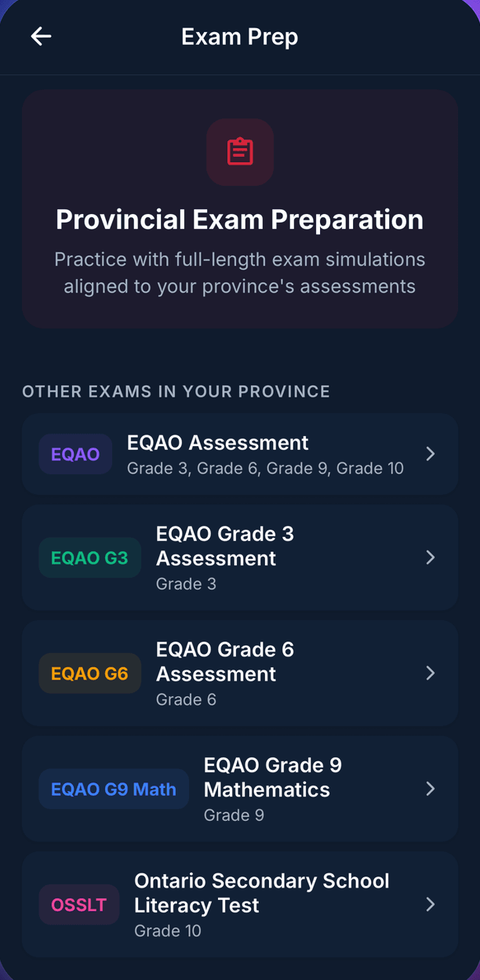
It's free to start — 5 tutoring chats and a practice quiz every day, no credit card. A Pro subscription ($9.99/month or $49.99/year CAD, 7-day free trial) unlocks unlimited tutoring, practice, and exam simulations.
What if I'm stuck on just one topic?
That's the point of skill-level tutoring: open Français, langue d’enseignement, 4e secondaire in the app, tap the exact skill from the list on this page, and the tutor teaches just that — no wading through lessons you don't need.
Does MapleMind work in French or other languages?
Yes — 14 languages, including French. Both the app and the tutor's explanations switch to the language you choose.
Where can I see the official Quebec curriculum for Français, langue d’enseignement, 4e secondaire?
The official source is linked on this page — Québec's official education program. The outline here follows it: every MapleMind skill carries its official outcome code, and the ministry's own wording is quoted under each unit.
Keep exploring
Ready when you are
Pick a skill from this page and see it taught properly — free, in the browser, in under a minute.