Get help with Science and Technology, Grade 4
Most tutoring makes your child sit through material your child already knows. MapleMind flips that: pick the exact skill that's causing trouble — any of the 39 below — and the tutor teaches just that one, step by step, as many times as it takes. Ask questions in plain words, any time of day, in English, French, or 12 other languages.
The official Ontario Science and Technology, Grade 4 curriculum
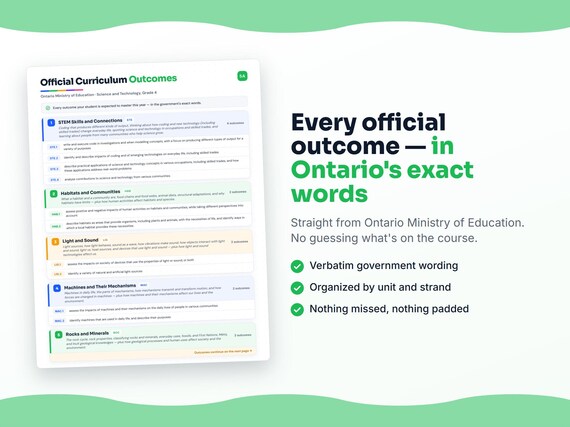
Ontario defines Science and Technology, Grade 4 by strands and outcomes. MapleMind teaches the same curriculum reorganized for one-skill-at-a-time tutoring — the table shows exactly where every official strand lands, and the ministry's own wording is quoted under each unit below.
Official source Ontario's official science curriculumRead it on the government site — dcp.edu.gov.on.ca ↗| Official strand | Outcomes | Where MapleMind teaches it |
|---|---|---|
| Strand A | 4 | STEM Skills and Connections |
| Strand B | 9 | Habitats and Communities |
| Strand C | 10 | Light and Sound |
| Strand D | 7 | Machines and Their Mechanisms |
| Strand E | 8 | Rocks and Minerals |
Every skill below, taught one on one.
 Try the first session free
How MapleMind teaches Science and Technology, Grade 4 — every unit, lesson, and skill
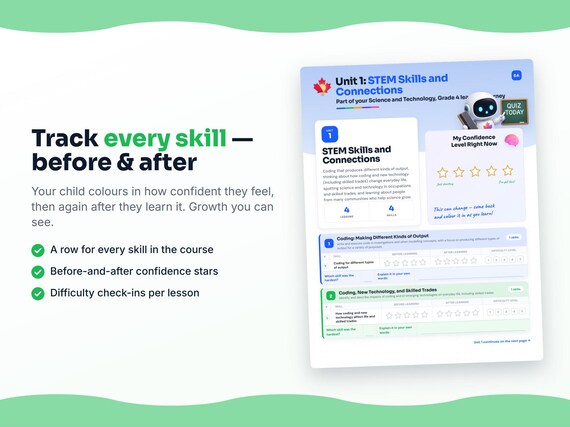
Every skill below runs as a short session: a plain-words lesson, a worked example, solving it together, then a five-question skill check that earns up to three stars. Guided Mode keeps it teaching instead of answer-handing — turning it off needs a parent's password.
Unit 1STEM Skills and ConnectionsOfficial strand · Strand A
Coding that produces different kinds of output, thinking about how coding and new technology (including skilled trades) change everyday life, spotting science and technology in occupations and skilled trades, and learning about people from many communities who help science grow.
Coding: Making Different Kinds of Output
- Coding for different types of outputA2.1 — Write and run code, focusing on producing different types of output for a variety of purposes.
Coding, New Technology, and Skilled Trades
- How coding and new technology affect life and skilled tradesA2.2 — Identify and describe how coding and new technology change everyday life, including in the skilled trades.
Science and Technology in Jobs and Trades
- Science and technology in occupations and skilled tradesA3.1 — Describe real uses of science and technology in various occupations, including skilled trades, and how they help solve real-world problems.
People Who Help Science Grow
- Learning about contributions from many communitiesA3.3 — Analyse and describe how people from many different communities have contributed to science and technology.
The official wording — 4 outcomes in this unit
- A2.1
write and execute code in investigations and when modelling concepts, with a focus on producing different types of output for a variety of purposes
- A2.2
identify and describe impacts of coding and of emerging technologies on everyday life, including skilled trades
- A3.1
describe practical applications of science and technology concepts in various occupations, including skilled trades, and how these applications address real-world problems
- A3.3
analyse contributions to science and technology from various communities
Unit 2Habitats and CommunitiesOfficial strand · Strand B
What a habitat and a community are, food chains and food webs, animal diets, structural adaptations, and why habitats have limits — plus how human activities affect habitats and species.
Humans, Habitats, and Species
- How people affect habitats and communitiesB1.1 — Assess the positive and negative impacts of human activities on habitats and communities, considering different perspectives.
- When a species disappearsB1.2 — Analyse the impact that the depletion or extinction of a species has on its habitat and community.
- Protecting species from disappearingB1.2 — Describe possible actions to prevent the depletion or extinction of species.
Habitats, Food Webs, and Adaptations
- What a habitat providesB2.1 — Describe habitats as areas that provide organisms with the necessities of life, and identify how a local habitat provides them.
- Communities of interacting speciesB2.2 — Describe a community as a group of interacting species sharing a habitat, and identify factors that affect their ability to survive.
- Food chains: producers, consumers, decomposersB2.3 — Describe the relationship of organisms in a food chain, and classify them as producers, consumers, or decomposers.
- Food websB2.4 — Show an understanding of a food web as many food chains connected together in a natural community.
- Carnivores, herbivores, and omnivoresB2.5 — Describe how animals are categorized by their diet, and classify animals as carnivores, herbivores, or omnivores.
- Structural adaptations for survivalB2.6 — Describe structural adaptations of plants and animals and how they help the organisms survive in their habitats.
- Why habitats have limitsB2.7 — Explain why all habitats have limits to the number of plants and animals they can support.
The official wording — 9 outcomes in this unit
- B1.1
assess positive and negative impacts of human activities on habitats and communities, while taking different perspectives into account
- B1.2
analyse the impact of the depletion or extinction of a species on its habitat and community
- B2.1
describe habitats as areas that provide organisms, including plants and animals, with the necessities of life, and identify ways in which a local habitat provides these necessities
- B2.2
describe a community as a group of interacting species sharing a common habitat, and identify factors that affect the ability of a community of plants and animals to survive in a local habitat
- B2.3
describe the relationship of organisms in a food chain, and classify organisms as producers, consumers, or decomposers
- B2.4
demonstrate an understanding of a food web as the interconnection of multiple food chains in a natural community
- B2.5
describe how animals are categorized according to their diet, and categorize various animals as carnivores, herbivores, or omnivores
- B2.6
describe structural adaptations of a variety of plants and animals and how these adaptations allow the organisms to survive in specific habitats
- B2.7
explain why all habitats have limits to the number of plants and animals they can support
Unit 3Light and SoundOfficial strand · Strand C
Light sources, how light behaves, sound as a wave, how vibrations make sound, how objects interact with light and sound, light vs. heat sources, and devices that use light and sound — plus how light and sound technologies affect us.
Light, Sound, and Technology
- Devices that use light or soundC1.1 — Assess the impacts on society of devices that use the properties of light, sound, or both.
- Light and sound energy in the environmentC1.2 — Assess the environmental impacts of light energy and sound energy from various technologies, considering different perspectives.
Exploring Light and Sound
- Natural and artificial light sourcesC2.1 — Identify a variety of natural and artificial light sources.
- Emitting light vs. reflecting lightC2.2 — Distinguish between objects and living things that give off their own light and those that reflect light from other sources.
- Properties of lightC2.3 — Describe properties of light, including that it travels in a straight path and can be absorbed, reflected, and refracted.
- Properties of soundC2.4 — Describe properties of sound, including that it travels through a medium as a wave and can be absorbed, reflected, and modified.
- How vibrations make soundC2.5 — Explain how vibrations cause sound waves.
- How objects interact with light and soundC2.6 — Describe how different objects and materials interact with light and sound energy.
- Light sources with and without heatC2.7 — Distinguish between light sources that give off both light and heat and those that give off light but little heat.
- Sensory organs and devices for light and soundC2.8 — Identify sensory organs and devices that make use of the properties of light and sound.
The official wording — 10 outcomes in this unit
- C1.1
assess the impacts on society of devices that use the properties of light or sound, or both
- C1.2
assess the impacts on the environment of light energy and sound energy produced by various technologies, while taking different perspectives into account
- C2.1
identify a variety of natural and artificial light sources
- C2.2
distinguish between objects and living things that emit their own light and those that reflect light from other sources
- C2.3
describe properties of light, including that light travels in a straight path and that light can be absorbed, reflected, and refracted
- C2.4
describe properties of sound, including that sound travels through a medium as a wave and that sound can be absorbed or reflected and modified
- C2.5
explain how vibrations cause sound waves
- C2.6
describe how different objects and materials interact with light and sound energy
- C2.7
distinguish between sources of light that emit both light and heat and those that emit light but little heat
- C2.8
identify sensory organs and devices that make use of the properties of light and sound
Unit 4Machines and Their MechanismsOfficial strand · Strand D
Machines in daily life, the parts of mechanisms, how mechanisms transmit and transform motion, and how forces are changed in machines — plus how machines and their mechanisms affect our lives and the environment.
How Machines Change Our World
- Machines in daily lifeD1.1 — Assess the impacts of machines and their mechanisms on the daily lives of people in various communities.
- Comparing machines' environmental impactsD1.2 — Assess and compare the environmental impacts of using different machines designed for similar purposes.
Mechanisms and Motion
- Machines used in daily lifeD2.1 — Identify machines used in daily life and describe their purposes.
- The parts of a mechanismD2.2 — Identify the parts of various mechanisms and describe the purpose of each part.
- How mechanisms transmit motionD2.3 — Describe how different mechanisms transmit various types of motion, including rotary motion, from one system to another.
- How mechanisms transform motionD2.4 — Describe how mechanisms transform motion, including changing the plane of motion and the speed or direction.
- How forces change in machinesD2.5 — Explain how forces are changed in a variety of machines.
The official wording — 7 outcomes in this unit
- D1.1
assess the impacts of machines and their mechanisms on the daily lives of people in various communities
- D1.2
assess and compare the environmental impacts of using different machines designed for similar purposes
- D2.1
identify machines that are used in daily life, and describe their purposes
- D2.2
identify the parts of various mechanisms and describe the purpose of each part
- D2.3
describe how different mechanisms transmit various types of motion, including rotary motion, from one system to another
- D2.4
describe how mechanisms transform motion, including how they can change the geometric plane in which the motion occurs and the speed and/or direction of motion
- D2.5
explain how forces are changed in a variety of machines
Unit 5Rocks and MineralsOfficial strand · Strand E
The rock cycle, rock properties, classifying rocks and minerals, everyday uses, fossils, and First Nations, Métis, and Inuit geological knowledges — plus how geological processes and human uses affect society and the environment.
Geology, People, and the Environment
- How geological processes affect usE1.1 — Analyse ways that geological processes affect society and the environment.
- Using rocks and mineralsE1.2 — Assess the social and environmental impacts of extracting, refining, manufacturing, recycling, and disposing of products made from rocks and minerals, considering different perspectives.
Exploring Rocks and Minerals
- The rock cycleE2.1 — Explain the geological processes that form igneous, sedimentary, and metamorphic rocks, using the rock cycle.
- Properties of rocksE2.2 — Describe the physical properties of igneous, sedimentary, and metamorphic rocks.
- Classifying rocks and mineralsE2.3 — Classify different rocks and minerals by their composition and physical properties, using various tests and criteria.
- Everyday uses of rocks and mineralsE2.4 — Describe everyday uses of rocks and minerals.
- Fossils and Earth's historyE2.5 — Describe how fossils are formed and what information they can provide about Earth's history.
- First Nations, Métis, and Inuit geological knowledgesE2.6 — Show an understanding of First Nations, Métis, and Inuit geological knowledges used in choosing rocks and minerals for specific purposes.
The official wording — 8 outcomes in this unit
- E1.1
analyse ways in which geological processes impact society and the environment
- E1.2
assess social and environmental impacts of extracting and refining rocks and minerals and of manufacturing, recycling, and disposing of products derived from rocks and minerals, while taking various perspectives into account
- E2.1
explain geological processes that result in the formation of igneous, sedimentary, and metamorphic rocks, using the rock cycle
- E2.2
describe the physical properties of igneous, sedimentary, and metamorphic rocks
- E2.3
classify different rocks and minerals according to their composition and physical properties, using various tests and criteria
- E2.4
describe everyday uses of rocks and minerals
- E2.5
describe how fossils are formed and what information they can provide about Earth’s history
- E2.6
demonstrate an understanding of First Nations, Métis, and Inuit geological knowledges that are used in the selection of different rocks and minerals for specific purposes
Printable workbook · A keepsake of the year
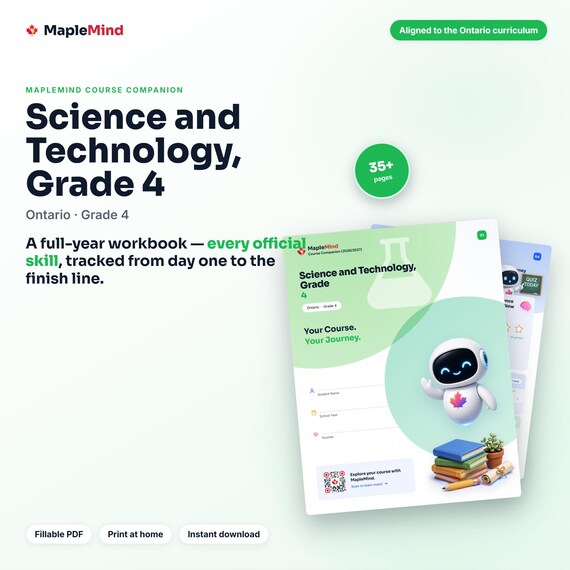
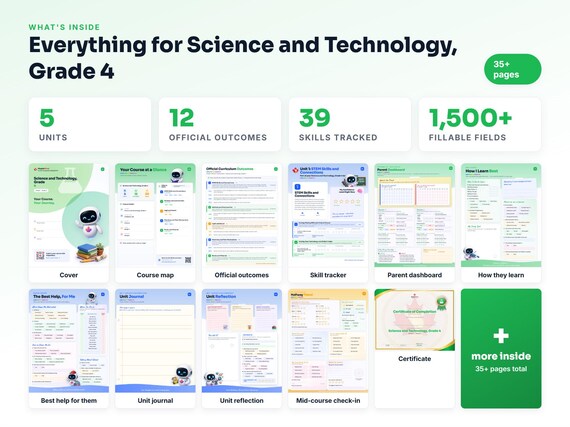
A Science and Technology, Grade 4 workbook worth keeping
Built from the same official curriculum as this page. Before and after each skill above, your student colours in how sure they feel — so the two of you can see, on one page, what's clicking and what needs another look. It's a quiet way to follow how the year is really going.
By June it's full of their own handwriting: units worked through, confidence grown, a mid-year check-in, notes from parent-teacher night, and a certificate at the end. Less a worksheet, more a record of the year worth keeping on the shelf.
Instant download · see every page, reviews and the full description · five or more workbooks are $2.99 each
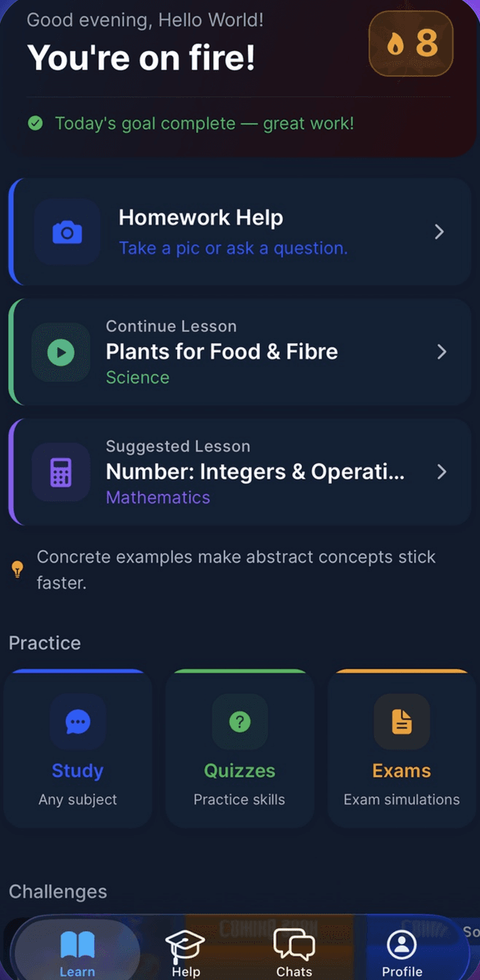
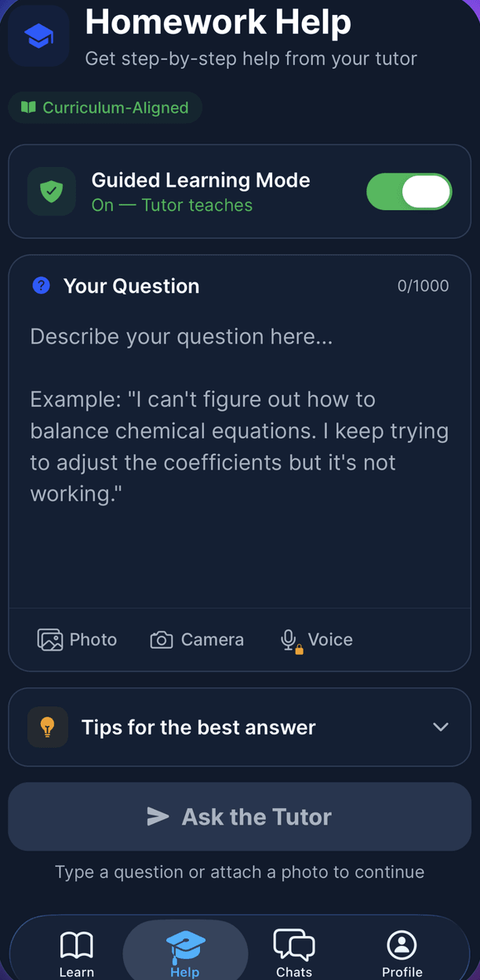
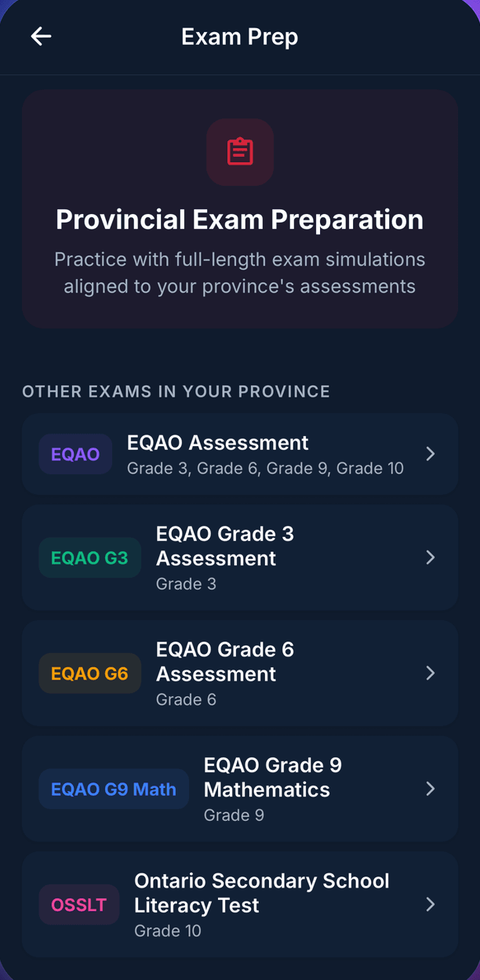
What it looks like in the app
Common questions
Can MapleMind help my child with Science and Technology, Grade 4?
Yes. MapleMind's AI tutor covers all 39 skills in Ontario's Science and Technology, Grade 4 — your child picks the exact skill, and the tutor teaches it step by step: a short lesson, a worked example, solving together, then a skill check to show it stuck.
Is MapleMind aligned to Ontario's official curriculum?
Yes. Every skill in this course maps to an official outcome code from Ontario's Grade 4 Science curriculum, and the ministry's own wording is quoted under each unit on this page — with the official government source linked so you can check it yourself.
What does MapleMind cost?
It's free to start — 5 tutoring chats and a practice quiz every day, no credit card. A Pro subscription ($9.99/month or $49.99/year CAD, 7-day free trial) unlocks unlimited tutoring, practice, and exam simulations.
What if my child is stuck on just one topic?
That's the point of skill-level tutoring: open Science and Technology, Grade 4 in the app, tap the exact skill from the list on this page, and the tutor teaches just that — no wading through lessons your child doesn't need.
Does MapleMind work in French or other languages?
Yes — 14 languages, including French. Both the app and the tutor's explanations switch to the language your child chooses.
Where can I see the official Ontario curriculum for Science and Technology, Grade 4?
The official source is linked on this page — Ontario's official science curriculum. The outline here follows it: every MapleMind skill carries its official outcome code, and the ministry's own wording is quoted under each unit.
Keep exploring
Ready when you are
Pick a skill from this page and see it taught properly — free, in the browser, in under a minute.