Get help with Science, Grade 8
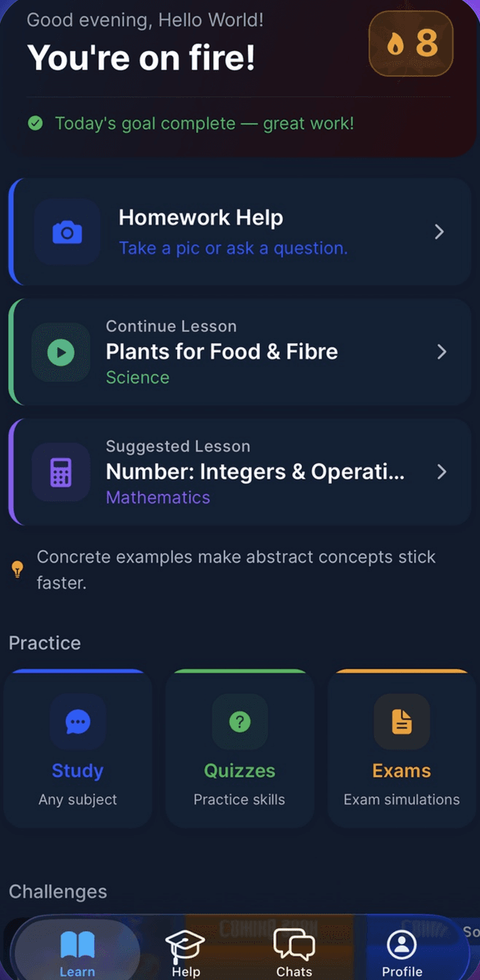
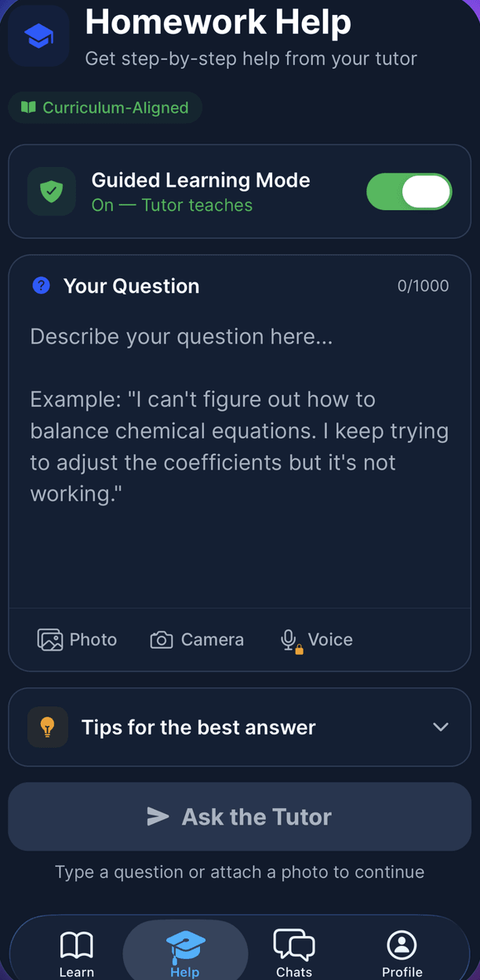
Most tutoring makes you sit through material you already know. MapleMind flips that: pick the exact skill that's causing trouble — any of the 35 below — and the tutor teaches just that one, step by step, as many times as it takes. Ask questions in plain words, any time of day, in English, French, or 12 other languages.
The official Nova Scotia Science, Grade 8 curriculum
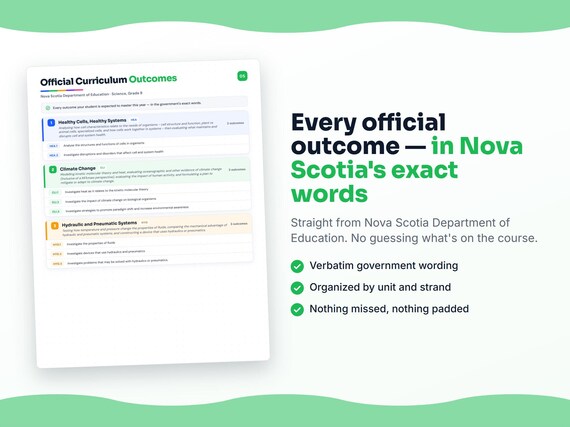
Nova Scotia defines Science, Grade 8 by strands and outcomes. MapleMind teaches the same curriculum reorganized for one-skill-at-a-time tutoring — the table shows exactly where every official strand lands, and the ministry's own wording is quoted under each unit below.
Official source Nova Scotia's official curriculumRead it on the government site — curriculum.novascotia.ca ↗| Official strand | Outcomes | Where MapleMind teaches it |
|---|---|---|
| Strand 1 | 9 | Healthy Cells, Healthy Systems |
| Strand 2 | 15 | Climate Change |
| Strand 3 | 11 | Hydraulic and Pneumatic Systems |
Every skill below, taught one on one.
 Try the first session free
How MapleMind teaches Science, Grade 8 — every unit, lesson, and skill
Every skill below runs as a short session: a plain-words lesson, a worked example, solving it together, then a five-question skill check that earns up to three stars. Guided Mode keeps it teaching instead of answer-handing — turning it off needs a parent's password.
Unit 1Healthy Cells, Healthy SystemsOfficial strand · Strand 1
Analysing how cell characteristics relate to the needs of organisms - cell structure and function, plant vs animal cells, specialized cells, and how cells work together in systems - then evaluating what maintains and disrupts cell and system health.
Cells and Systems
- Structures and functions of cellssci8.1.1 — Analyse the structures and functions of cells in organisms.
- Comparing animal and plant cellssci8.1.2 — Compare animal cells and plant cells.
- Specialized cells and their functionssci8.1.3 — Analyse the characteristics of specialized cells in relation to their function in the system.
- How cells work together in systemssci8.1.4 — Investigate how cells work together in systems.
- Needs of cells and systemssci8.1.5 — Investigate the needs of cells and systems.
Cell and System Health
- Disruptions and disorders of healthsci8.2.1 — Investigate disruptions and disorders that affect cell and system health.
- Impact of disruptions on healthsci8.2.2 — Evaluate the impact of disruptions and disorders on cell and system health.
- Technologies and careers in healthsci8.2.3 — Investigate technologies and careers that address cell and system health.
- Ways to maintain health, including Mi'kmawsci8.2.4 — Evaluate ways to maintain health from a number of perspectives, including Mi'kmaw.
The official wording — 9 outcomes in this unit
- sci8.1.1
Analyse the structures and functions of cells in organisms
- sci8.1.2
Compare animal and plant cells
- sci8.1.3
Analyse characteristics of specialized cells in relation to their function in the system
- sci8.1.4
Investigate how cells work together in systems
- sci8.1.5
Investigate the needs of cells and systems
- sci8.2.1
Investigate disruptions and disorders that affect cell and system health
- sci8.2.2
Evaluate the impact of disruptions and disorders on cell/system health.
- sci8.2.3
Investigate technologies and careers that address cell/system health.
- sci8.2.4
Evaluate ways to maintain health from a number of perspectives, including Mi’kmaw
Unit 2Climate ChangeOfficial strand · Strand 2
Modelling kinetic molecular theory and heat, evaluating oceanographic and other evidence of climate change (inclusive of a Mi'kmaw perspective), evaluating the impact of human activity, and formulating a plan to mitigate or adapt to climate change.
Heat and Kinetic Molecular Theory
- Heat and kinetic molecular theorysci8.3.1 — Investigate heat as it relates to the kinetic molecular theory.
- Conducting and insulating materialssci8.3.2 — Evaluate materials that conduct or insulate heat.
- Heat transfersci8.3.3 — Investigate how heat transfers between objects.
- Heat absorption and the greenhouse effectsci8.3.4 — Analyse heat absorption in the context of the greenhouse effect.
Evidence and Causes of Climate Change
- Impact of climate change on organismssci8.4.1 — Investigate the impact of climate change on biological organisms.
- Oceanographic evidence of climate changesci8.4.2 — Evaluate oceanographic data for evidence of climate change.
- Measuring climatic indicatorssci8.4.3 — Measure climatic indicators using probeware.
- Impact of climate change on communitiessci8.4.4 — Analyse the impact of climate change on various communities, including Mi'kmaw.
- Causes of climate changesci8.5.1 — Analyse the causes of climate change.
- Environmental impacts of energy sourcessci8.5.2 — Evaluate the environmental impacts of various sources of energy.
- How climate change is being expeditedsci8.5.3 — Analyse how climate change is being expedited (sped up).
Climate Action
- Promoting environmental awarenesssci8.6.1 — Investigate strategies to promote a shift in thinking and increase environmental awareness.
- Climate change solutions, including Mi'kmawsci8.6.2 — Investigate climate change solutions inclusive of a Mi'kmaw perspective.
- Evaluating green technologiessci8.6.3 — Evaluate the environmental impact of green technologies.
- Implications of climate solutionssci8.6.4 — Evaluate the implications of potential climate change solutions.
The official wording — 15 outcomes in this unit
- sci8.3.1
Investigate heat as it relates to the kinetic molecular theory
- sci8.3.2
Evaluate conducting and insulating materials
- sci8.3.3
Investigate heat transference
- sci8.3.4
Analyse heat absorption in the context of the greenhouse effect
- sci8.4.1
Investigate the impact of climate change on biological organisms
- sci8.4.2
Evaluate oceanographic data for evidence of climate change
- sci8.4.3
Measure climatic indicators using probeware.
- sci8.4.4
Analyse the impact of climate change on various communities, including Mi’kmaw.
- sci8.5.1
Analyse the causes of climate change
- sci8.5.2
Evaluate the environmental impacts of various sources of energy
- sci8.5.3
Analyse how climate change is being expedited
- sci8.6.1
Investigate strategies to promote paradigm shift and increase environmental awareness
- sci8.6.2
Investigate climate change solutions inclusive of a Mi’kmaw perspective
- sci8.6.3
Evaluate the environmental impact of green technologies
- sci8.6.4
Evaluate the implications of potential climate change solutions
Unit 3Hydraulic and Pneumatic SystemsOfficial strand · Strand 3
Testing how temperature and pressure change the properties of fluids, comparing the mechanical advantage of hydraulic and pneumatic systems, and constructing a device that uses hydraulics or pneumatics.
Properties of Fluids
- Properties of fluidssci8.7.1 — Investigate the properties of fluids.
- Factors that affect fluid propertiessci8.7.2 — Test factors that affect fluid properties.
- Relationships among fluid propertiessci8.7.3 — Analyse the relationships between temperature, volume, pressure, compressibility, viscosity, and density.
- Measuring temperature and pressuresci8.7.4 — Measure temperature and pressure with probeware.
Hydraulics and Pneumatics
- Devices that use hydraulics and pneumaticssci8.8.1 — Investigate devices that use hydraulics and pneumatics.
- Comparing hydraulic and pneumatic systemssci8.8.2 — Compare hydraulic and pneumatic systems.
- How mechanical advantage is createdsci8.8.3 — Investigate how mechanical advantage is created in hydraulic and pneumatic devices.
Building a Fluid-Powered Device
- Problems solved with hydraulics or pneumaticssci8.9.1 — Investigate problems that may be solved with hydraulics or pneumatics.
- Applying fluid properties to buildsci8.9.2 — Apply the properties of fluids in building a device.
- Evaluating the devicesci8.9.3 — Evaluate devices for efficiency and effectiveness.
- Carrying out the device designsci8.9.4 — Implement a design for a hydraulic or pneumatic device.
The official wording — 11 outcomes in this unit
- sci8.7.1
Investigate the properties of fluids
- sci8.7.2
Test factors that affect fluid properties
- sci8.7.3
Analyse the relationships between temperature, volume, pressure, compressibility, viscosity, and density
- sci8.7.4
Measure temperature and pressure with probeware
- sci8.8.1
Investigate devices that use hydraulics and pneumatics
- sci8.8.2
Compare hydraulic and pneumatic systems
- sci8.8.3
Investigate how mechanical advantage is created in hydraulic and pneumatic devices
- sci8.9.1
Investigate problems that may be solved with hydraulics or pneumatics.
- sci8.9.2
Apply the properties of fluids in building a device
- sci8.9.3
Evaluate devices for efficiency and effectiveness
- sci8.9.4
Implement a design for a hydraulic or pneumatic device
Printable workbook · A keepsake of the year
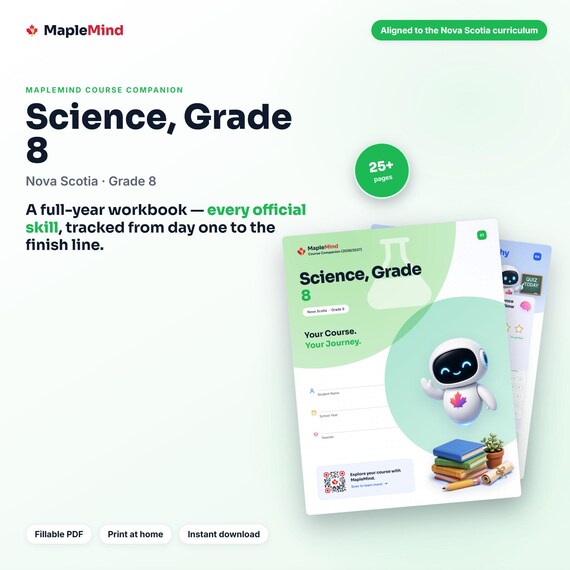
A Science, Grade 8 workbook worth keeping
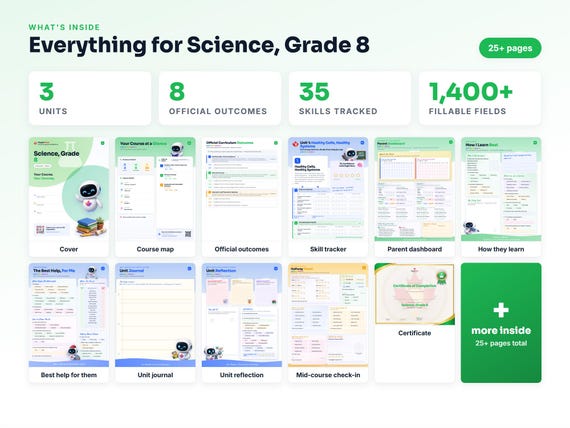
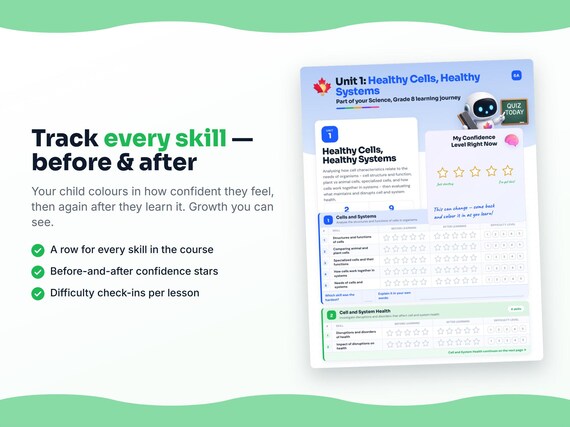
Built from the same official curriculum as this page. Before and after each skill above, your student colours in how sure they feel — so the two of you can see, on one page, what's clicking and what needs another look. It's a quiet way to follow how the year is really going.
By June it's full of their own handwriting: units worked through, confidence grown, a mid-year check-in, notes from parent-teacher night, and a certificate at the end. Less a worksheet, more a record of the year worth keeping on the shelf.
Instant download · see every page, reviews and the full description · five or more workbooks are $2.99 each
What it looks like in the app
Common questions
Can MapleMind help me with Science, Grade 8?
Yes. MapleMind's AI tutor covers all 35 skills in Nova Scotia's Science, Grade 8 — you pick the exact skill, and the tutor teaches it step by step: a short lesson, a worked example, solving together, then a skill check to show it stuck.
Is MapleMind aligned to Nova Scotia's official curriculum?
Yes. Every skill in this course maps to an official outcome code from Nova Scotia's Grade 8 Science curriculum, and the ministry's own wording is quoted under each unit on this page — with the official government source linked so you can check it yourself.
What does MapleMind cost?
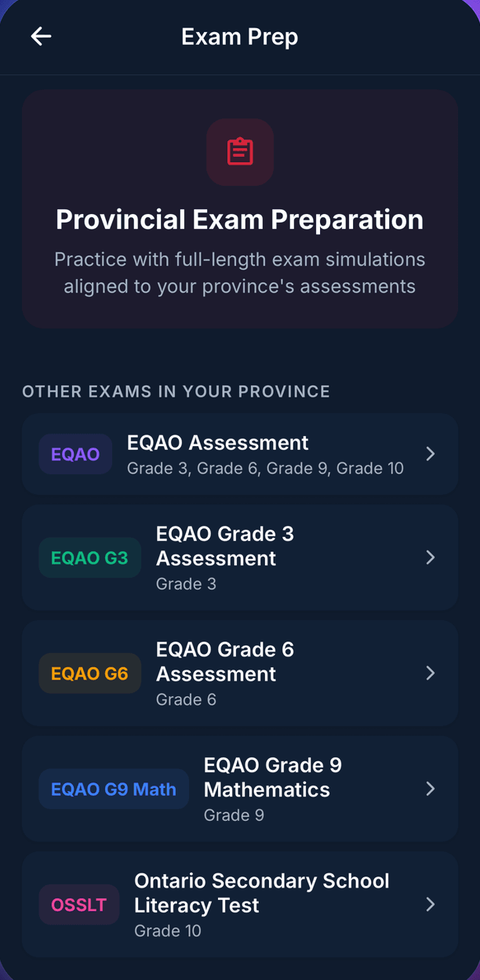
It's free to start — 5 tutoring chats and a practice quiz every day, no credit card. A Pro subscription ($9.99/month or $49.99/year CAD, 7-day free trial) unlocks unlimited tutoring, practice, and exam simulations.
What if I'm stuck on just one topic?
That's the point of skill-level tutoring: open Science, Grade 8 in the app, tap the exact skill from the list on this page, and the tutor teaches just that — no wading through lessons you don't need.
Does MapleMind work in French or other languages?
Yes — 14 languages, including French. Both the app and the tutor's explanations switch to the language you choose.
Where can I see the official Nova Scotia curriculum for Science, Grade 8?
The official source is linked on this page — Nova Scotia's official curriculum. The outline here follows it: every MapleMind skill carries its official outcome code, and the ministry's own wording is quoted under each unit.
Keep exploring
Ready when you are
Pick a skill from this page and see it taught properly — free, in the browser, in under a minute.