Get help with Science 9
Most tutoring makes you sit through material you already know. MapleMind flips that: pick the exact skill that's causing trouble — any of the 70 below — and the tutor teaches just that one, step by step, as many times as it takes. Ask questions in plain words, any time of day, in English, French, or 12 other languages.
The official Nova Scotia Science 9 curriculum
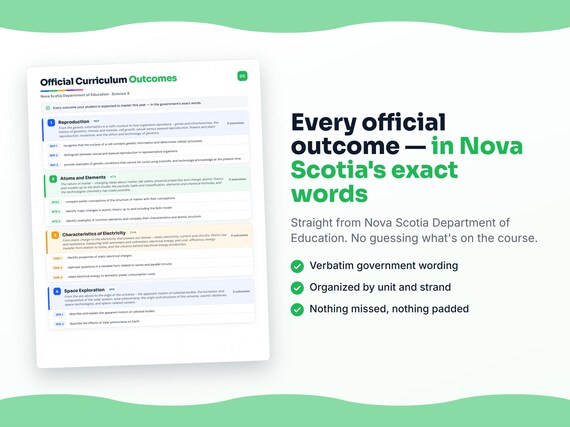
Nova Scotia defines Science 9 by strands and outcomes. MapleMind teaches the same curriculum reorganized for one-skill-at-a-time tutoring — the table shows exactly where every official strand lands, and the ministry's own wording is quoted under each unit below.
Official source Nova Scotia's official curriculumRead it on the government site — curriculum.novascotia.ca ↗| Official strand | Outcomes | Where MapleMind teaches it |
|---|---|---|
| Strand 1 | 15 | Reproduction |
| Strand 2 | 18 | Atoms and Elements |
| Strand 3 | 21 | Characteristics of Electricity |
| Strand 4 | 16 | Space Exploration |
Every skill below, taught one on one.
 Try the first session free
How MapleMind teaches Science 9 — every unit, lesson, and skill
Every skill below runs as a short session: a plain-words lesson, a worked example, solving it together, then a five-question skill check that earns up to three stars. Guided Mode keeps it teaching instead of answer-handing — turning it off needs a parent's password.
Unit 1ReproductionOfficial strand · Strand 1
From the genetic information in a cell's nucleus to how organisms reproduce - genes and chromosomes, the history of genetics, mitosis and meiosis, cell growth, sexual versus asexual reproduction, flowers and plant reproduction, mutations, and the ethics and technology of genetics.
Genes, Chromosomes, and Cell Division
- The nucleus and genetic informationsci9.1.1 — Recognize that the nucleus of a cell contains genetic information and determines cellular processes.
- Using the terms gene and chromosomesci9.1.2 — Explain the importance of using the terms gene and chromosome properly.
- Major shifts in understanding geneticssci9.1.3 — Identify major shifts in the scientific understanding of genetics.
- Mitosis and meiosissci9.1.4 — Illustrate and describe the basic processes of mitosis and meiosis.
- Graphing cell growth ratesci9.1.5 — Determine and graph the theoretical growth rate of a cell population, and interpolate and extrapolate from the graph.
Sexual and Asexual Reproduction
- Distinguishing sexual and asexual reproductionsci9.1.6 — Distinguish between sexual and asexual reproduction in representative organisms.
- Advantages of each reproduction typesci9.1.7 — Compare sexual and asexual reproduction in terms of their advantages and disadvantages.
- Investigable questions on plant reproductionsci9.1.8 — Identify questions to investigate about sexual reproduction in plants.
- Investigating flower structure safelysci9.1.9 — Use tools and apparatus safely to investigate the structure of flowers.
- Communicating investigation resultssci9.1.10 — Communicate the results of an investigation into the structure of flowers.
Mutations, Genetic Technology, and Society
- Genetic conditions we cannot yet curesci9.1.11 — Provide examples of genetic conditions that cannot be cured with current scientific and technological knowledge.
- Factors that change genetic informationsci9.1.12 — Discuss factors that may lead to changes in a cell's genetic information.
- Evaluating evidence on geneticssci9.1.13 — Evaluate information and evidence gathered on the topic of genetics and genetic engineering.
- Technologies from cellular knowledgesci9.1.14 — Provide examples of how knowledge of cellular functions has led to the development of technologies.
- Canadian contributions to geneticssci9.1.15 — Provide examples of Canadian contributions to science and technology related to heredity and genetic engineering.
The official wording — 15 outcomes in this unit
- sci9.1.1
recognize that the nucleus of a cell contains genetic information and determines cellular processes
- sci9.1.2
explain the importance of using the terms gene and chromosome properly
- sci9.1.3
identify major shifts in scientific understanding of genetics
- sci9.1.4
illustrate and describe the basic processes of mitosis and meiosis
- sci9.1.5
determine and graph the theoretical growth rate of a cell, and interpolate and extrapolate the cell population from the graph
- sci9.1.6
distinguish between sexual and asexual reproduction in representative organisms
- sci9.1.7
compare sexual and asexual reproduction in terms of their advantages and disadvantages
- sci9.1.8
identify questions to investigate about sexual reproduction in plants
- sci9.1.9
use tools and apparatus safely to investigate the structure of flowers
- sci9.1.10
communicate the results of an investigation into the structure of flowers
- sci9.1.11
provide examples of genetic conditions that cannot be cured using scientific and technological knowledge at the present time
- sci9.1.12
discuss factors that may lead to changes in a cell’s genetic information
- sci9.1.13
evaluate information and evidence gathered on the topic of genetics and genetic engineering
- sci9.1.14
provide examples of how the knowledge of cellular functions has resulted in the development of technologies
- sci9.1.15
provide examples of Canadian contributions to science and technology related to heredity and genetic engineering
Unit 2Atoms and ElementsOfficial strand · Strand 2
The nature of matter - changing ideas about matter, lab safety, physical properties and change, atomic theory and models up to the Bohr model, the periodic table and classification, elements and chemical formulas, and the technologies chemistry has made possible.
Matter, Properties, and Change
- Changing conceptions of mattersci9.2.1 — Compare earlier conceptions of the structure of matter with current conceptions.
- WHMIS and safe lab techniquesci9.2.2 — Demonstrate knowledge of WHMIS standards by using proper techniques for handling and disposing of lab materials.
- Investigating physical propertiessci9.2.3 — Investigate materials and describe them in terms of their physical properties.
- Displaying property datasci9.2.4 — Compile and display data collected during an investigation of the physical properties of materials.
- Changes from chemical reactionssci9.2.5 — Describe changes that result from some common chemical reactions.
- Physical versus chemical changesci9.2.6 — Determine, where possible, whether a change in a material is physical or chemical based on experimental data.
- New questions from investigationssci9.2.7 — Identify new questions about physical and chemical changes that arise from investigations.
Atomic Theory and Structure
- Atomic theory up to the Bohr modelsci9.2.8 — Identify major changes in atomic theory up to and including the Bohr model.
- Modelling atomic structuresci9.2.9 — Use models to describe the structure and components of atoms and molecules and choose scientifically appropriate words.
- Technologies enabling chemistry researchsci9.2.10 — Provide examples of technologies that have enhanced, promoted, or made possible scientific research in chemistry.
- Chemistry in individual and group settingssci9.2.11 — Provide examples illustrating that scientific and technological activities related to atomic structure occur in a variety of individual and group settings.
- Using the terms law and theorysci9.2.12 — Explain the importance of using the terms law and theory properly in science.
Elements and the Periodic Table
- Common elements and their atomic structuresci9.2.13 — Identify examples of common elements and compare their characteristics and atomic structure.
- How the periodic table developedsci9.2.14 — Describe and explain the roles of collecting evidence, finding relationships, and proposing explanations in developing the periodic table.
- Using a classification keysci9.2.15 — Use or construct a classification key.
- Reading a chemical formulasci9.2.16 — Identify the elements and number of atoms given a chemical formula.
- Chemistry and commercial materialssci9.2.17 — Provide examples where knowledge of chemistry has led to the development of commercial materials.
- Limited resources and efficient extractionsci9.2.18 — Explain examples of how limited resources have driven more efficient ways to extract elements and compounds or to find substitutes.
The official wording — 18 outcomes in this unit
- sci9.2.1
compare earlier conceptions of the structure of matter with their conceptions
- sci9.2.2
demonstrate a knowledge of WHMIS standards by using proper techniques for handling and disposing of lab materials
- sci9.2.3
investigate materials and describe them in terms of their physical properties
- sci9.2.4
compile and display data collected during an investigation of the physical properties of materials
- sci9.2.5
describe changes that result from some common chemical reactions
- sci9.2.6
determine, where possible, if the change in a material or object is physical or chemical on the basis of experimental data
- sci9.2.7
identify new questions about physical and chemical changes that arise from investigations
- sci9.2.8
identify major changes in atomic theory up to and including the Bohr model
- sci9.2.9
use models in describing the structure and the components of atoms and molecules, and explain the importance of choosing words that are scientifically or technologically appropriate
- sci9.2.10
provide examples of technologies that have enhanced, promoted, or made possible scientific research in chemistry
- sci9.2.11
provide examples to illustrate that scientific and technological activities related to atomic structure take place in a variety of individual and group settings
- sci9.2.12
explain the importance of using the terms law and theory in science
- sci9.2.13
identify examples of common elements, and compare their characteristics and atomic structure
- sci9.2.14
describe and explain the role of collecting evidence, finding relationships, and proposing explanations in the development of the periodic table
- sci9.2.15
use or construct a classification key
- sci9.2.16
identify the elements and number of atoms, given a chemical formula
- sci9.2.17
provide examples where knowledge of chemistry has resulted in the development of commercial materials
- sci9.2.18
give and explain examples illustrating how limited resources have forced scientists and technologists to develop more efficient ways to extract elements and compounds from nature, or to find or develop appropriate substitutes
Unit 3Characteristics of ElectricityOfficial strand · Strand 3
From static charge to the electricity that powers our homes - static electricity, current and circuits, Ohm's Law and resistance, measuring with ammeters and voltmeters, electrical energy and cost, efficiency, energy transfer from station to home, and the choices behind electrical energy production.
Static and Current Electricity
- Properties of static chargesci9.3.1 — Identify the properties of static electrical charges.
- Producing static chargesci9.3.2 — Explain the production of static electrical charges in some common materials.
- Technologies from static electricitysci9.3.3 — Provide examples of how knowledge of static electricity has led to the development of technologies.
- Charge flow and resistance in a circuitsci9.3.5 — Describe the flow of charge in an electrical circuit and the factors affecting resistance in a wire (length, diameter, type).
- Static electricity versus electric currentsci9.3.6 — Compare static electricity and electric current qualitatively.
Circuits, Measurement, and Ohm's Law
- Framing testable circuit questionssci9.3.7 — Rephrase questions in a testable form related to series and parallel circuits.
- Measuring with ammeters and voltmeterssci9.3.8 — Use an ammeter and a voltmeter to measure current and voltage in series and parallel circuits.
- Sources of error in meter readingssci9.3.9 — Identify potential sources of error in ammeter and voltmeter readings.
- Explaining discrepancies in datasci9.3.10 — Identify and suggest explanations for discrepancies in data collected using an ammeter and a voltmeter.
- Graphing circuit datasci9.3.11 — Present graphically the data from investigations of voltage, current, and resistance in series and parallel circuits.
- Ohm's Law in series and parallel circuitssci9.3.12 — Describe series and parallel circuits (maximum two resistors) with varying resistance, voltage, and current using Ohm's Law.
Electrical Energy, Power, and Production
- Electrical energy and power costssci9.3.13 — Relate electrical energy to domestic power consumption costs.
- Interpreting EnerGuide labels and utility billssci9.3.14 — Explain that precise language is required to properly interpret EnerGuide labels and understand a utility bill.
- Past and current electrical technologiessci9.3.15 — Compare examples of past and current technologies that used current electricity to meet similar needs.
- Efficiency of an electrical appliancesci9.3.16 — Determine quantitatively the efficiency of an electrical appliance that converts electrical energy to heat energy.
- Energy transfer from station to homesci9.3.17 — Describe the transfer and conversion of energy from a generating station to the home.
- Evaluating electrical energy sourcessci9.3.18 — Evaluate evidence and sources of information when researching electrical energy production and its environmental impact.
- Using recent data on energy problemssci9.3.19 — Select recent data when researching the environmental problems associated with types of electrical energy production.
- Reducing electrical energy usesci9.3.20 — Propose a course of action that reduces the consumption of electrical energy.
- Development of alternative energy sourcessci9.3.21 — Give examples of alternative energy sources (such as wind and solar) developed as a result of cost, availability, and material properties.
The official wording — 21 outcomes in this unit
- sci9.3.1
identify properties of static electrical charges
- sci9.3.2
explain the production of static electrical charges in some common materials
- sci9.3.3
provide examples of how knowledge of static electricity has resulted in the development of technologies
- sci9.3.4
provide examples of careers related to electricity in their community and province
- sci9.3.5
describe the flow of charge in an electrical circuit and describe the factors affecting the amount of resistance in a wire (length, diameter, type)
- sci9.3.6
compare qualitatively static electricity and electric current
- sci9.3.7
rephrase questions in a testable form related to series and parallel circuits
- sci9.3.8
use an ammeter and a voltmeter to measure current and voltage in series and parallel circuits
- sci9.3.9
identify potential sources of error in ammeter and voltmeter readings
- sci9.3.10
identify and suggest explanations for discrepancies in data collected using an ammeter and a voltmeter
- sci9.3.11
present graphically the data from investigation of voltage, current, and resistance in series and parallel circuits
- sci9.3.12
describe series and parallel (maximum two resistors) circuits involving varying resistance, voltage, and current, using Ohms’ Law
- sci9.3.13
relate electrical energy to domestic power consumption costs
- sci9.3.14
explain that precise language is required to properly interpret Energuide labels and to understand a utility bill
- sci9.3.15
compare examples of past and current technologies that used current electricity to meet similar needs
- sci9.3.16
determine quantitatively the efficiency of an electrical appliance that converts electrical energy to heat energy
- sci9.3.17
describe the transfer and conversion of energy from a generating station to the home
- sci9.3.18
evaluate evidence and sources of information when conducting research on electrical energy production and its impact on the environment
- sci9.3.19
select recent data while conducting research on the environmental problems associated with various types of electrical energy production
- sci9.3.20
propose a course of action that reduces the consumption of electrical energy
- sci9.3.21
give examples of the development of alternative sources of energy (such as wind generators and solar energy) that are a result of cost and the availability and properties of materials
Unit 4Space ExplorationOfficial strand · Strand 4
From the sky above to the edge of the universe - the apparent motion of celestial bodies, the formation and composition of the solar system, solar phenomena, the origin and structure of the universe, cosmic distances, space technologies, and space-related careers.
The Solar System
- Apparent motion of celestial bodiessci9.4.1 — Describe and explain the apparent motion of celestial bodies.
- Formation of the solar systemsci9.4.2 — Describe theories on the formation of the solar system.
- Composition of the solar systemsci9.4.3 — Describe the composition and characteristics of the components of the solar system.
- Testing theories about the solar systemsci9.4.4 — Explain the need for new evidence to continually test existing theories about the composition and origin of the solar system and galaxies.
- Canadian space research involvementsci9.4.5 — Provide examples of how the Canadian Government and/or Canadian Space Agency is involved in research projects about space.
- Taking a position on space explorationsci9.4.6 — Defend a position regarding societal support for space exploration.
The Sun, Stars, and the Universe
- Solar phenomena and their effects on Earthsci9.4.7 — Describe the effects of solar phenomena on Earth.
- Designing a model space stationsci9.4.8 — Design and describe a model space station based on what has been learned about the Sun's influences on Earth.
- Origin and evolution of the universesci9.4.9 — Describe theories on the origin and evolution of the universe.
- Major components of the universesci9.4.10 — Describe and classify the major components of the universe.
- Calculating travel time to a starsci9.4.11 — Calculate the travel time to a distant star at a given speed.
- How technology reveals the universesci9.4.12 — Explain how data provided by technologies contribute to our knowledge of the universe.
- Comparing stars and building a modelsci9.4.13 — Working collaboratively, prepare a comparative data table on stars and design a model representing them relative to our solar system.
- Space exploration careers in Canadasci9.4.14 — Describe examples of science- and technology-based careers in Canada associated with space exploration.
- New questions from studying spacesci9.4.15 — Identify new questions and problems that arise from the study of space exploration.
- The science behind space technologiessci9.4.16 — Describe the science underlying three technologies designed to explore space.
The official wording — 16 outcomes in this unit
- sci9.4.1
describe and explain the apparent motion of celestial bodies
- sci9.4.2
describe theories on the formation of the solar system
- sci9.4.3
describe the composition and characteristics of the components of the solar system
- sci9.4.4
explain the need for new evidence in order to continually test existing theories about the composition and origin of our solar system and galaxies
- sci9.4.5
provide examples of how the Canadian Government and/or Canadian Space Agency is involved in research projects about space
- sci9.4.6
defend their position regarding societal support for space exploration
- sci9.4.7
describe the effects of solar phenomena on Earth
- sci9.4.8
design and describe a model space station on the basis of what they have learned about the sun’s influences on Earth
- sci9.4.9
describe theories on the origin and evolution of the universe
- sci9.4.10
describe and classify the major components of the universe
- sci9.4.11
calculate the travel time to a distant star at a given speed
- sci9.4.12
explain how data provided by technologies contribute to our knowledge of the universe
- sci9.4.13
working collaboratively with group members, prepare a comparative data table on various stars, and design a model to represent some of these stars relative to our solar system
- sci9.4.14
describe examples of science- and technology-based careers in Canada that are associated with space exploration
- sci9.4.15
identify new questions and problems that arise from the study of space exploration
- sci9.4.16
describe the science underlying three technologies designed to explore space
Printable workbook · A keepsake of the year
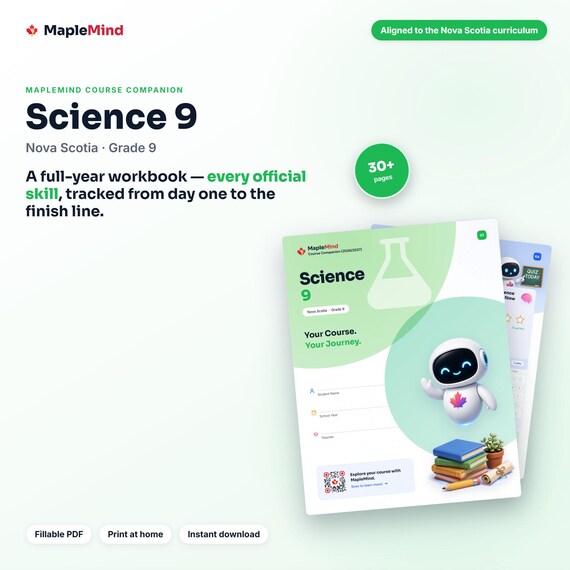
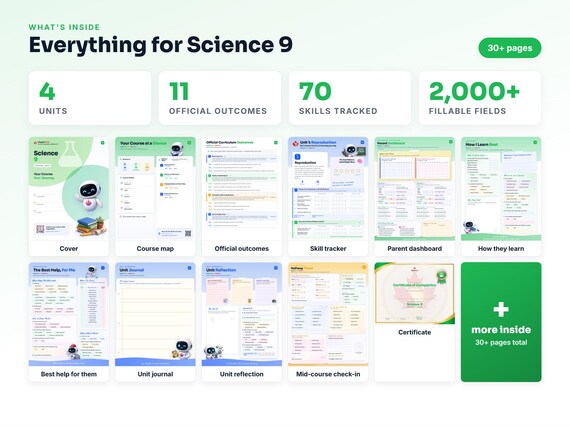
A Science 9 workbook worth keeping
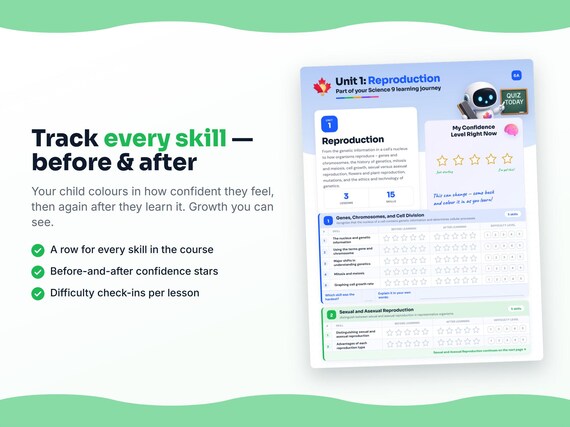
Built from the same official curriculum as this page. Before and after each skill above, your student colours in how sure they feel — so the two of you can see, on one page, what's clicking and what needs another look. It's a quiet way to follow how the year is really going.
By June it's full of their own handwriting: units worked through, confidence grown, a mid-year check-in, notes from parent-teacher night, and a certificate at the end. Less a worksheet, more a record of the year worth keeping on the shelf.
Instant download · see every page, reviews and the full description · five or more workbooks are $2.99 each
What it looks like in the app
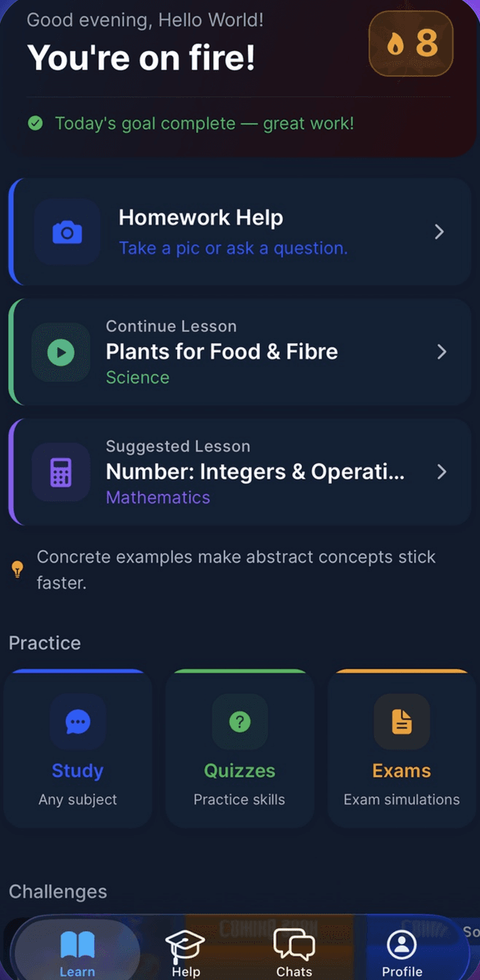
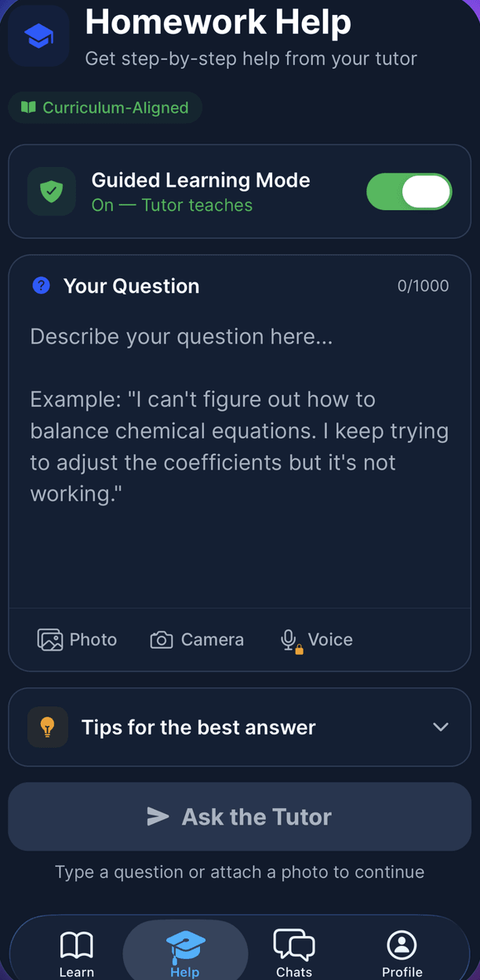
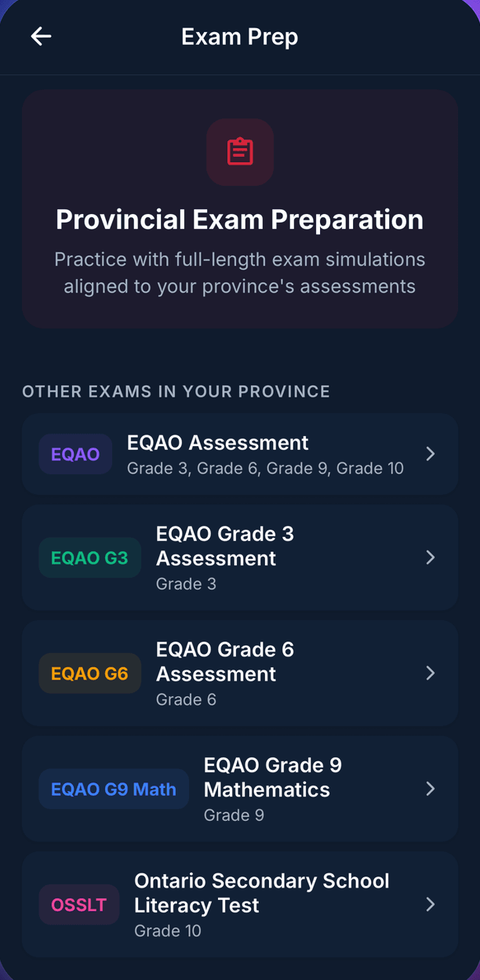
Common questions
Can MapleMind help me with Science 9?
Yes. MapleMind's AI tutor covers all 70 skills in Nova Scotia's Science 9 — you pick the exact skill, and the tutor teaches it step by step: a short lesson, a worked example, solving together, then a skill check to show it stuck.
Is MapleMind aligned to Nova Scotia's official curriculum?
Yes. Every skill in this course maps to an official outcome code from Nova Scotia's Grade 9 Science curriculum, and the ministry's own wording is quoted under each unit on this page — with the official government source linked so you can check it yourself.
What does MapleMind cost?
It's free to start — 5 tutoring chats and a practice quiz every day, no credit card. A Pro subscription ($9.99/month or $49.99/year CAD, 7-day free trial) unlocks unlimited tutoring, practice, and exam simulations.
What if I'm stuck on just one topic?
That's the point of skill-level tutoring: open Science 9 in the app, tap the exact skill from the list on this page, and the tutor teaches just that — no wading through lessons you don't need.
Does MapleMind work in French or other languages?
Yes — 14 languages, including French. Both the app and the tutor's explanations switch to the language you choose.
Where can I see the official Nova Scotia curriculum for Science 9?
The official source is linked on this page — Nova Scotia's official curriculum. The outline here follows it: every MapleMind skill carries its official outcome code, and the ministry's own wording is quoted under each unit.
Keep exploring
Ready when you are
Pick a skill from this page and see it taught properly — free, in the browser, in under a minute.