Get help with Social Studies 7
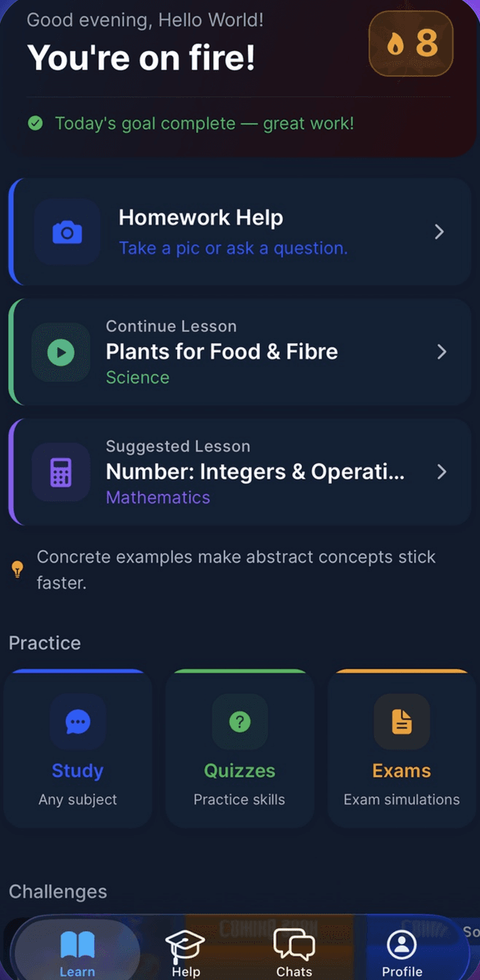
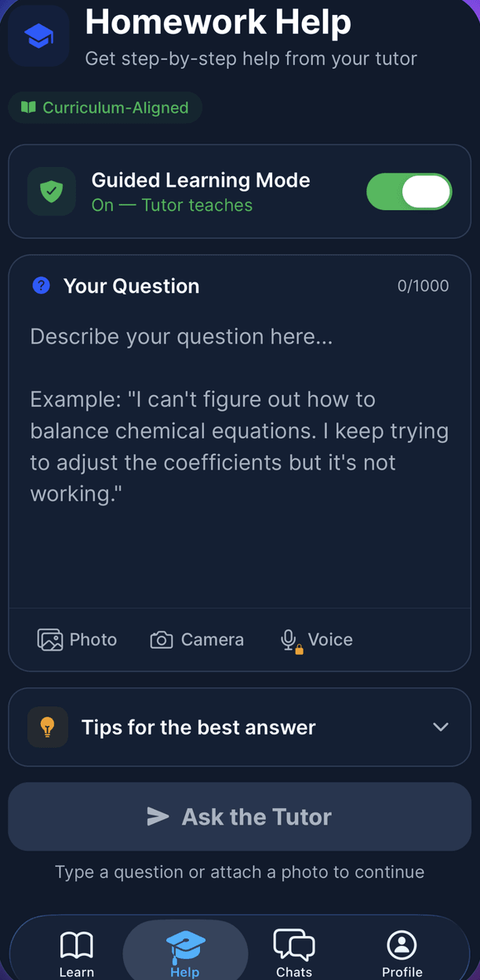
Most tutoring makes you sit through material you already know. MapleMind flips that: pick the exact skill that's causing trouble — any of the 11 below — and the tutor teaches just that one, step by step, as many times as it takes. Ask questions in plain words, any time of day, in English, French, or 12 other languages.
The official British Columbia Social Studies 7 curriculum
British Columbia defines Social Studies 7 by strands and outcomes. MapleMind teaches the same curriculum reorganized for one-skill-at-a-time tutoring — the table shows exactly where every official strand lands, and the ministry's own wording is quoted under each unit below.
Official source BC's official social studies curriculumRead it on the government site — curriculum.gov.bc.ca ↗| Official strand | Outcomes | Where MapleMind teaches it |
|---|---|---|
| Content | 11 | Human Origins · Geography and Early Peoples · Rise and Fall of Civilizations · World Religions · Science, Philosophy, and Technology · Contact and Exchange Between Civilizations · Systems and Structures |
Every skill below, taught one on one.
 Try the first session free
How MapleMind teaches Social Studies 7 — every unit, lesson, and skill
Every skill below runs as a short session: a plain-words lesson, a worked example, solving it together, then a five-question skill check that earns up to three stars. Guided Mode keeps it teaching instead of answer-handing — turning it off needs a parent's password.
Unit 1Human OriginsOfficial strand · Content
Big Idea: geographic conditions shaped the emergence of civilizations. Where humans came from, and how the story of our origins is pieced together from fossil, tool, and genetic evidence.
Where Did People Come From?
- The anthropological story of human origins7.AOH.1 — Explain what anthropologists and archaeologists have pieced together about the anthropological origins of humans — the early origins of humans in Africa, their migration out of Africa to the rest of the world, interactions between early humans and Neanderthals, the growing sophistication of stone tools and early metalworking, and the shift from a nomadic hunter-gatherer way of life to settled agricultural communities.
The official wording — 1 outcome in this unit
- 7.AOH.1
anthropological origins of humans
Unit 2Geography and Early PeoplesOfficial strand · Content
Big Idea: geographic conditions shaped the emergence of civilizations. How climate, landforms, and natural resources shaped where people settled, how a culture eventually fell, and how cultures interacted with one another.
Living With the Land
- How geography shaped early societies7.HRP.1 — Describe human responses to particular geographic challenges and opportunities — including climates, landforms, and natural resources — covering how physical environments affected a culture's development and settlement (proximity to water, fertile land, natural resources, defensibility), a culture's fall (earthquakes, tsunamis, volcanic activity, unsustainable human practices), and interactions among cultures (mountain ranges, oceans, rivers), and how humans adapted through architecture, transportation, and clothing.
The official wording — 1 outcome in this unit
- 7.HRP.1
human responses to particular geographic challenges and opportunities, including climates, landforms, and natural resources
Unit 3Rise and Fall of CivilizationsOfficial strand · Content
Big Idea: increasingly complex societies required new systems of laws and government. What features define a civilization in the first place, and — separately — the patterns behind why civilizations grow powerful and why they eventually collapse.
What Makes a Civilization
- Features and characteristics of civilizations7.FCC.1 — Identify the features and characteristics common to civilizations around the world and throughout time — social organization, religion, traditions, government, law, trade, technology, fine arts, and more — and the diagnostic elements (advanced technology, specialized workers, record keeping, complex institutions, major urban centres) that make a society a civilization rather than a large village.
Why Civilizations Rise and Fall
- Factors behind the rise and fall of civilizations7.FCC.2 — Analyze the factors that led civilizations to rise and fall — why some societies grew powerful (resources, leadership, trade networks, technology) and why they eventually collapsed (usually several compounding factors — economic strain, environmental stress, political instability, invasion — building over generations rather than one single cause).
The official wording — 2 outcomes in this unit
- 7.FCC.1
features and characteristics of civilizations
- 7.FCC.2
factors that led to their rise and fall
Unit 4World ReligionsOfficial strand · Content
Big Idea: religious and cultural practices that emerged during this period have endured and continue to influence people. Where major world religions began, what they teach, and how they have shaped societies — including a religion indigenous to the Americas.
Beliefs That Shaped the World
- Origins, beliefs, and influence of religions7.OCB.1 — Describe the origins, core beliefs, narratives, practices, and influences of religions from around the world, including at least one religion indigenous to the Americas, drawing on how past civilizations and cultures represented the world through their religions, spiritual beliefs, myths, stories, knowledge, and languages.
The official wording — 1 outcome in this unit
- 7.OCB.1
origins, core beliefs, narratives, practices, and influences of religions, including at least one indigenous to the Americas
Unit 5Science, Philosophy, and TechnologyOfficial strand · Content
Big Idea: economic specialization and trade networks can lead to conflict and co-operation between societies. The concrete scientific discoveries and technological inventions of ancient cultures — and, separately, the philosophical ideas about how to live, govern, and know that are still studied today.
Inventions That Changed Everything
- Scientific and technological developments7.SPT.1 — Describe key scientific and technological developments of ancient cultures — such as astronomy, medicine, papermaking, sea travel, agriculture, and ceramics — and compare selected technologies across cultures in terms of materials, purpose, and impact on society and daily life.
Big Ideas of the Ancient World
- Philosophical developments7.SPT.2 — Describe key philosophical developments of ancient civilizations — the big questions thinkers asked about how to live, how to govern, and how to know what is true — and explain why philosophers from this era are still studied and quoted today.
The official wording — 2 outcomes in this unit
- 7.SPT.1
scientific, philosophical, and technological developments
- 7.SPT.2
scientific, philosophical, and technological developments
Unit 6Contact and Exchange Between CivilizationsOfficial strand · Content
Big Idea: economic specialization and trade networks can lead to conflict and co-operation between societies. How civilizations met one another — through conflict, peace, trade, expansion, and migration — and changed each other as a result.
When Civilizations Met
- Interactions and exchanges between civilizations7.IEP.1 — Analyze interactions and exchanges between past civilizations and cultures, including conflict, peace, trade, expansion, and migration — such as Egypt's adaptation of chariots from the Hyksos, Rome's adaptation of Greek gods and mythology, and adaptations of the Sumerian writing system, Babylonian code of law, and Sumerian irrigation system — and explain how these contacts changed the societies involved.
The official wording — 1 outcome in this unit
- 7.IEP.1
interactions and exchanges between past civilizations and cultures, including conflict, peace, trade, expansion, and migration
Unit 7Systems and StructuresOfficial strand · Content
Big Idea: increasingly complex societies required new systems of laws and government. How early societies organized power, law, and government; how they sorted people into social classes and roles; and how their economies ran — including at least one system indigenous to the Americas.
How Early Societies Organized Power
- Political, legal, and governmental systems7.SPL.1 — Compare the political, legal, and governmental systems and structures of early civilizations, including at least one indigenous to the Americas — how power was held, how laws worked, and how governments were structured — and trace how ideas like the rule of law, democracy, the senate, and representation evolved into modern Canadian institutions.
Who Was on Top — and Who Wasn't
From Bartering to Money
- Economic systems: trade and the shift to money7.SPL.3 — Describe the economic systems and structures of early civilizations — the goods and services people used in trade (items needed for survival and comfort) — and explain how and why monetary systems evolved from bartering as societies grew more complex.
The official wording — 3 outcomes in this unit
- 7.SPL.1
political, legal, governmental
- 7.SPL.2
social
- 7.SPL.3
economic systems and structures
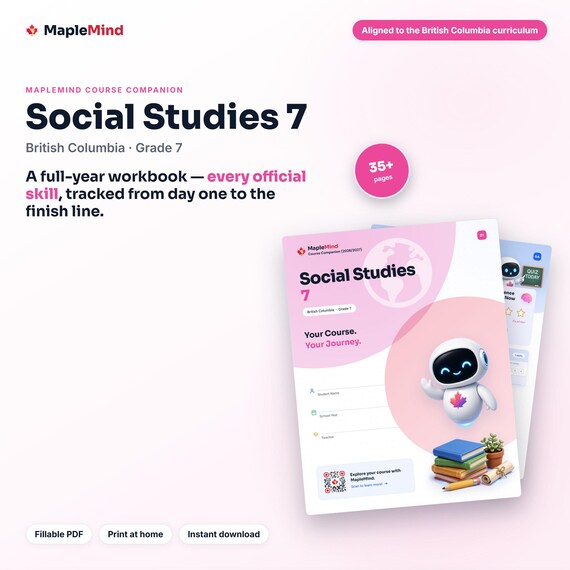
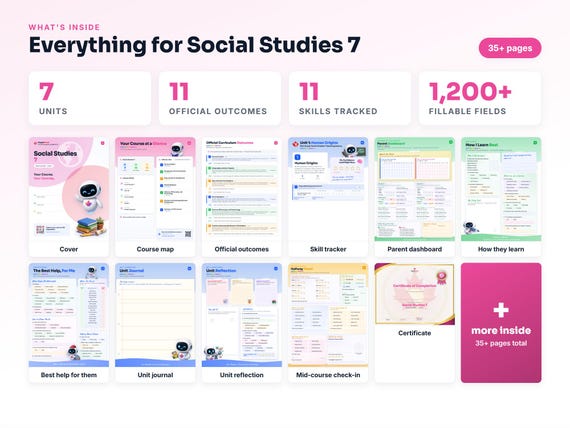
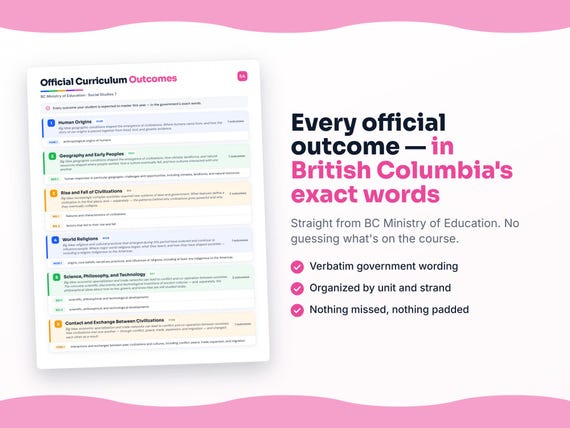
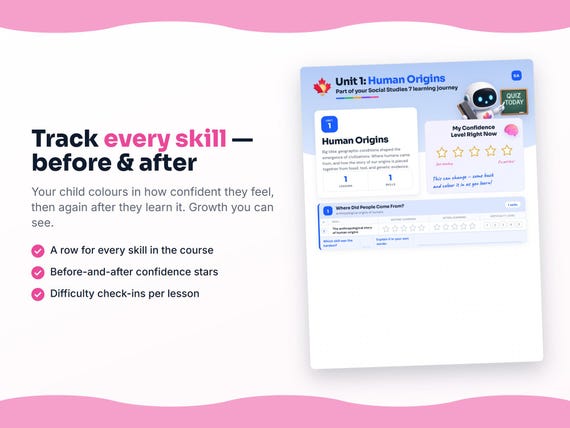
Printable workbook · A keepsake of the year
A Social Studies 7 workbook worth keeping
Built from the same official curriculum as this page. Before and after each skill above, your student colours in how sure they feel — so the two of you can see, on one page, what's clicking and what needs another look. It's a quiet way to follow how the year is really going.
By June it's full of their own handwriting: units worked through, confidence grown, a mid-year check-in, notes from parent-teacher night, and a certificate at the end. Less a worksheet, more a record of the year worth keeping on the shelf.
Instant download · see every page, reviews and the full description · five or more workbooks are $2.99 each
What it looks like in the app
Common questions
Can MapleMind help me with Social Studies 7?
Yes. MapleMind's AI tutor covers all 11 skills in British Columbia's Social Studies 7 — you pick the exact skill, and the tutor teaches it step by step: a short lesson, a worked example, solving together, then a skill check to show it stuck.
Is MapleMind aligned to British Columbia's official curriculum?
Yes. Every skill in this course maps to an official outcome code from British Columbia's Grade 7 Social Studies curriculum, and the ministry's own wording is quoted under each unit on this page — with the official government source linked so you can check it yourself.
What does MapleMind cost?
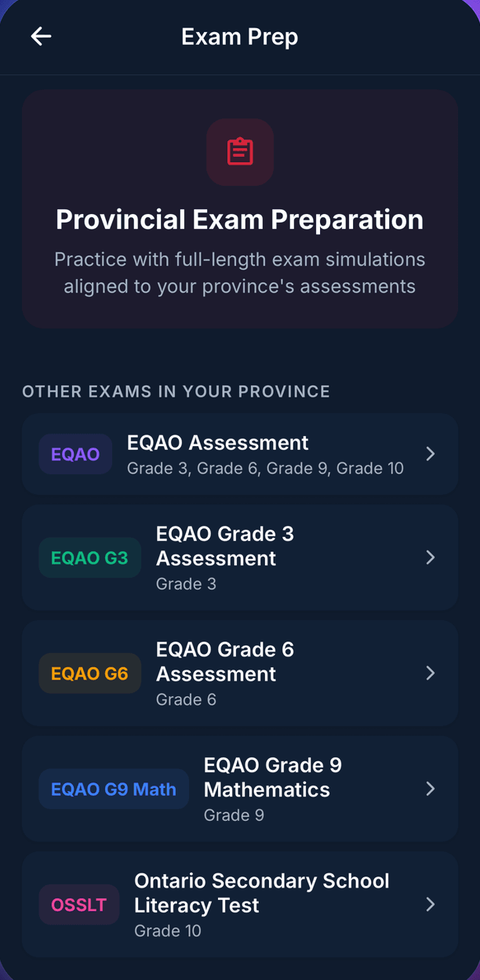
It's free to start — 5 tutoring chats and a practice quiz every day, no credit card. A Pro subscription ($9.99/month or $49.99/year CAD, 7-day free trial) unlocks unlimited tutoring, practice, and exam simulations.
What if I'm stuck on just one topic?
That's the point of skill-level tutoring: open Social Studies 7 in the app, tap the exact skill from the list on this page, and the tutor teaches just that — no wading through lessons you don't need.
Does MapleMind work in French or other languages?
Yes — 14 languages, including French. Both the app and the tutor's explanations switch to the language you choose.
Where can I see the official British Columbia curriculum for Social Studies 7?
The official source is linked on this page — BC's official social studies curriculum. The outline here follows it: every MapleMind skill carries its official outcome code, and the ministry's own wording is quoted under each unit.
Keep exploring
Ready when you are
Pick a skill from this page and see it taught properly — free, in the browser, in under a minute.