Get help with Science 2
Most tutoring makes your child sit through material your child already knows. MapleMind flips that: pick the exact skill that's causing trouble — any of the 10 below — and the tutor teaches just that one, step by step, as many times as it takes. Ask questions in plain words, any time of day, in English, French, or 12 other languages.
The official British Columbia Science 2 curriculum
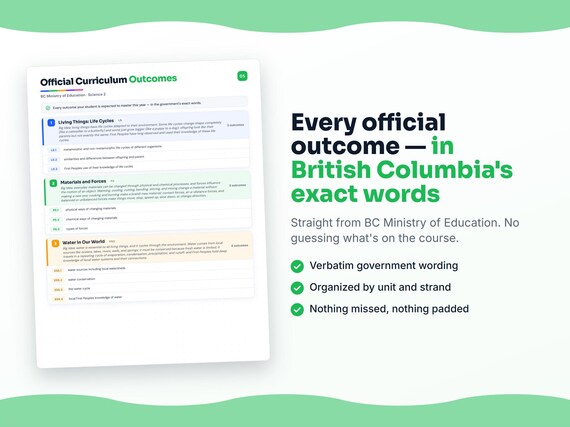
British Columbia defines Science 2 by strands and outcomes. MapleMind teaches the same curriculum reorganized for one-skill-at-a-time tutoring — the table shows exactly where every official strand lands, and the ministry's own wording is quoted under each unit below.
Official source BC's official science curriculumRead it on the government site — curriculum.gov.bc.ca ↗| Official strand | Outcomes | Where MapleMind teaches it |
|---|---|---|
| Life Science | 3 | Living Things: Life Cycles |
| Physical Science | 3 | Materials and Forces |
| Earth and Space Science | 4 | Water in Our World |
Every skill below, taught one on one.
 Try the first session free
How MapleMind teaches Science 2 — every unit, lesson, and skill
Every skill below runs as a short session: a plain-words lesson, a worked example, solving it together, then a five-question skill check that earns up to three stars. Guided Mode keeps it teaching instead of answer-handing — turning it off needs a parent's password.
Unit 1Living Things: Life CyclesOfficial strand · Life Science
Big Idea: living things have life cycles adapted to their environment. Some life cycles change shape completely (like a caterpillar to a butterfly) and some just grow bigger (like a puppy to a dog); offspring look like their parents but not exactly the same; First Peoples have long observed and used their knowledge of these life cycles.
Life Cycles That Change a Lot, and Life Cycles That Don't
- Big-change and small-change life cycles2.LC.1 — Compare the life cycle of an organism that changes body structure completely as it grows (metamorphosis, like a caterpillar to a butterfly, a mealworm, or a tadpole to a frog) with one that keeps the same body structure the whole time and just gets bigger (like a human).
Baby Animals and Their Parents
- How offspring are like and unlike their parents2.OP.1 — Look at animal offspring next to their parents — like a kitten and a cat, a puppy and a dog, or a young salmon and an adult salmon — and describe ways they are similar and ways they change a great deal as they grow.
First Peoples Knowledge of Life Cycles
- How First Peoples use life cycle knowledge2.FPL.1 — Learn how local First Peoples have long observed the life cycles of local plants and animals and used that knowledge to sustainably gather, hunt, and fish in step with the seasons — such as clam gardens, seasonal rounds, and salmon hatchery programs.
The official wording — 3 outcomes in this unit
- 2.LC.1
metamorphic and non-metamorphic life cycles of different organisms
- 2.OP.1
similarities and differences between offspring and parent
- 2.FPL.1
First Peoples use of their knowledge of life cycles
Unit 2Materials and ForcesOfficial strand · Physical Science
Big Idea: everyday materials can be changed through physical and chemical processes, and forces influence the motion of an object. Warming, cooling, cutting, bending, stirring, and mixing change a material without making a new one; cooking and burning make a brand-new material; contact forces, at-a-distance forces, and balanced or unbalanced forces make things move, stop, speed up, slow down, or change direction.
Changing a Material Without Making a New One
- Physical changes — same material, new shape2.PC.1 — See how warming, cooling, cutting, bending, stirring, or mixing a material changes its shape or how it can be used, but it is still the same material — like ice melting into water, or plants ground up and combined with other materials to make dyes.
Changing a Material Into Something New
- Chemical changes — a brand-new material2.CC.1 — See how cooking or burning changes a material into a different material altogether that cannot be changed back — like batter cooking into a cake, or wood burning into ash.
Pushes and Pulls
- Different kinds of forces2.TF.1 — Explore different kinds of forces — contact forces like a push or a magnet touching metal, at-a-distance forces like static electricity or a magnet pulling from across a table, and balanced or unbalanced forces like how a shape falls through air or moves through water, ice, or snow — and see how each can make an object move, stop, speed up, slow down, or change direction.
The official wording — 3 outcomes in this unit
- 2.PC.1
physical ways of changing materials
- 2.CC.1
chemical ways of changing materials
- 2.TF.1
types of forces
Unit 3Water in Our WorldOfficial strand · Earth and Space Science
Big Idea: water is essential to all living things, and it cycles through the environment. Water comes from local sources like oceans, lakes, rivers, wells, and springs; it must be conserved because fresh water is limited; it travels in a repeating cycle of evaporation, condensation, precipitation, and runoff; and First Peoples hold deep knowledge of local water systems and their connections.
Where Our Water Comes From
- Local water sources and watersheds2.WS.1 — Identify local sources of water — oceans, lakes, rivers, wells, springs — including local watersheds, and learn that most of the world's fresh water is actually stored underground and in glaciers.
Saving Water
- Ways to save water2.WC.1 — Learn simple everyday ways to conserve water — like turning off the tap while brushing teeth — and understand why saving water matters: fresh water is a limited resource that is not being replaced as fast as it is being used.
The Water Cycle
- How water travels in a cycle2.WCY.1 — Follow water as the sun drives it through a repeating cycle of evaporation, condensation, precipitation, and runoff — and see how this cycle is also a big part of weather, like clouds and rain.
First Peoples Knowledge of Water
- First Peoples knowledge of water cycles, conservation, and connections2.FPW.1 — Learn how local First Peoples hold deep knowledge of water — its cycles, the need to conserve it, and its cultural connection to other living systems, since water is essential for all interconnected forms of life — passed down through generations.
The official wording — 4 outcomes in this unit
- 2.WS.1
water sources including local watersheds
- 2.WC.1
water conservation
- 2.WCY.1
the water cycle
- 2.FPW.1
local First Peoples knowledge of water
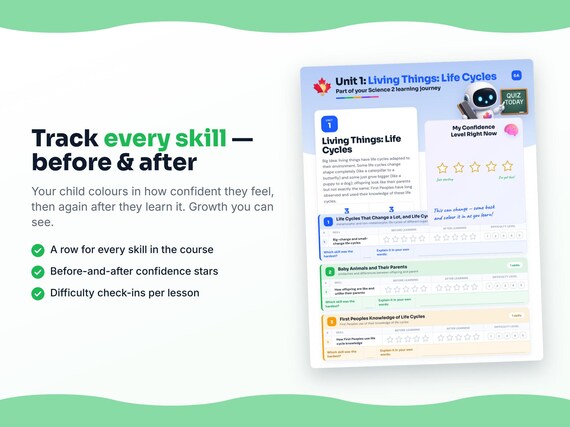
Printable workbook · A keepsake of the year
A Science 2 workbook worth keeping
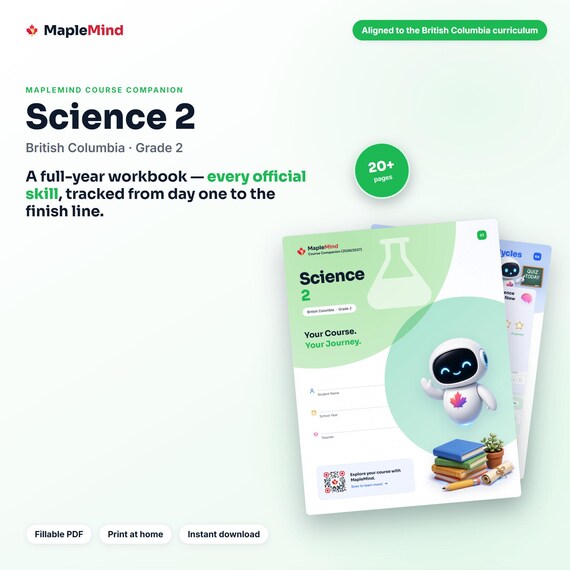
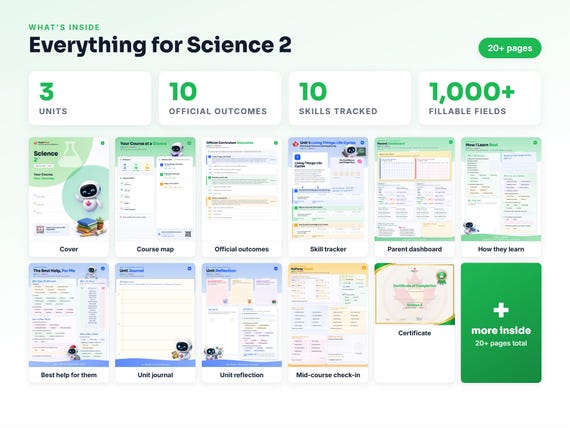
Built from the same official curriculum as this page. Before and after each skill above, your student colours in how sure they feel — so the two of you can see, on one page, what's clicking and what needs another look. It's a quiet way to follow how the year is really going.
By June it's full of their own handwriting: units worked through, confidence grown, a mid-year check-in, notes from parent-teacher night, and a certificate at the end. Less a worksheet, more a record of the year worth keeping on the shelf.
Instant download · see every page, reviews and the full description · five or more workbooks are $2.99 each
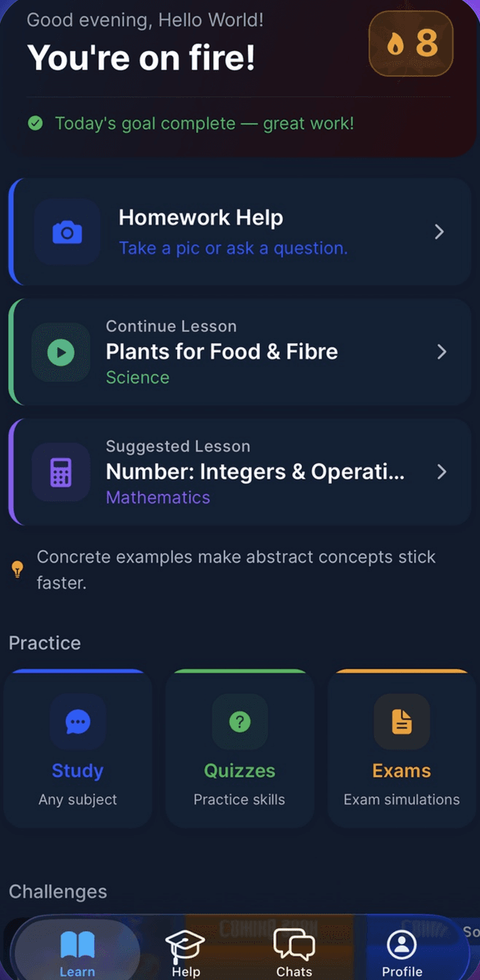
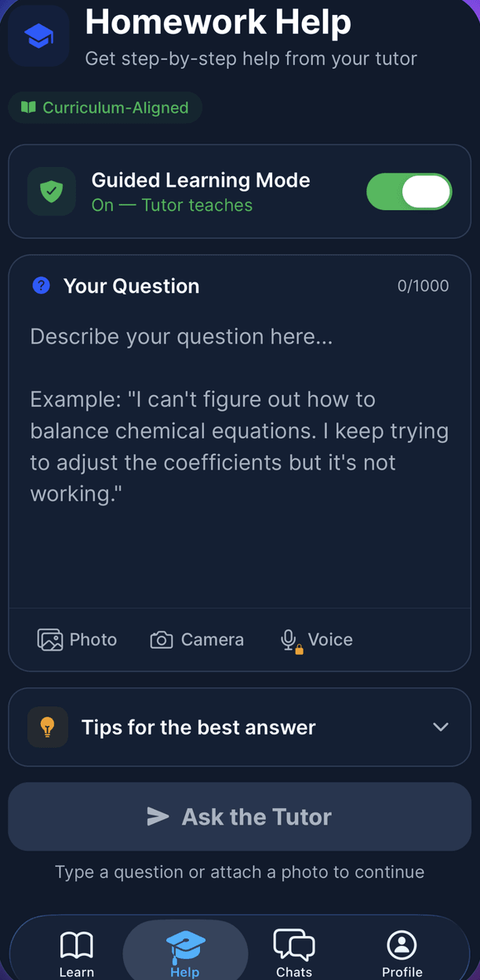
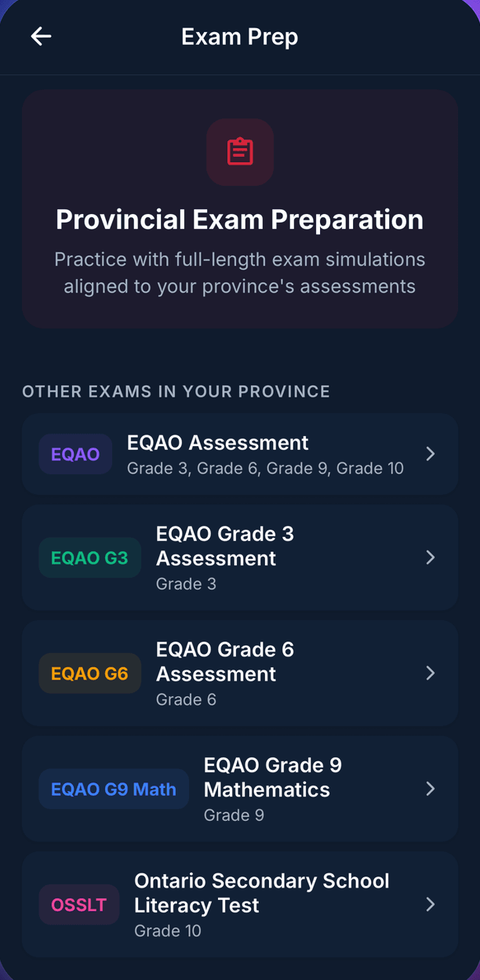
What it looks like in the app
Common questions
Can MapleMind help my child with Science 2?
Yes. MapleMind's AI tutor covers all 10 skills in British Columbia's Science 2 — your child picks the exact skill, and the tutor teaches it step by step: a short lesson, a worked example, solving together, then a skill check to show it stuck.
Is MapleMind aligned to British Columbia's official curriculum?
Yes. Every skill in this course maps to an official outcome code from British Columbia's Grade 2 Science curriculum, and the ministry's own wording is quoted under each unit on this page — with the official government source linked so you can check it yourself.
What does MapleMind cost?
It's free to start — 5 tutoring chats and a practice quiz every day, no credit card. A Pro subscription ($9.99/month or $49.99/year CAD, 7-day free trial) unlocks unlimited tutoring, practice, and exam simulations.
What if my child is stuck on just one topic?
That's the point of skill-level tutoring: open Science 2 in the app, tap the exact skill from the list on this page, and the tutor teaches just that — no wading through lessons your child doesn't need.
Does MapleMind work in French or other languages?
Yes — 14 languages, including French. Both the app and the tutor's explanations switch to the language your child chooses.
Where can I see the official British Columbia curriculum for Science 2?
The official source is linked on this page — BC's official science curriculum. The outline here follows it: every MapleMind skill carries its official outcome code, and the ministry's own wording is quoted under each unit.
Keep exploring
Ready when you are
Pick a skill from this page and see it taught properly — free, in the browser, in under a minute.