Get help with English Language Arts 10
Most tutoring makes you sit through material you already know. MapleMind flips that: pick the exact skill that's causing trouble — any of the 29 below — and the tutor teaches just that one, step by step, as many times as it takes. Ask questions in plain words, any time of day, in English, French, or 12 other languages.
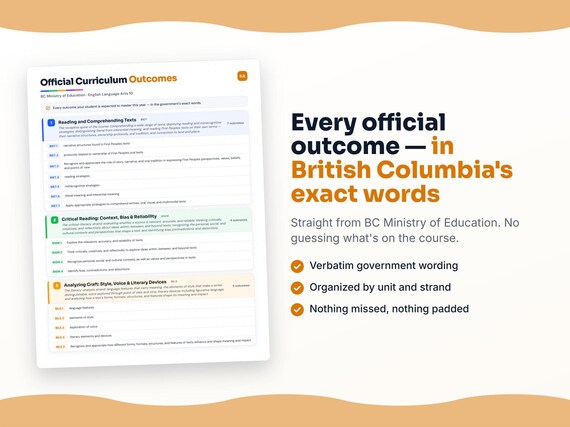
The official British Columbia English Language Arts 10 curriculum
British Columbia defines English Language Arts 10 by strands and outcomes. MapleMind teaches the same curriculum reorganized for one-skill-at-a-time tutoring — the table shows exactly where every official strand lands, and the ministry's own wording is quoted under each unit below.
Official source BC's official English language arts curriculumRead it on the government site — curriculum.gov.bc.ca ↗| Official strand | Outcomes | Where MapleMind teaches it |
|---|---|---|
| Big Idea: The exploration of text and story deepens our understanding of diverse, complex ideas about identity, others, and the world. / People understand text differently depending on their world views and perspectives. | 8 | Reading and Comprehending Texts |
| Big Idea: Questioning what we hear, read, and view contributes to our ability to be educated and engaged citizens. | 4 | Critical Reading: Context, Bias & Reliability |
| Big Idea: Language shapes ideas and influences others. | 6 | Analyzing Craft: Style, Voice & Literary Devices |
| Big Idea: Texts are socially, culturally, geographically, and historically constructed. | 11 | Composing and Communicating |
Every skill below, taught one on one.
 Try the first session free
How MapleMind teaches English Language Arts 10 — every unit, lesson, and skill
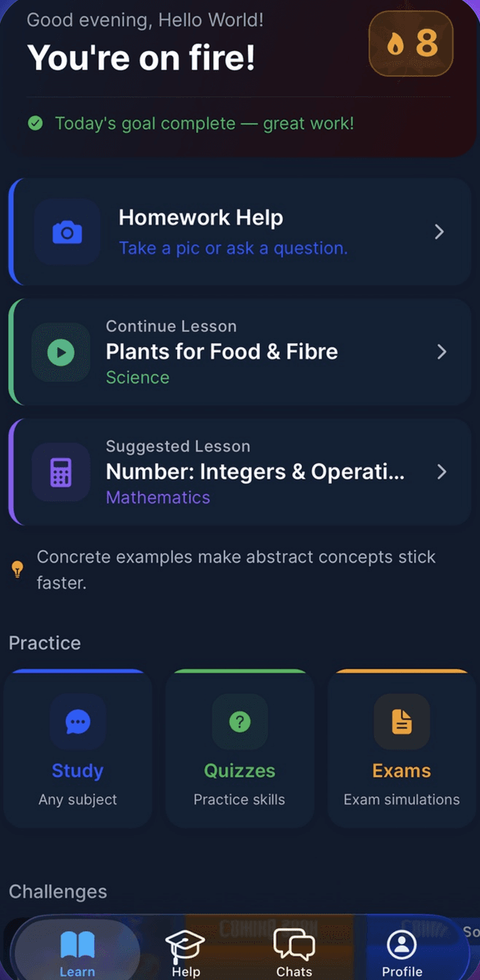
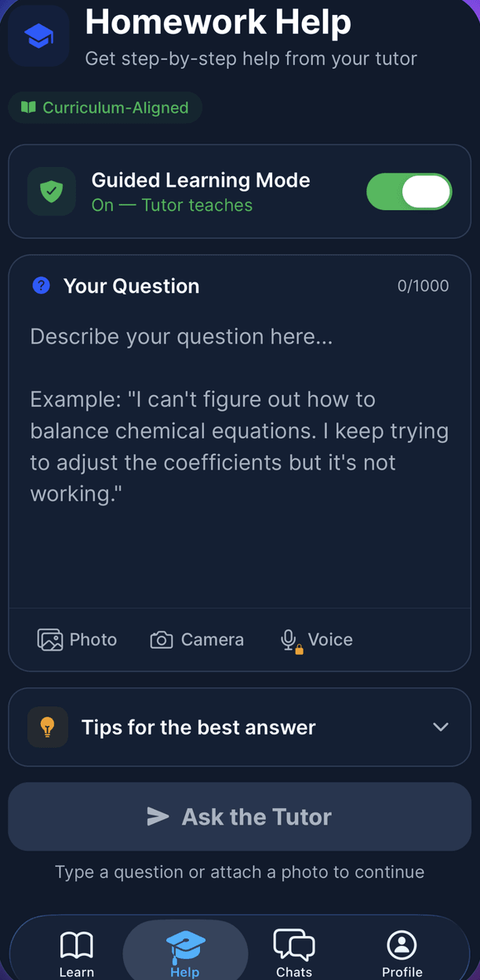
Every skill below runs as a short session: a plain-words lesson, a worked example, solving it together, then a five-question skill check that earns up to three stars. Guided Mode keeps it teaching instead of answer-handing — turning it off needs a parent's password.
Unit 1Reading and Comprehending TextsOfficial strand · Big Idea: The exploration of text and story deepens our understanding of diverse, complex ideas about identity, others, and the world. / People understand text differently depending on their world views and perspectives.
The receptive spine of the course: comprehending a wide range of texts, deploying reading and metacognitive strategies, distinguishing literal from inferential meaning, and reading First Peoples texts on their own terms — their narrative structures, ownership protocols, oral tradition, and connection to land and place.
First Peoples Narrative Structures
- Narrative structures in First Peoples texts10.FP.1 — Recognize the narrative structures found in First Peoples texts — circular, iterative, cyclical — and read them on their own terms rather than forcing a Western plot shape onto them.
Ownership and Protocols
- Protocols for the ownership of First Peoples oral texts10.FP.2 — Understand the protocols related to ownership of First Peoples oral texts — that stories, songs, and teachings can belong to a specific family, clan, or Nation, and that sharing or retelling them carries permissions and responsibilities.
First Peoples Oral Tradition and the Influence of Land
- The role of story, narrative, and oral tradition in First Peoples texts10.FPTRAD.1 — Recognize and appreciate the role of story, narrative, and oral tradition in expressing First Peoples perspectives, values, beliefs, and points of view, and the diversity within and across First Peoples societies as represented in texts.
- The influence of land and place in First Peoples and Canadian texts10.FPLAND.1 — Recognize and appreciate the influence of land and place in First Peoples and other Canadian texts — how a specific place shapes a text's meaning, imagery, and relationships.
Reading Strategies for Complex Texts
- Reading strategies for making sense of a text10.READ.1 — Apply reading strategies — previewing, questioning, predicting, annotating, rereading difficult passages, using context clues — to build and check understanding of increasingly complex texts.
Thinking About Your Own Thinking
- Metacognitive strategies — thinking about your own thinking10.META.1 — Use metacognitive strategies — noticing when meaning breaks down, naming what is confusing, choosing a fix (reread, look up, ask, keep reading for context) — to monitor and repair your own comprehension while reading, writing, and discussing.
Literal vs. Inferential Meaning
- Literal meaning vs. inferential meaning in texts10.MEAN.1 — Distinguish literal meaning (what a text states directly) from inferential meaning (what a text implies but does not say outright), and use evidence from the text to support an inference.
Comprehending Written, Oral, Visual, and Multimodal Texts
- Comprehending written, oral, visual, and multimodal texts10.COMP.1 — Apply appropriate strategies to comprehend written, oral, visual, and multimodal texts — building meaning from a text regardless of the medium it is delivered in.
The official wording — 8 outcomes in this unit
- 10.FP.1
narrative structures found in First Peoples texts
- 10.FP.2
protocols related to ownership of First Peoples oral texts
- 10.FPTRAD.1
Recognize and appreciate the role of story, narrative, and oral tradition in expressing First Peoples perspectives, values, beliefs, and points of view
- 10.FPLAND.1
Recognize and appreciate the influence of land/place in First Peoples and other Canadian texts
- 10.READ.1
reading strategies
- 10.META.1
metacognitive strategies
- 10.MEAN.1
literal meaning and inferential meaning
- 10.COMP.1
Apply appropriate strategies to comprehend written, oral, visual, and multimodal texts
Unit 2Critical Reading: Context, Bias & ReliabilityOfficial strand · Big Idea: Questioning what we hear, read, and view contributes to our ability to be educated and engaged citizens.
The critical-literacy strand: evaluating whether a source is relevant, accurate, and reliable; thinking critically, creatively, and reflectively about ideas within, between, and beyond texts; recognizing the personal, social, and cultural contexts and perspectives that shape a text; and identifying bias, contradictions, and distortions.
Evaluating Relevance, Accuracy, and Reliability
- Evaluating the relevance, accuracy, and reliability of a source10.RELY.1 — Explore the relevance, accuracy, and reliability of texts — checking a source's currency, evidence, and credibility before trusting or using it.
Thinking Critically, Creatively, and Reflectively
- Thinking critically and creatively about ideas within, between, and beyond texts10.THINK.1 — Think critically, creatively, and reflectively to explore ideas within a single text, between multiple texts, and beyond the text into the wider world.
Recognizing Context, Values, and Perspectives
- Recognizing contexts, values, and perspectives in a text10.CTX.1 — Recognize the personal, social, and cultural contexts, as well as the values and perspectives, that shape a text and the way it is read.
Identifying Bias, Contradictions, and Distortions
- Identifying bias, contradictions, and distortions in a text10.BIAS.1 — Identify bias, contradictions, and distortions in a text — signs that a text is slanting, misrepresenting, or leaving out information.
The official wording — 4 outcomes in this unit
- 10.RELY.1
Explore the relevance, accuracy, and reliability of texts
- 10.THINK.1
Think critically, creatively, and reflectively to explore ideas within, between, and beyond texts
- 10.CTX.1
Recognize personal, social, and cultural contexts, as well as values and perspectives in texts
- 10.BIAS.1
Identify bias, contradictions, and distortions
Unit 3Analyzing Craft: Style, Voice & Literary DevicesOfficial strand · Big Idea: Language shapes ideas and influences others.
The literary-analysis strand: language features that carry meaning, the elements of style that make a writer distinguishable, voice explored through point of view and tone, literary devices including figurative language, and analyzing how a text's forms, formats, structures, and features shape its meaning and impact.
Language Features
- Language features that carry meaning in a text10.LFEAT.1 — Identify and use language features — figurative language, sentence variety, precise diction, sound devices — and name the effect each one creates for a reader.
Elements of Style
- Elements of style — diction, vocabulary, sentence structure, tone10.STYLE.1 — Recognize elements of style — diction, vocabulary, sentence structure, and tone — the stylistic choices that make one specific writer distinguishable from others.
Exploring Voice
- Voice: point of view, perspective, and persona10.VOICE.1 — Explore voice through point of view and perspective — including persona — noticing who is speaking, from what stance, and how that shapes what a reader is told.
- Voice through humour, irony, satire, and wit10.VOICE.2 — Explore voice through humour, irony, satire, and wit — the tonal choices a writer or speaker makes that colour how a text's ideas land.
Literary Elements and Devices
- Literary elements and devices, including figurative language10.DEV.1 — Identify and analyze literary elements and devices, including figurative language, and explain how a text uses them according to its purpose and audience.
How Forms, Structures, and Features Shape Meaning
- How forms, structures, and features of texts shape meaning and impact10.ANLZ.1 — Recognize and appreciate how different forms, formats, structures, and features of texts enhance and shape meaning and impact — analyzing why a writer chose a given form or structure.
The official wording — 6 outcomes in this unit
- 10.LFEAT.1
language features
- 10.STYLE.1
elements of style
- 10.VOICE.1
exploration of voice
- 10.VOICE.2
exploration of voice
- 10.DEV.1
literary elements and devices
- 10.ANLZ.1
Recognize and appreciate how different forms, formats, structures, and features of texts enhance and shape meaning and impact
Unit 4Composing and CommunicatingOfficial strand · Big Idea: Texts are socially, culturally, geographically, and historically constructed.
The productive "Create and communicate" strand: speaking and listening with purpose, moving through writing and design processes, applying usage and conventions, citing sources, refining texts for clarity and impact, and composing meaningful texts — including opinions supported with evidence — for real purposes and audiences.
Speaking and Listening with Purpose
- Oral language strategies (speaking with expression, clarifying, summarizing)10.ORAL.1 — Use oral language strategies — speaking with expression, connecting to listeners, asking questions to clarify, listening for specifics, summarizing, paraphrasing — for both prepared presentations and live discussion.
The Writing Process
- Writing processes — from gathering ideas to editing10.WPROC.1 — Move through writing processes deliberately — determining audience and purpose, generating or gathering ideas, free-writing, making notes, drafting, revising, and editing — treating writing as an iterative process rather than a single draft.
Designing a Text's Layout and Format
- Design processes for shaping a text's layout and format10.DPROC.1 — Use design processes — planning layout, sequencing, spacing, and other format choices — to make deliberate decisions about how a text communicates beyond its words alone.
Usage and Conventions
- Usage — avoiding double negatives, mixed metaphors, malapropisms, word misuse10.CONV.1 — Recognize and avoid common usage errors — double negatives, mixed metaphors, malapropisms, and word misuse — that muddy a sentence's meaning.
- Conventions — standard punctuation, capitalization, quoting, Canadian spelling10.CONV.2 — Apply standard conventions — punctuation, capitalization, quoting, and Canadian spelling — accurately enough that a reader is never distracted from the writing's meaning.
Citation Techniques
- Citation techniques for acknowledging sources10.CITE.1 — Apply citation techniques to acknowledge sources accurately, keeping a record of where borrowed words, ideas, and evidence came from.
Refining Texts for Clarity and Impact
- Revising and refining your writing for clarity and impact10.REFINE.1 — Assess and refine texts to improve clarity and impact — creatively and critically manipulating language, adjusting diction and form for audience, and varying sentence types for a desired effect.
Speaking and Listening in Formal and Informal Contexts
- Speaking and listening in formal and informal contexts10.SPEAK.1 — Demonstrate speaking and listening skills in a variety of formal and informal contexts, for a range of purposes such as informing, exploring, explaining, or entertaining, including respectfully exchanging ideas and viewpoints with others.
Composing Meaningful Texts for Real Audiences
- Composing meaningful texts for real purposes and audiences10.CREATE.1 — Use writing and design processes to plan, develop, and create engaging and meaningful texts for a variety of real-world purposes and audiences — peers, community members, and wider digital audiences.
Expressing and Supporting an Opinion
- Expressing and supporting an opinion with evidence10.OPIN.1 — Express an opinion and support it with evidence from a text or from research, rather than asserting a view without backing it up.
Acknowledgements and Intellectual Property Rights
- Acknowledgements and citations — avoiding plagiarism, respecting IP rights10.IP.1 — Use acknowledgements and citations to recognize intellectual property rights — citing sources to understand and avoid plagiarism, and understanding the protocols that guide use of First Peoples oral texts and other knowledge.
The official wording — 11 outcomes in this unit
- 10.ORAL.1
oral language strategies
- 10.WPROC.1
writing processes
- 10.DPROC.1
design processes
- 10.CONV.1
usage and conventions
- 10.CONV.2
usage and conventions
- 10.CITE.1
citation techniques
- 10.REFINE.1
Assess and refine texts to improve clarity and impact
- 10.SPEAK.1
Demonstrate speaking and listening skills in a variety of formal and informal contexts for a range of purposes
- 10.CREATE.1
Use writing and design processes to plan, develop, and create engaging and meaningful texts for a variety of purposes and audiences
- 10.OPIN.1
Express and support an opinion with evidence
- 10.IP.1
Use acknowledgements and citations to recognize intellectual property rights
Printable workbook · A keepsake of the year
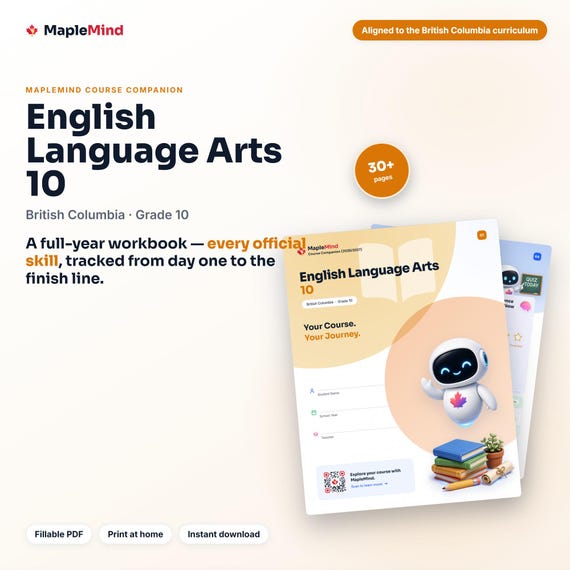
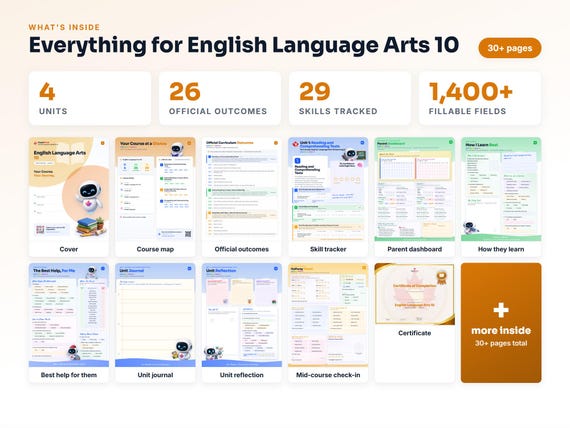
A English Language Arts 10 workbook worth keeping
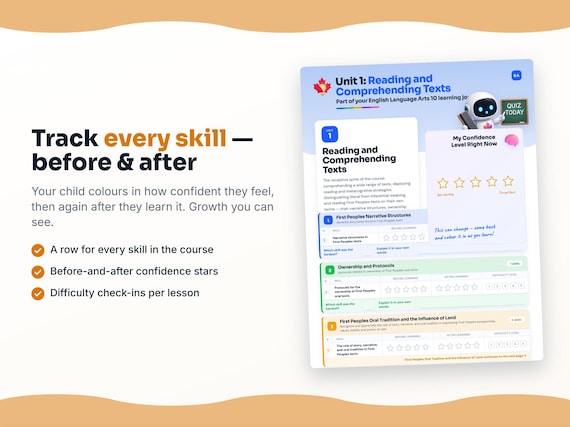
Built from the same official curriculum as this page. Before and after each skill above, your student colours in how sure they feel — so the two of you can see, on one page, what's clicking and what needs another look. It's a quiet way to follow how the year is really going.
By June it's full of their own handwriting: units worked through, confidence grown, a mid-year check-in, notes from parent-teacher night, and a certificate at the end. Less a worksheet, more a record of the year worth keeping on the shelf.
Instant download · see every page, reviews and the full description · five or more workbooks are $2.99 each
What it looks like in the app
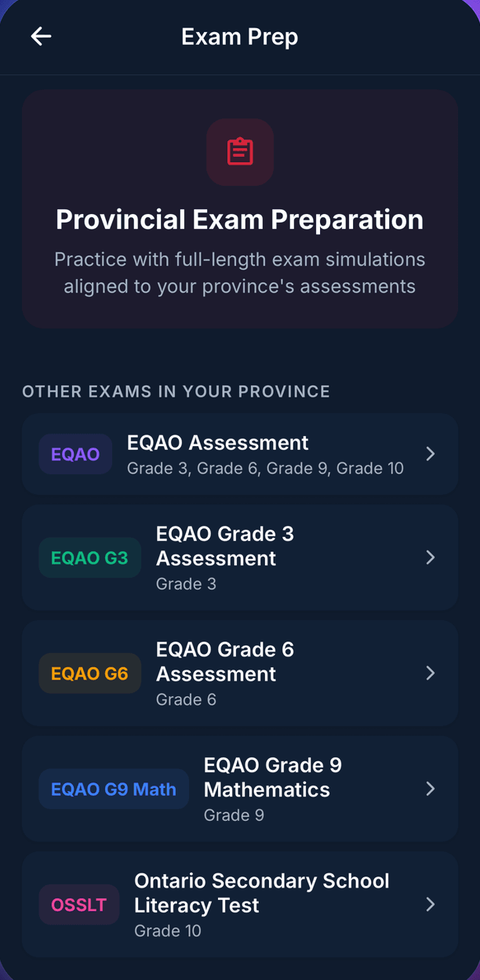
Preparing for the Grade 10 Literacy Assessment?
BC's Grade 10 Literacy Assessment is a graduation requirement. MapleMind builds reading and written-response practice from this course.
Common questions
Can MapleMind help me with English Language Arts 10?
Yes. MapleMind's AI tutor covers all 29 skills in British Columbia's English Language Arts 10 — you pick the exact skill, and the tutor teaches it step by step: a short lesson, a worked example, solving together, then a skill check to show it stuck.
Is MapleMind aligned to British Columbia's official curriculum?
Yes. Every skill in this course maps to an official outcome code from British Columbia's Grade 10 English Language Arts curriculum, and the ministry's own wording is quoted under each unit on this page — with the official government source linked so you can check it yourself.
What does MapleMind cost?
It's free to start — 5 tutoring chats and a practice quiz every day, no credit card. A Pro subscription ($9.99/month or $49.99/year CAD, 7-day free trial) unlocks unlimited tutoring, practice, and exam simulations.
What if I'm stuck on just one topic?
That's the point of skill-level tutoring: open English Language Arts 10 in the app, tap the exact skill from the list on this page, and the tutor teaches just that — no wading through lessons you don't need.
Does MapleMind work in French or other languages?
Yes — 14 languages, including French. Both the app and the tutor's explanations switch to the language you choose.
Where can I see the official British Columbia curriculum for English Language Arts 10?
The official source is linked on this page — BC's official English language arts curriculum. The outline here follows it: every MapleMind skill carries its official outcome code, and the ministry's own wording is quoted under each unit.
Does MapleMind help with the Grade 10 Literacy Assessment?
Yes. BC's Grade 10 Literacy Assessment is a graduation requirement. MapleMind builds reading and written-response practice from this course.
Keep exploring
Ready when you are
Pick a skill from this page and see it taught properly — free, in the browser, in under a minute.