Get help with Science and Technology, Grade 1
Most tutoring makes your child sit through material your child already knows. MapleMind flips that: pick the exact skill that's causing trouble — any of the 39 below — and the tutor teaches just that one, step by step, as many times as it takes. Ask questions in plain words, any time of day, in English, French, or 12 other languages.
The official Ontario Science and Technology, Grade 1 curriculum
Ontario defines Science and Technology, Grade 1 by strands and outcomes. MapleMind teaches the same curriculum reorganized for one-skill-at-a-time tutoring — the table shows exactly where every official strand lands, and the ministry's own wording is quoted under each unit below.
Official source Ontario's official science curriculumRead it on the government site — dcp.edu.gov.on.ca ↗| Official strand | Outcomes | Where MapleMind teaches it |
|---|---|---|
| Strand A | 4 | STEM Skills and Connections |
| Strand B | 8 | Needs and Characteristics of Living Things |
| Strand C | 8 | Energy in Our Lives |
| Strand D | 10 | Materials, Objects, and Everyday Structures |
| Strand E | 8 | Daily and Seasonal Changes |
Every skill below, taught one on one.
 Try the first session free
How MapleMind teaches Science and Technology, Grade 1 — every unit, lesson, and skill
Every skill below runs as a short session: a plain-words lesson, a worked example, solving it together, then a five-question skill check that earns up to three stars. Guided Mode keeps it teaching instead of answer-handing — turning it off needs a parent's password.
Unit 1STEM Skills and ConnectionsOfficial strand · Strand A
Writing simple step-by-step code, thinking about how coding and new technology change everyday life, spotting science and technology in the jobs and tools around us, and learning about people from many communities who help science grow.
Coding: Clear Step-by-Step Instructions
- Writing simple step-by-step codeA2.1 — Write and run simple code that gives clear, exact instructions in order to solve a small problem.
How Coding and New Technology Change Our Day
- Noticing how coding and new technology affect everyday lifeA2.2 — Notice and describe ways that coding and new kinds of technology change everyday life.
Science and Technology Around Us
- Finding science and technology at home and in the communityA3.1 — Describe real uses of science and technology at home and in the neighbourhood, and how they help solve everyday problems.
People Who Help Science Grow
- Learning about contributions from many communitiesA3.3 — Learn about and describe how people from many different communities have contributed to science and technology.
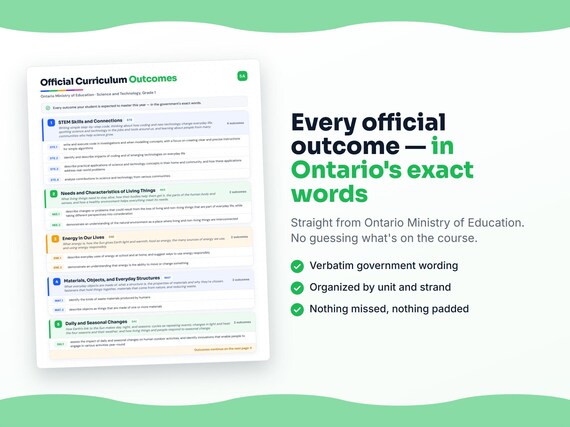
The official wording — 4 outcomes in this unit
- A2.1
write and execute code in investigations and when modelling concepts, with a focus on creating clear and precise instructions for simple algorithms
- A2.2
identify and describe impacts of coding and of emerging technologies on everyday life
- A3.1
describe practical applications of science and technology concepts in their home and community, and how these applications address real-world problems
- A3.3
analyse contributions to science and technology from various communities
Unit 2Needs and Characteristics of Living ThingsOfficial strand · Strand B
What living things need to stay alive, how their bodies help them get it, the parts of the human body and senses, and how a healthy environment helps everything meet its needs.
Caring for a Healthy Environment
- What happens when things are lostB1.1 — Describe changes or problems that could happen if living and non-living things we depend on were lost, thinking about different points of view.
- Actions for a healthy environmentB1.2 — Identify things people can do to help keep the environment healthy.
Living Things and Their Needs
- Living and non-living things are connectedB2.1 — Show that in nature, living and non-living things are connected and depend on one another.
- The basic needs of living thingsB2.2 — Identify the basic needs that all living things share: air, water, food, heat, shelter, and space.
- How body parts help living things meet needsB2.3 — Identify physical features of plants and animals, including humans, and explain how those features help them meet their basic needs.
- Parts of the human body and the sensesB2.4 — Identify where parts of the human body are and what they do, including the sensory organs used for the five senses.
- What a healthy environment gives usB2.5 — Describe what makes an environment healthy — clean air, clean water, and good food — and how it helps living things meet their needs.
- How living things help each otherB2.6 — Describe ways that living things provide for the needs of other living things.
The official wording — 8 outcomes in this unit
- B1.1
describe changes or problems that could result from the loss of living and non-living things that are part of everyday life, while taking different perspectives into consideration
- B1.2
identify actions that can be taken to contribute to a healthy environment
- B2.1
demonstrate an understanding of the natural environment as a place where living and non-living things are interconnected
- B2.2
identify the basic needs of living things, including the need for air, water, food, heat, shelter, and space
- B2.3
identify the physical characteristics of various plants and animals, including humans, and explain how these characteristics help the plants and animals meet their basic needs
- B2.4
identify the location and the function of various parts of the human body, including sensory organs
- B2.5
describe the characteristics of a healthy environment, including clean air and water and nutritious food, and how a healthy environment enables living things to meet their needs
- B2.6
describe ways in which living things provide for the needs of other living things
Unit 3Energy in Our LivesOfficial strand · Strand C
What energy is, how the Sun gives Earth light and warmth, food as energy, the many sources of energy we use, and using energy responsibly.
Using Energy Responsibly
- Using energy wisely at home and schoolC1.1 — Describe everyday ways we use energy at home and school, and suggest ways to use it responsibly.
- A day without electricityC1.2 — Describe how the lives of people and other living things would change if electrical energy were no longer available.
What Is Energy?
- Energy makes things move or changeC2.1 — Show an understanding that energy is the ability to move or change something.
- The Sun is Earth's main source of energyC2.2 — Show an understanding that the Sun is Earth's main source of energy — it warms air, land, and water, gives light, and helps plants grow.
- Food gives living things energyC2.3 — Identify food as a source of energy for living things.
- Everyday sources of energyC2.4 — Identify everyday uses of different sources of energy.
- Energy resources are limitedC2.5 — Show an understanding that humans get energy resources from the world around them, and that many of these are limited.
- How we use energy in different seasonsC2.6 — Describe how the way we use energy, and the forms we use, change with the seasons.
The official wording — 8 outcomes in this unit
- C1.1
describe everyday uses of energy at school and at home, and suggest ways to use energy responsibly
- C1.2
describe how the lives of people and other living things would be affected if electrical energy were no longer available
- C2.1
demonstrate an understanding that energy is the ability to move or change something
- C2.2
demonstrate an understanding that the Sun is Earth’s principal source of energy, including how it warms the air, land, and water; is a source of light for Earth; and makes it possible for plants to grow
- C2.3
identify food as a source of energy for living things
- C2.4
identify everyday uses of various sources of energy
- C2.5
demonstrate an understanding that humans get the energy resources they need from the world around them, and that the supply of many of these resources is limited
- C2.6
describe seasonal differences in how we use energy and in the forms of energy we use
Unit 4Materials, Objects, and Everyday StructuresOfficial strand · Strand D
What everyday objects are made of, what a structure is, the properties of materials and why they're chosen, fasteners that hold things together, materials that come from nature, and reducing waste.
Objects, Materials, and Waste
- Kinds of waste we makeD1.1 — Identify the kinds of waste materials that people produce.
- A plan to make less wasteD1.1 — Plan and carry out an action to reduce waste in the classroom or at home, and explain why each action matters.
- Where objects come from and goD1.2 — Look at everyday objects with similar jobs and think about the materials they're made of, where those materials come from, and what happens when the objects wear out.
Objects, Structures, and Materials
- Objects are made of materialsD2.1 — Describe objects as things made of one or more materials.
- Structures hold a loadD2.2 — Identify structures as objects designed to support a load, including frameworks that hold up other objects.
- Materials used to make objectsD2.3 — Identify materials that are used to make various everyday objects, including structures.
- Describing objects with our sensesD2.4 — Describe what everyday objects and structures are like using information gathered through the senses.
- What objects are forD2.5 — Describe the purposes of everyday objects, including structures.
- Why materials are chosenD2.6 — Identify properties of materials that let the objects made from them do their job.
- Fasteners that hold things togetherD2.7 — Identify different kinds of fasteners and describe what each is used for.
- Materials that come from natureD2.8 — Identify sources in nature of some common materials used to make objects, including structures.
The official wording — 10 outcomes in this unit
- D1.1
identify the kinds of waste materials produced by humans
- D1.2
assess everyday objects, including structures, that have similar purposes, in terms of the materials they are made from, the source of these materials, and what happens to these objects when they are worn out or no longer needed
- D2.1
describe objects as things that are made of one or more materials
- D2.2
identify structures that are objects designed to support a load, including those acting as supporting frameworks for objects
- D2.3
identify materials that are used to make various everyday objects, including structures
- D2.4
describe observable characteristics of various everyday objects, including structures, using qualitative information gathered through their senses
- D2.5
describe purposes of everyday objects, including structures
- D2.6
identify properties of materials that enable the objects made from them to perform their intended function
- D2.7
identify different kinds of fasteners and describe uses for each
- D2.8
identify sources in nature of some common materials that are used to make various objects, including structures
Unit 5Daily and Seasonal ChangesOfficial strand · Strand E
How Earth's link to the Sun makes day, night, and seasons; cycles as repeating events; changes in light and heat; the four seasons and their weather; and how living things and people respond to seasonal change.
How Daily and Seasonal Changes Affect Us
- Changes and outdoor activitiesE1.1 — Assess how daily and seasonal changes affect outdoor activities, and identify inventions that let people do activities all year.
- Changes affect society, environment, and living thingsE1.2 — Assess ways that daily and seasonal changes affect people, the environment, and living things in nature.
The Sun, Cycles, and the Seasons
- Earth and the Sun make day and seasonsE2.1 — Show an understanding that Earth's relationship to the Sun causes daily and seasonal changes on Earth.
- Cycles are repeating eventsE2.2 — Show an understanding that a cycle is a series of repeating events, and that cycles show up in daily and seasonal changes.
- Changes in light and heat from the SunE2.3 — Describe how the amount of light and heat from the Sun changes through the day and across the four seasons.
- The four seasons and their weatherE2.4 — Describe and compare the four seasons by their weather, including precipitation and temperature, in the local area.
- How living things change with the seasonsE2.5 — Describe changes in how living things look or behave that help them handle seasonal changes.
- How people prepare for the seasonsE2.6 — Describe how people get ready for and respond to daily and seasonal changes.
The official wording — 8 outcomes in this unit
- E1.1
assess the impact of daily and seasonal changes on human outdoor activities, and identify innovations that enable people to engage in various activities year-round
- E1.2
assess ways in which daily and seasonal changes have an impact on society, the environment, and living things in the natural environment
- E2.1
demonstrate an understanding of Earth’s relationship to the Sun and that this relationship results in daily and seasonal changes on Earth
- E2.2
demonstrate an understanding that a cycle is a series of repeating events, and that cycles can be observed in daily and seasonal changes
- E2.3
describe the changes in the amount of light and heat from the Sun that occur throughout the day and in the four seasons
- E2.4
describe and compare the four seasons in terms of the weather, including precipitation and temperature, in their local area
- E2.5
describe changes in the appearance or behaviour of living things that are adaptations to seasonal changes
- E2.6
describe how humans prepare for, and respond to, daily and seasonal changes
Printable workbook · A keepsake of the year
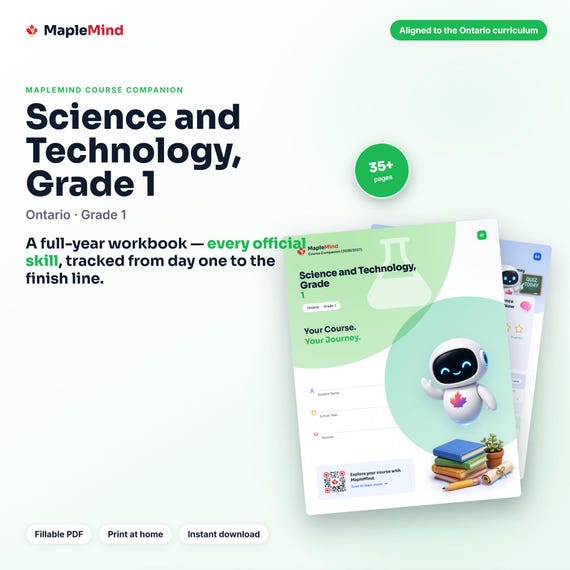
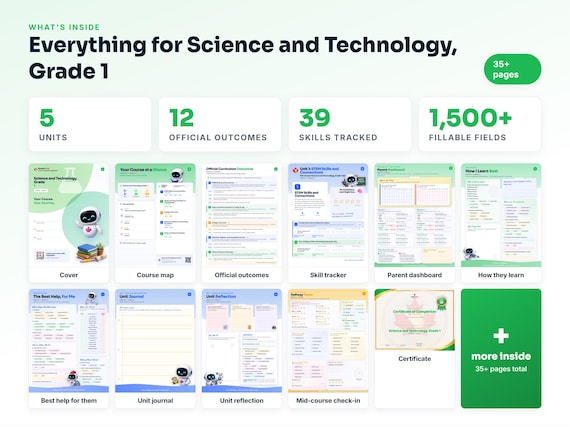
A Science and Technology, Grade 1 workbook worth keeping
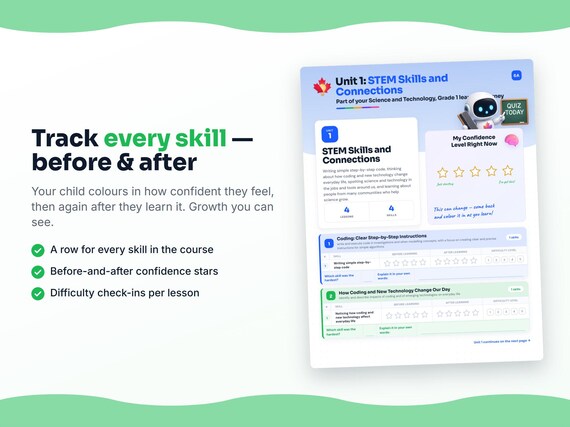
Built from the same official curriculum as this page. Before and after each skill above, your student colours in how sure they feel — so the two of you can see, on one page, what's clicking and what needs another look. It's a quiet way to follow how the year is really going.
By June it's full of their own handwriting: units worked through, confidence grown, a mid-year check-in, notes from parent-teacher night, and a certificate at the end. Less a worksheet, more a record of the year worth keeping on the shelf.
Instant download · see every page, reviews and the full description · five or more workbooks are $2.99 each
What it looks like in the app
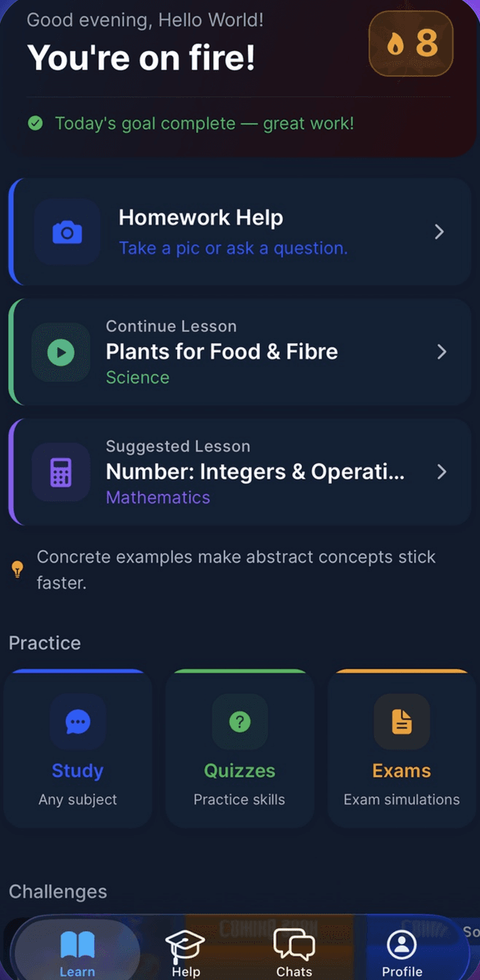
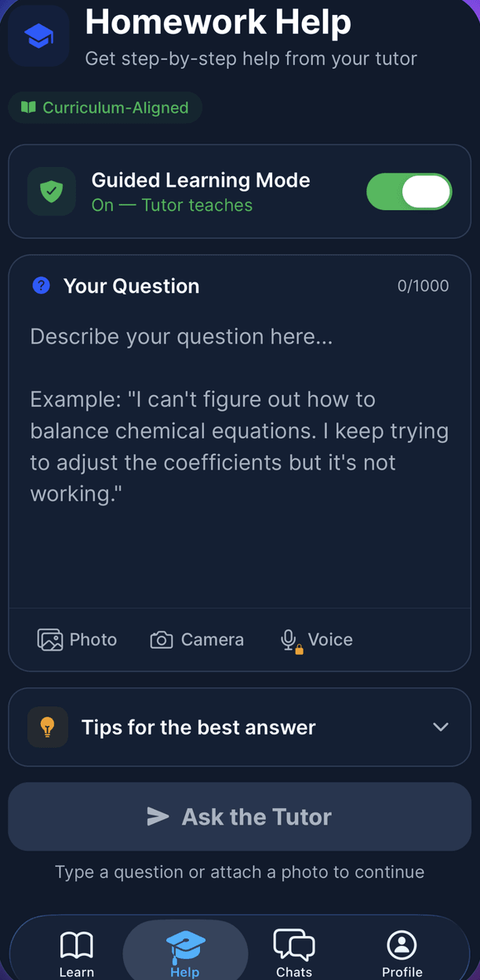
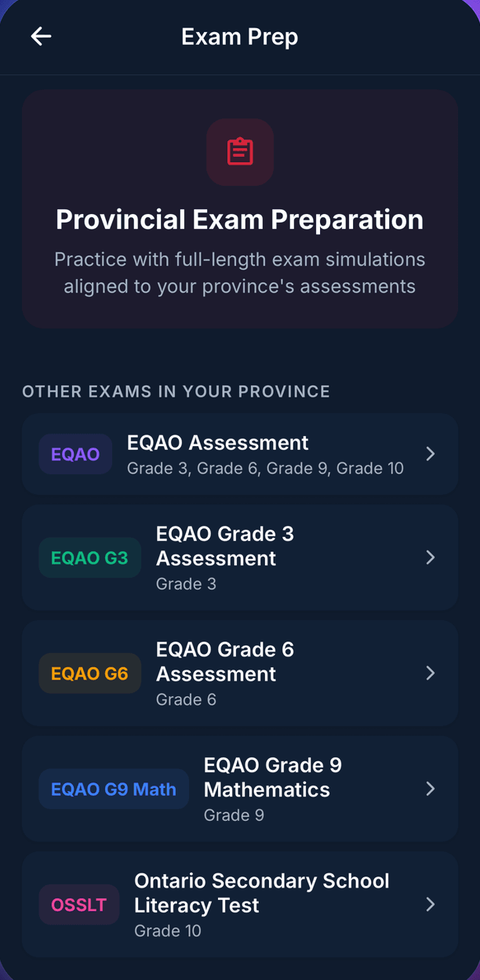
Common questions
Can MapleMind help my child with Science and Technology, Grade 1?
Yes. MapleMind's AI tutor covers all 39 skills in Ontario's Science and Technology, Grade 1 — your child picks the exact skill, and the tutor teaches it step by step: a short lesson, a worked example, solving together, then a skill check to show it stuck.
Is MapleMind aligned to Ontario's official curriculum?
Yes. Every skill in this course maps to an official outcome code from Ontario's Grade 1 Science curriculum, and the ministry's own wording is quoted under each unit on this page — with the official government source linked so you can check it yourself.
What does MapleMind cost?
It's free to start — 5 tutoring chats and a practice quiz every day, no credit card. A Pro subscription ($9.99/month or $49.99/year CAD, 7-day free trial) unlocks unlimited tutoring, practice, and exam simulations.
What if my child is stuck on just one topic?
That's the point of skill-level tutoring: open Science and Technology, Grade 1 in the app, tap the exact skill from the list on this page, and the tutor teaches just that — no wading through lessons your child doesn't need.
Does MapleMind work in French or other languages?
Yes — 14 languages, including French. Both the app and the tutor's explanations switch to the language your child chooses.
Where can I see the official Ontario curriculum for Science and Technology, Grade 1?
The official source is linked on this page — Ontario's official science curriculum. The outline here follows it: every MapleMind skill carries its official outcome code, and the ministry's own wording is quoted under each unit.
Keep exploring
Ready when you are
Pick a skill from this page and see it taught properly — free, in the browser, in under a minute.