Get help with Social Studies, Grade 8
Most tutoring makes you sit through material you already know. MapleMind flips that: pick the exact skill that's causing trouble — any of the 24 below — and the tutor teaches just that one, step by step, as many times as it takes. Ask questions in plain words, any time of day, in English, French, or 12 other languages.
The official Nova Scotia Social Studies, Grade 8 curriculum
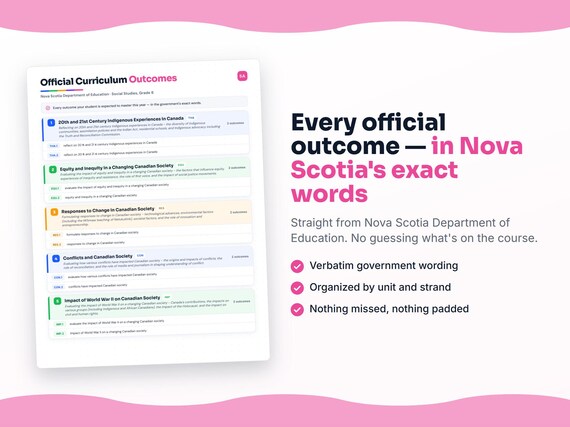
Nova Scotia defines Social Studies, Grade 8 by strands and outcomes. MapleMind teaches the same curriculum reorganized for one-skill-at-a-time tutoring — the table shows exactly where every official strand lands, and the ministry's own wording is quoted under each unit below.
Official source Nova Scotia's official curriculumRead it on the government site — curriculum.novascotia.ca ↗| Official strand | Outcomes | Where MapleMind teaches it |
|---|---|---|
| Strand 1 | 1 | 20th and 21st Century Indigenous Experiences in Canada |
| Strand 2 | 1 | Equity and Inequity in a Changing Canadian Society |
| Strand 3 | 1 | Responses to Change in Canadian Society |
| Strand 4 | 1 | Conflicts and Canadian Society |
| Strand 5 | 1 | Impact of World War II on Canadian Society |
| Strand 6 | 1 | Advocacy Action |
Every skill below, taught one on one.
 Try the first session free
How MapleMind teaches Social Studies, Grade 8 — every unit, lesson, and skill
Every skill below runs as a short session: a plain-words lesson, a worked example, solving it together, then a five-question skill check that earns up to three stars. Guided Mode keeps it teaching instead of answer-handing — turning it off needs a parent's password.
Unit 120th and 21st Century Indigenous Experiences in CanadaOfficial strand · Strand 1
Reflecting on 20th and 21st century Indigenous experiences in Canada - the diversity of Indigenous communities, assimilation policies and the Indian Act, residential schools, and Indigenous advocacy including the Truth and Reconciliation Commission.
Indigenous Diversity and Assimilation Policy
- Diversity within Indigenous communitiesNS-SS-8.1 — Investigate the diversity within Indigenous communities across Canada.
- Assimilation policies and the Indian ActNS-SS-8.1 — Investigate the purpose and impacts of assimilation policies, including the Indian Act and the reserve system, on Indigenous cultures.
Residential Schools and Indigenous Advocacy
- The impact of residential schoolsNS-SS-8.1 — Reflect on the intentions behind the residential school system and its lasting impacts on Indigenous peoples and communities.
- Indigenous advocacy and reconciliationNS-SS-8.1 — Analyse how Indigenous peoples have advocated for their rights, including the 1982 recognition of treaty rights and the Truth and Reconciliation Commission.
The official wording — 1 outcome in this unit
- NS-SS-8.1
reflect on 20th and 21st century Indigenous experiences in Canada
Unit 2Equity and Inequity in a Changing Canadian SocietyOfficial strand · Strand 2
Evaluating the impact of equity and inequity in a changing Canadian society - the factors that influence equity, experiences of inequity and resistance, the role of first voice, and the impact of social justice movements.
Factors of Equity and Experiences of Resistance
- Factors that influence equity and inequityNS-SS-8.2 — Analyse the factors that influence equity and inequity in Canadian society.
- Experiences of inequity and resistanceNS-SS-8.2 — Investigate experiences of inequity and resistance from various perspectives.
First Voice and Social Justice Movements
- The impact of first voiceNS-SS-8.2 — Investigate how first voice leads to an informed understanding of equity and inequity.
The official wording — 1 outcome in this unit
- NS-SS-8.2
evaluate the impact of equity and inequity in a changing Canadian society
Unit 3Responses to Change in Canadian SocietyOfficial strand · Strand 3
Formulating responses to change in Canadian society - technological advances, environmental factors (including the Mi'kmaw teaching of Netukulimk), societal factors, and the role of innovation and entrepreneurship.
Technological and Environmental Change
- Technological advances and changeNS-SS-8.3 — Analyse how technological advances contribute to a changing Canadian society.
- Environmental factors and NetukulimkNS-SS-8.3 — Analyse how environmental factors contribute to a changing Canadian society, including the Mi'kmaw teaching of Netukulimk.
Societal Factors and Innovation
- Societal factors and changeNS-SS-8.3 — Question how societal factors, such as immigration and the labour market, contribute to a changing Canadian society.
- Innovation and entrepreneurship in the economyNS-SS-8.3 — Investigate the role of innovation and entrepreneurship in the Canadian economy.
The official wording — 1 outcome in this unit
- NS-SS-8.3
formulate responses to change in Canadian society
Unit 4Conflicts and Canadian SocietyOfficial strand · Strand 4
Evaluating how various conflicts have impacted Canadian society - the origins and impacts of conflicts, the role of reconciliation, and the role of media and journalism in shaping understanding of conflict.
Origins and Impacts of Conflicts
- The origins of conflictsNS-SS-8.4 — Analyse the origins of various conflicts in Canadian society from multiple perspectives.
- The impacts of conflicts on societyNS-SS-8.4 — Investigate the impacts of various conflicts on Canadian society.
Reconciliation and the Role of Media
- The role of reconciliationNS-SS-8.4 — Investigate the role and purpose of reconciliation in addressing conflict in Canada.
- The role of media in understanding conflictNS-SS-8.4 — Investigate the role of media and journalism in shaping how we understand conflict.
The official wording — 1 outcome in this unit
- NS-SS-8.4
evaluate how various conflicts have impacted Canadian society
Unit 5Impact of World War II on Canadian SocietyOfficial strand · Strand 5
Evaluating the impact of World War II on a changing Canadian society - Canada's contributions, the impacts on various groups (including Indigenous and African Canadians), the impact of the Holocaust, and the impact on civil and human rights.
Canada's Contributions and Impacts on Groups
- Canada's contributions to World War IINS-SS-8.5 — Investigate the role of Canada's material and human contributions during World War II.
- Impacts of World War II on various groupsNS-SS-8.5 — Analyse the impacts of World War II on various groups in Canada, including women, Indigenous peoples, and African Canadians.
The Holocaust and Human Rights
- The impact of the Holocaust on Canadian attitudesNS-SS-8.5 — Question the impacts of the Holocaust on Canadian attitudes towards human rights, including the Evian Conference (1938) and the MS St. Louis (1939).
- The impact of WWII on civil and human rightsNS-SS-8.5 — Analyse the impact of World War II on civil and human rights in Canada, including the experiences of African Canadian veterans.
The official wording — 1 outcome in this unit
- NS-SS-8.5
evaluate the impact of World War II on a changing Canadian society
Unit 6Advocacy ActionOfficial strand · Strand 6
Planning an advocacy action in response to an issue - understanding forms of advocacy, the causes and impacts of a current issue, and evaluating the effectiveness of advocacy.
Forms of Advocacy and Causes of an Issue
- Forms of advocacyNS-SS-8.6 — Investigate various forms of advocacy and how to choose an appropriate one.
- The causes of a current issueNS-SS-8.6 — Investigate the causes of a current issue in a community.
Impacts of an Issue and Effective Advocacy
- The impacts of a current issueNS-SS-8.6 — Analyse how a current issue impacts various groups in a community over time.
- Evaluating the effectiveness of advocacyNS-SS-8.6 — Evaluate the effectiveness of various forms of advocacy and plan an advocacy action in response to an issue.
The official wording — 1 outcome in this unit
- NS-SS-8.6
plan an advocacy action in response to an issue
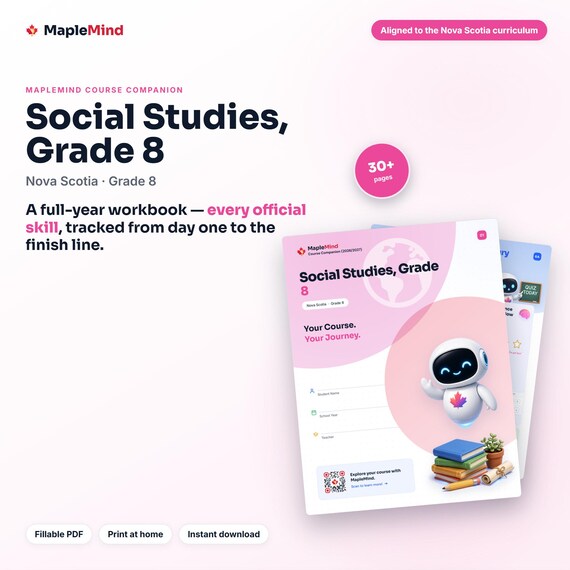
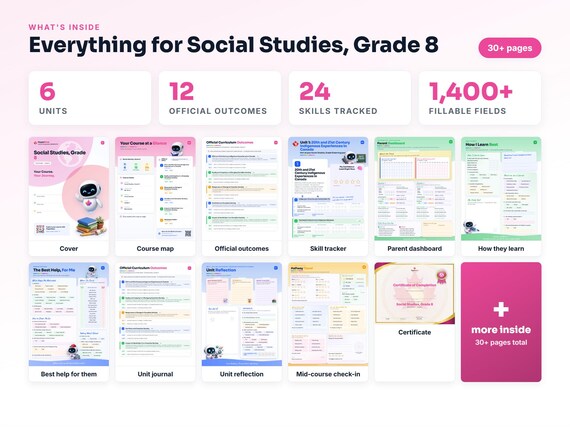
Printable workbook · A keepsake of the year
A Social Studies, Grade 8 workbook worth keeping
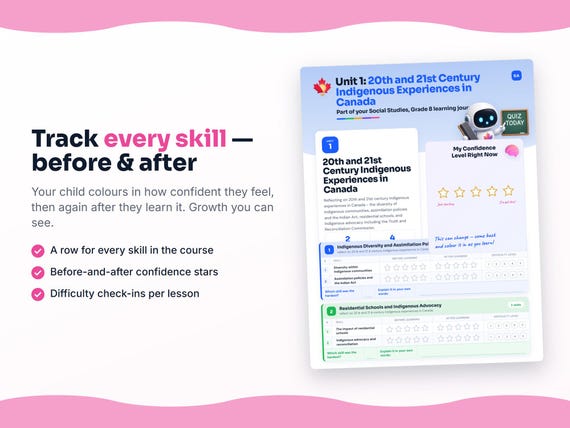
Built from the same official curriculum as this page. Before and after each skill above, your student colours in how sure they feel — so the two of you can see, on one page, what's clicking and what needs another look. It's a quiet way to follow how the year is really going.
By June it's full of their own handwriting: units worked through, confidence grown, a mid-year check-in, notes from parent-teacher night, and a certificate at the end. Less a worksheet, more a record of the year worth keeping on the shelf.
Instant download · see every page, reviews and the full description · five or more workbooks are $2.99 each
What it looks like in the app
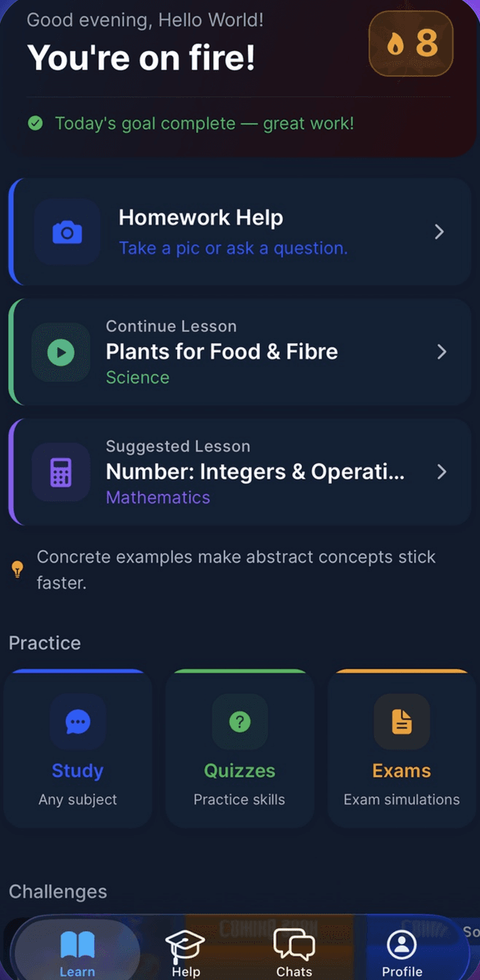
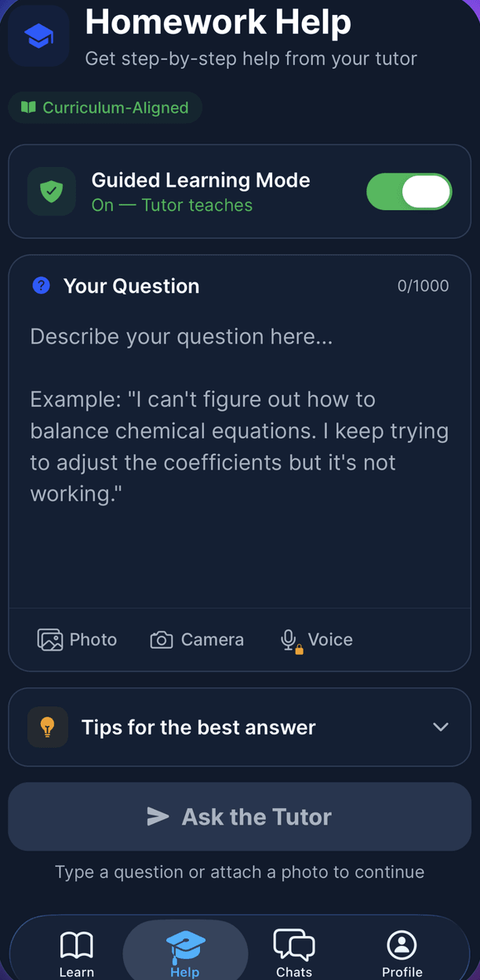
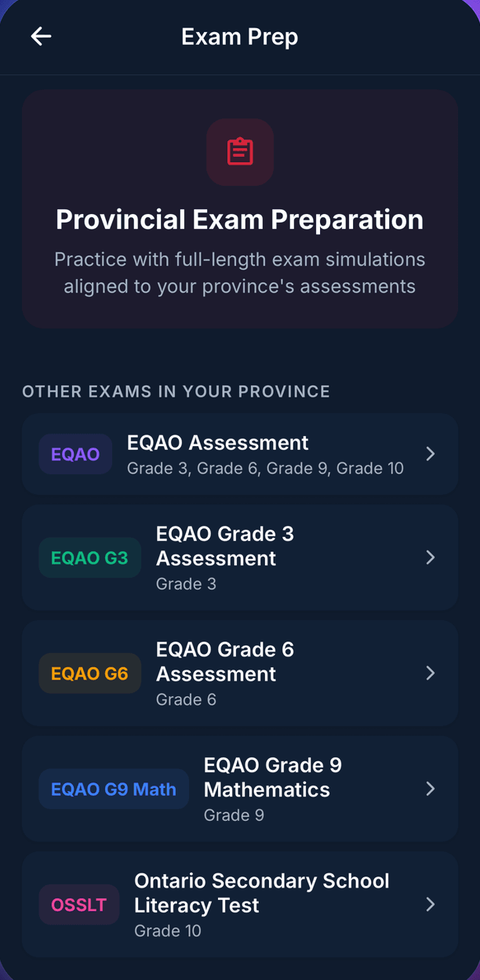
Common questions
Can MapleMind help me with Social Studies, Grade 8?
Yes. MapleMind's AI tutor covers all 24 skills in Nova Scotia's Social Studies, Grade 8 — you pick the exact skill, and the tutor teaches it step by step: a short lesson, a worked example, solving together, then a skill check to show it stuck.
Is MapleMind aligned to Nova Scotia's official curriculum?
Yes. Every skill in this course maps to an official outcome code from Nova Scotia's Grade 8 Social Studies curriculum, and the ministry's own wording is quoted under each unit on this page — with the official government source linked so you can check it yourself.
What does MapleMind cost?
It's free to start — 5 tutoring chats and a practice quiz every day, no credit card. A Pro subscription ($9.99/month or $49.99/year CAD, 7-day free trial) unlocks unlimited tutoring, practice, and exam simulations.
What if I'm stuck on just one topic?
That's the point of skill-level tutoring: open Social Studies, Grade 8 in the app, tap the exact skill from the list on this page, and the tutor teaches just that — no wading through lessons you don't need.
Does MapleMind work in French or other languages?
Yes — 14 languages, including French. Both the app and the tutor's explanations switch to the language you choose.
Where can I see the official Nova Scotia curriculum for Social Studies, Grade 8?
The official source is linked on this page — Nova Scotia's official curriculum. The outline here follows it: every MapleMind skill carries its official outcome code, and the ministry's own wording is quoted under each unit.
Keep exploring
Ready when you are
Pick a skill from this page and see it taught properly — free, in the browser, in under a minute.