Get help with Social Studies, Grade 1
Most tutoring makes your child sit through material your child already knows. MapleMind flips that: pick the exact skill that's causing trouble — any of the 21 below — and the tutor teaches just that one, step by step, as many times as it takes. Ask questions in plain words, any time of day, in English, French, or 12 other languages.
The official Newfoundland and Labrador Social Studies, Grade 1 curriculum
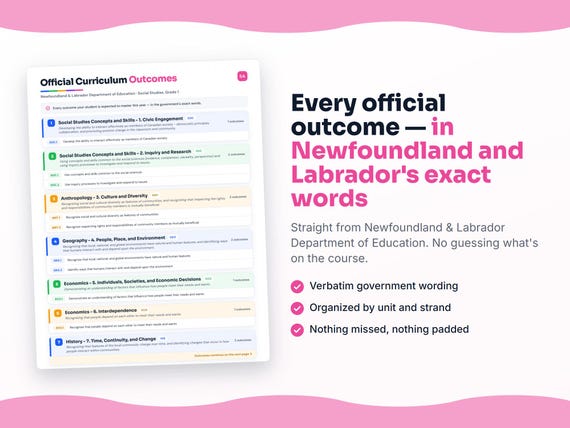
Newfoundland and Labrador defines Social Studies, Grade 1 by strands and outcomes. MapleMind teaches the same curriculum reorganized for one-skill-at-a-time tutoring — the table shows exactly where every official strand lands, and the ministry's own wording is quoted under each unit below.
Official source Newfoundland and Labrador's official curriculumRead it on the government site — gov.nl.ca ↗| Official strand | Outcomes | Where MapleMind teaches it |
|---|---|---|
| Strand 1 | 1 | Social Studies Concepts and Skills - 1. Civic Engagement |
| Strand 2 | 2 | Social Studies Concepts and Skills - 2. Inquiry and Research |
| Strand 3 | 2 | Anthropology - 3. Culture and Diversity |
| Strand 4 | 2 | Geography - 4. People, Place, and Environment |
| Strand 5 | 1 | Economics - 5. Individuals, Societies, and Economic Decisions |
| Strand 6 | 1 | Economics - 6. Interdependence |
| Strand 7 | 2 | History - 7. Time, Continuity, and Change |
Every skill below, taught one on one.
 Try the first session free
How MapleMind teaches Social Studies, Grade 1 — every unit, lesson, and skill
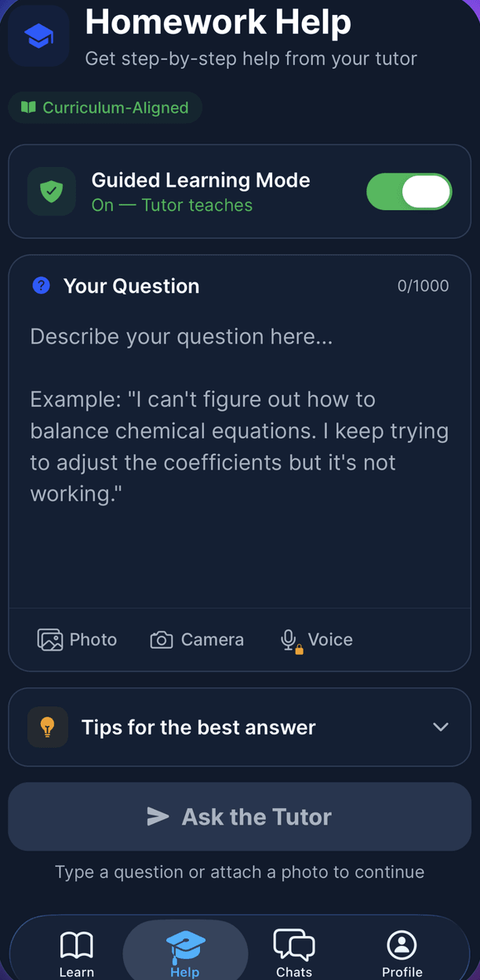
Every skill below runs as a short session: a plain-words lesson, a worked example, solving it together, then a five-question skill check that earns up to three stars. Guided Mode keeps it teaching instead of answer-handing — turning it off needs a parent's password.
Unit 1Social Studies Concepts and Skills - 1. Civic EngagementOfficial strand · Strand 1
Developing the ability to interact effectively as members of Canadian society - democratic principles, collaboration, and promoting positive change in the classroom and community.
Interacting Well With Others
- Fairness, rules, and taking turnsNL-SS-1.1 — Understand early democratic ideas: co-creating class norms, sharing, taking turns, and making fair group decisions.
- Working together in a groupNL-SS-1.1 — Learn to be an active group member: sharing responsibility, being respectful and flexible, and learning from others.
- Being a good citizen and helping othersNL-SS-1.1 — Identify ways to be a good citizen and help others, caring for people and the world around us.
The official wording — 1 outcome in this unit
- NL-SS-1.1
Develop the ability to interact effectively as members of Canadian society
Unit 2Social Studies Concepts and Skills - 2. Inquiry and ResearchOfficial strand · Strand 2
Using concepts and skills common to the social sciences (evidence, comparison, causality, perspective) and using inquiry processes to investigate and respond to issues.
Thinking Like a Social Scientist
- Using evidence and making comparisonsNL-SS-1.2 — Use evidence (clues from sources like photos and stories) and make comparisons between people, places, and events.
- Understanding causes and other people's feelingsNL-SS-1.2 — Notice cause-and-consequence relationships and consider other people's feelings and perspectives.
Asking Questions and Finding Answers
- Asking questions and gathering informationNL-SS-1.3 — Begin an inquiry by asking meaningful questions and gathering and organizing information.
- Making sense, deciding, and sharingNL-SS-1.3 — Make sense of information, draw a well-reasoned conclusion, and communicate ideas to others.
The official wording — 2 outcomes in this unit
- NL-SS-1.2
Use concepts and skills common to the social sciences
- NL-SS-1.3
Use inquiry processes to investigate and respond to issues
Unit 3Anthropology - 3. Culture and DiversityOfficial strand · Strand 3
Recognizing social and cultural diversity as features of communities, and recognizing that respecting the rights and responsibilities of community members is mutually beneficial.
Many Groups in Our Community
- How diversity helps our communityNL-SS-1.4 — Consider the benefits of diversity - new experiences, learning about other cultures, and a welcoming community.
Rights and Responsibilities
- What rights and responsibilities meanNL-SS-1.5 — Understand what rights and responsibilities are for community members.
- Why respecting others helps everyoneNL-SS-1.5 — Understand that respecting others' rights and responsibilities is mutually beneficial and keeps everyone treated fairly.
The official wording — 2 outcomes in this unit
- NL-SS-1.4
Recognize social and cultural diversity as features of communities
- NL-SS-1.5
Recognize respecting rights and responsibilities of community members as mutually beneficial
Unit 4Geography - 4. People, Place, and EnvironmentOfficial strand · Strand 4
Recognizing that local, national, and global environments have natural and human features, and identifying ways that humans interact with and depend upon the environment.
Natural and Human Features
- Telling natural and human features apartNL-SS-1.6 — Identify natural features and human features of local, national, and global environments.
- Comparing environments near and farNL-SS-1.6 — Compare the natural and human features of Newfoundland and Labrador with those of other regions and global ecosystems.
How We Use and Care for the Environment
- Ways we depend on the environmentNL-SS-1.7 — Identify ways humans interact with and depend on the environment for needs and wants.
- Caring for the environmentNL-SS-1.7 — Recognize that some interactions harm the environment and that humans have a responsibility to look after it.
The official wording — 2 outcomes in this unit
- NL-SS-1.6
Recognize that local, national, and global environments have natural and human features
- NL-SS-1.7
Identify ways that humans interact with and depend upon the environment
Unit 5Economics - 5. Individuals, Societies, and Economic DecisionsOfficial strand · Strand 5
Demonstrating an understanding of factors that influence how people meet their needs and wants.
Meeting Needs and Wants
- Needs and wantsNL-SS-1.8 — Distinguish needs from wants, including social-emotional needs, and identify how each is met.
- What makes meeting needs easier or harderNL-SS-1.8 — Identify factors (like income, weather, and resources) that influence how easily people meet their needs and wants, and how the community can help.
The official wording — 1 outcome in this unit
- NL-SS-1.8
Demonstrate an understanding of factors that influence how people meet their needs and wants
Unit 6Economics - 6. InterdependenceOfficial strand · Strand 6
Recognizing that people depend on each other to meet their needs and wants.
Depending on Each Other
- How people rely on one anotherNL-SS-1.9 — Recognize that people depend on one another - and on organizations - to meet needs and wants, benefiting both sides.
- Communities differ, and helping everyoneNL-SS-1.9 — Recognize that communities differ (rural, remote, urban) in how needs are met, and explore ways to help all members.
The official wording — 1 outcome in this unit
- NL-SS-1.9
Recognize that people depend on each other to meet their needs and wants
Unit 7History - 7. Time, Continuity, and ChangeOfficial strand · Strand 7
Recognizing that features of the local community change over time, and identifying changes that occur in how people interact within communities.
How Our Community Changes
- Features that change over timeNL-SS-1.10 — Examine how natural and human features of the local community change or stay the same over time, and suggest reasons.
How People Interact Changes Too
- Changing ways people interactNL-SS-1.11 — Identify how the ways people interact within communities - face-to-face and virtual - have changed over time, and predict future changes.
The official wording — 2 outcomes in this unit
- NL-SS-1.10
Recognize that features of the local community change over time
- NL-SS-1.11
Identify changes that occur in how people interact within communities
Printable workbook · A keepsake of the year
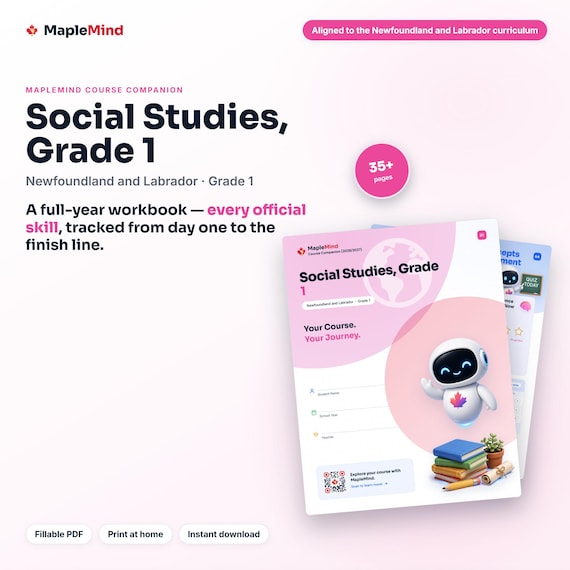
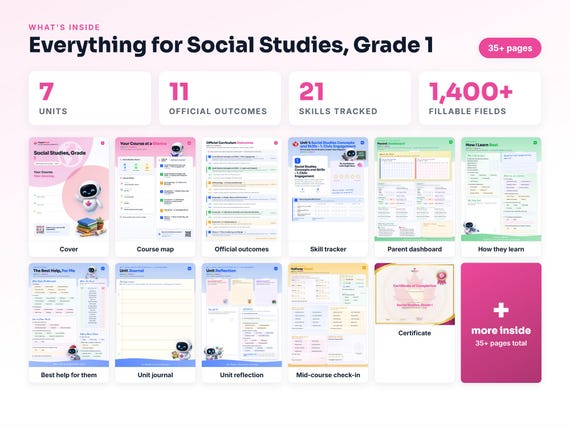
A Social Studies, Grade 1 workbook worth keeping
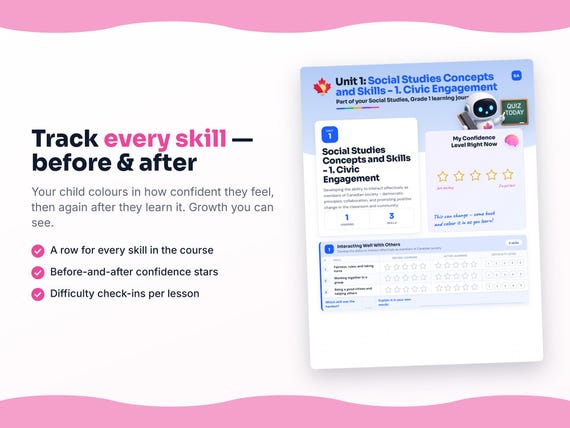
Built from the same official curriculum as this page. Before and after each skill above, your student colours in how sure they feel — so the two of you can see, on one page, what's clicking and what needs another look. It's a quiet way to follow how the year is really going.
By June it's full of their own handwriting: units worked through, confidence grown, a mid-year check-in, notes from parent-teacher night, and a certificate at the end. Less a worksheet, more a record of the year worth keeping on the shelf.
Instant download · see every page, reviews and the full description · five or more workbooks are $2.99 each
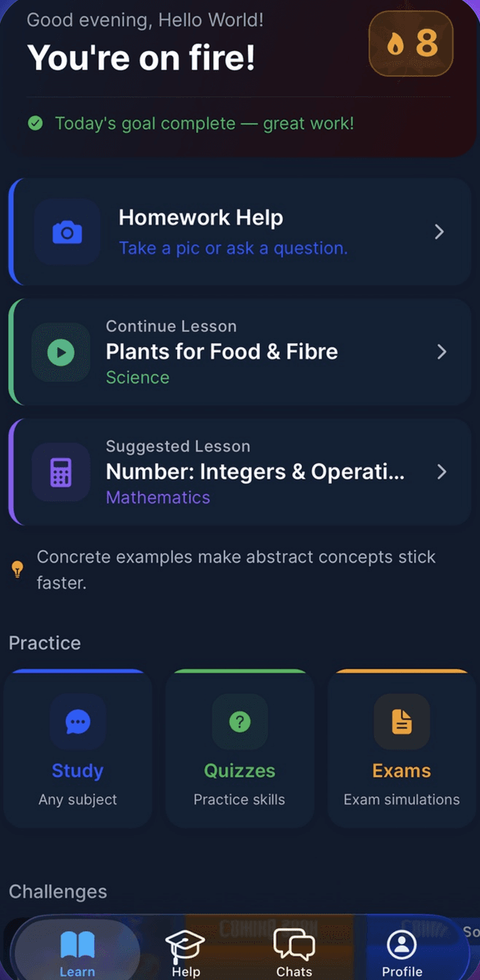
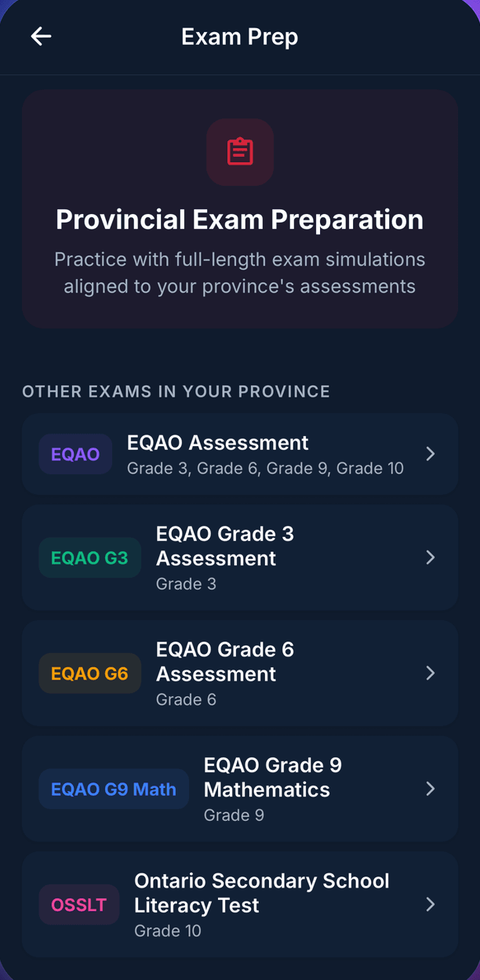
What it looks like in the app
Common questions
Can MapleMind help my child with Social Studies, Grade 1?
Yes. MapleMind's AI tutor covers all 21 skills in Newfoundland and Labrador's Social Studies, Grade 1 — your child picks the exact skill, and the tutor teaches it step by step: a short lesson, a worked example, solving together, then a skill check to show it stuck.
Is MapleMind aligned to Newfoundland and Labrador's official curriculum?
Yes. Every skill in this course maps to an official outcome code from Newfoundland and Labrador's Grade 1 Social Studies curriculum, and the ministry's own wording is quoted under each unit on this page — with the official government source linked so you can check it yourself.
What does MapleMind cost?
It's free to start — 5 tutoring chats and a practice quiz every day, no credit card. A Pro subscription ($9.99/month or $49.99/year CAD, 7-day free trial) unlocks unlimited tutoring, practice, and exam simulations.
What if my child is stuck on just one topic?
That's the point of skill-level tutoring: open Social Studies, Grade 1 in the app, tap the exact skill from the list on this page, and the tutor teaches just that — no wading through lessons your child doesn't need.
Does MapleMind work in French or other languages?
Yes — 14 languages, including French. Both the app and the tutor's explanations switch to the language your child chooses.
Where can I see the official Newfoundland and Labrador curriculum for Social Studies, Grade 1?
The official source is linked on this page — Newfoundland and Labrador's official curriculum. The outline here follows it: every MapleMind skill carries its official outcome code, and the ministry's own wording is quoted under each unit.
Keep exploring
Ready when you are
Pick a skill from this page and see it taught properly — free, in the browser, in under a minute.