Get help with Intensive French, Grade 5
Most tutoring makes your child sit through material your child already knows. MapleMind flips that: pick the exact skill that's causing trouble — any of the 35 below — and the tutor teaches just that one, step by step, as many times as it takes. Ask questions in plain words, any time of day, in English, French, or 12 other languages.
The official New Brunswick Intensive French, Grade 5 curriculum
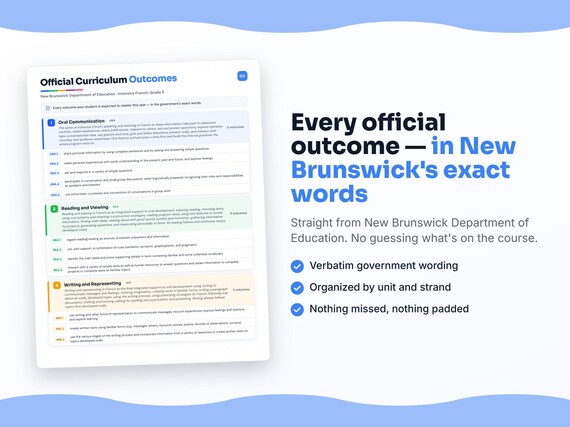
New Brunswick defines Intensive French, Grade 5 by strands and outcomes. MapleMind teaches the same curriculum reorganized for one-skill-at-a-time tutoring — the table shows exactly where every official strand lands, and the ministry's own wording is quoted under each unit below.
Official source New Brunswick's official K-12 education resourcesRead it on the government site — www2.gnb.ca ↗| Official strand | Outcomes | Where MapleMind teaches it |
|---|---|---|
| Strand 1 | 13 | Oral Communication |
| Strand 2 | 12 | Reading and Viewing |
| Strand 3 | 9 | Writing and Representing |
Every skill below, taught one on one.
 Try the first session free
How MapleMind teaches Intensive French, Grade 5 — every unit, lesson, and skill
Every skill below runs as a short session: a plain-words lesson, a worked example, solving it together, then a five-question skill check that earns up to three stars. Guided Mode keeps it teaching instead of answer-handing — turning it off needs a parent's password.
Unit 1Oral CommunicationOfficial strand · Strand 1
The spine of Intensive French: speaking and listening in French to share information, take part in classroom routines, relate experiences, share preferences, respond to others, ask and answer questions, express opinions, take conversational roles, use gesture and tone, give and follow directions, present orally, and interact with courtesy and audience awareness. Oral fluency and accuracy come first and build the internal grammar the whole program rests on.
Sharing About Yourself and Living the Class in French
- Sharing personal informationNB.IF5.2 — Share personal information in French using complete sentences and by asking and answering simple questions.
- Taking part in classroom routinesNB.IF5.3 — Participate in classroom routines conducted in French, using useful phrases and expressions for many situations.
Experiences, Preferences, and Responding to Others
- Relating experiences across timeNB.IF5.4 — Relate personal experiences in French with some understanding of present, past, and future, and express feelings.
- Sharing preferences and interestsNB.IF5.5 — Share your preferences and interests in French with respect to familiar topics.
- Listening and responding to othersNB.IF5.6 — Listen to others' ideas and respond in simple French sentences.
Asking Questions and Giving Opinions
- Asking and answering a variety of questionsNB.IF5.7 — Ask and respond to a variety of simple questions in French.
- Expressing opinions with simple explanationsNB.IF5.8 — Express opinions in French and give simple explanations for some of them.
Conversation Roles, Gesture, and Directions
- Taking part in conversations and discussionsNB.IF5.10 — Participate in conversation and small-group discussions in French, when linguistically prepared, recognizing speaker and listener roles.
- Using gesture and tone to convey meaningNB.IF5.11 — Use gestures and tone to help clarify and convey meaning in French conversations and presentations.
- Giving and following simple directionsNB.IF5.12 — Respond to and give simple directions or instructions in French.
- Giving and responding to oral presentationsNB.IF5.13 — Engage in simple oral presentations in French and respond to the presentations of others.
Courtesy and Speaking to Your Audience
- Using courtesies and conventions of conversationNB.IF5.15 — Use some basic courtesies and conventions of conversation in French group work.
- Choosing language for the situation and audienceNB.IF5.16 — Show an awareness of the kinds of language appropriate to different situations and audiences, given one's linguistic preparedness.
The official wording — 13 outcomes in this unit
- NB.IF5.2
share personal information by using complete sentences and by asking and answering simple questions
- NB.IF5.3
participate in classroom routines conducted in French using phrases and expressions that are useful in many different situations
- NB.IF5.4
relate personal experiences with some understanding of the present, past and future, and express feelings
- NB.IF5.5
share their preferences and interests with respect to familiar topics
- NB.IF5.6
listen to others’ ideas and respond in simple sentences
- NB.IF5.7
ask and respond to a variety of simple questions
- NB.IF5.8
express opinions and give simple explanations for some of their opinions
- NB.IF5.10
participate in conversation and small group discussions, when linguistically prepared, recognizing their roles and responsibilities as speakers and listeners
- NB.IF5.11
use gestures and tone to help clarify and convey meaning in conversations and presentations
- NB.IF5.12
respond to and give simple directions or instructions
- NB.IF5.13
engage in simple oral presentations and respond to oral presentations of others
- NB.IF5.15
use some basic courtesies and conventions of conversations in group work
- NB.IF5.16
show an awareness of the kinds of language appropriate to different situations and audience to the degree possible given their linguistic preparedness
Unit 2Reading and ViewingOfficial strand · Strand 2
Reading and viewing in French as an integrated support to oral development: enjoying reading, choosing texts, using cue systems and meaning-construction strategies, reading program texts, using text features to locate information, finding main ideas, reading aloud with good sound-symbol and intonation, gathering information for projects, generating questions, and responding personally to texts. All reading follows and reinforces topics developed orally.
Enjoying and Choosing French Texts
- Reading and viewing for enjoyment and informationNB.IF5.18 — Regard reading and viewing as sources of interest, enjoyment, and information in French.
- Choosing texts that suit youNB.IF5.19 — Select, independently or with teacher assistance, French texts appropriate to your interests and learning needs.
Strategies for Making Meaning
- Using cue systems to construct meaningNB.IF5.20 — Use, with support, a combination of cues - semantic, syntactic, graphophonic, and pragmatic - to construct meaning from a French text.
- Using a variety of strategies to construct meaningNB.IF5.20 — Use a variety of reading strategies to construct meaning from a French text, with support.
- Reading program fiction and non-fictionNB.IF5.21 — Read a variety of fiction and non-fiction French texts identified for the Intensive French program.
- Using text features to locate informationNB.IF5.22 — Use pictures and illustrations, word structures, and text features - table of contents, headings, subheadings - to locate information in French.
Finding Main Ideas and Reading Aloud
- Finding main ideas and supporting detailsNB.IF5.23 — Identify the main ideas and some supporting details in French texts containing familiar and some unfamiliar vocabulary.
- Reading aloud with sound and intonationNB.IF5.24 — Read orally in French demonstrating correct sound/symbol relationships, good intonation, and appropriate phrasing that reflects overall comprehension.
Reading for Projects and Responding to Texts
- Gathering information for projectsNB.IF5.26 — Interact with simple French texts and human resources to answer questions and obtain information for projects on familiar topics.
- Generating questions to guide projectsNB.IF5.27 — Generate simple questions in French to guide the development of projects.
- Expressing and supporting opinions about textsNB.IF5.29 — Express and begin to support opinions about French texts and illustrations.
- Making personal connections to textsNB.IF5.30 — Make personal connections to French texts and describe, share, and discuss reactions and emotions in simple language.
- Responding to texts in a variety of waysNB.IF5.31 — Respond personally to French texts in a variety of ways - drawing, writing, mime, drama, readers' theatre.
The official wording — 12 outcomes in this unit
- NB.IF5.18
regard reading/viewing as sources of interest, enjoyment and information
- NB.IF5.19
select, independently or with teacher assistance, texts appropriate to their interests and learning needs
- NB.IF5.20
use, with support, a combination of cues (semantic, syntactic, graphophonic, and pragmatic)
- NB.IF5.21
read a variety of fiction and non-fiction texts identified for the Intensive French program
- NB.IF5.22
use pictures and illustrations, word structures, and text features (e.g., table of contents, headings and subheadings) to locate information
- NB.IF5.23
identify the main ideas and some supporting details in texts containing familiar and some unfamiliar vocabulary
- NB.IF5.24
read orally demonstrating correct sound/symbol relationships, and good intonation and appropriate phrasing reflecting an overall comprehension of the text
- NB.IF5.26
interact with a variety of simple texts as well as human resources to answer questions and obtain information to complete projects or complete texts on familiar topics
- NB.IF5.27
generate simple questions to guide the development of projects
- NB.IF5.29
express and begin to support opinions about texts and illustrations
- NB.IF5.30
make personal connections to texts and describe, share and discuss in simple language their reactions and emotions
- NB.IF5.31
respond personally to texts in a variety of ways (e.g., drawing, writing, mime, drama, and readers’ theater)
Unit 3Writing and RepresentingOfficial strand · Strand 3
Writing and representing in French as the final integrated support to oral development: using writing to communicate messages and feelings, showing imagination, creating texts in familiar forms, writing a paragraph about an orally developed topic, using the writing process, using prewriting strategies (in French, following oral discussion), drafting and revising, editing for spelling and punctuation, and publishing. Writing always follows topics first developed orally.
Writing to Communicate and Imagine
- Writing to communicate messages and feelingsNB.IF5.33 — Use writing and other forms of representation in French to communicate messages, recount experiences, express feelings and opinions, and explore learning.
- Showing imagination in writingNB.IF5.34 — Demonstrate imagination in French writing and representation.
Creating Texts and Writing a Paragraph
- Creating texts in familiar formsNB.IF5.36 — Create French written texts using familiar forms - messages, letters, recounts, stories, poems, records of observations, surveys.
- Writing a paragraph on an orally developed topicNB.IF5.37 — Write one or two French paragraphs with reasonable accuracy about a topic or subject that has been developed orally.
The Writing Process: Plan, Draft, Edit, Publish
- Using the writing process with resourcesNB.IF5.39 — Use the various stages of the writing process and incorporate information from resources to create French texts on topics developed orally.
- Using prewriting strategies in FrenchNB.IF5.40 — Use prewriting strategies - discussion, researching, interviewing - to generate and organize ideas for writing, in French and following oral development.
- Drafting and making simple revisionsNB.IF5.41 — Create a draft and make simple revisions to ensure the message is clear, in French.
- Editing for spelling and punctuationNB.IF5.42 — Use editing strategies in French to check spelling of familiar words and punctuation, using journals as a resource.
- Publishing and presenting your writingNB.IF5.43 — Use appropriate techniques for publishing and presenting in French - word processor, presentation software, illustrations, charts, diagrams.
The official wording — 9 outcomes in this unit
- NB.IF5.33
use writing and other forms of representation to communicate messages, recount experiences, express feelings and opinions and explore learning
- NB.IF5.34
demonstrate imagination
- NB.IF5.36
create written texts using familiar forms (e.g., messages, letters, recounts, stories, poems, records of observations, surveys)
- NB.IF5.37
write one or two paragraphs with reasonable accuracy about a topic/subject that has been developed orally
- NB.IF5.39
use the various stages of the writing process and incorporate information from a variety of resources to create written texts on topics developed orally
- NB.IF5.40
use some prewriting strategies (e.g., discussion, researching, interviewing) to generate and organize ideas for writing
- NB.IF5.41
create a draft and make simple revisions to ensure the message is clear
- NB.IF5.42
use editing strategies to check for spelling of familiar words and punctuation; check spelling and sentence structure using their journals as a resource
- NB.IF5.43
use appropriate techniques for publishing/presenting (e.g. use of word processor, PowerPoint, and the inclusion of illustrations, charts, diagrams to enhance writing)
Printable workbook · A keepsake of the year
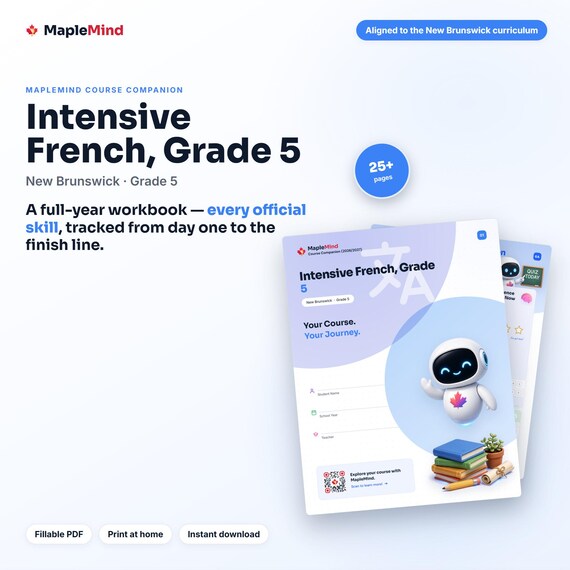
A Intensive French, Grade 5 workbook worth keeping
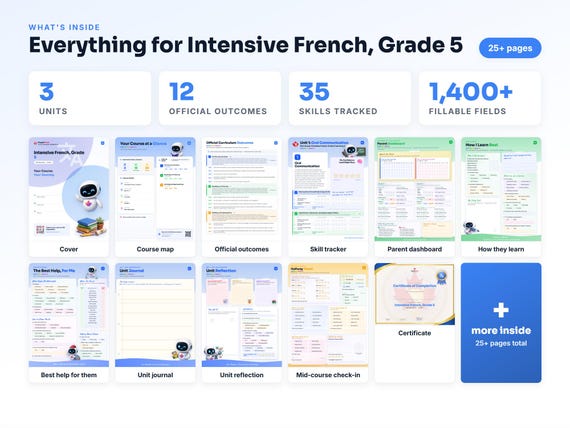
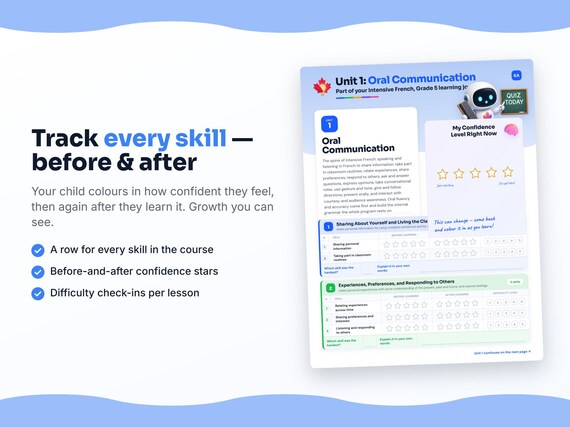
Built from the same official curriculum as this page. Before and after each skill above, your student colours in how sure they feel — so the two of you can see, on one page, what's clicking and what needs another look. It's a quiet way to follow how the year is really going.
By June it's full of their own handwriting: units worked through, confidence grown, a mid-year check-in, notes from parent-teacher night, and a certificate at the end. Less a worksheet, more a record of the year worth keeping on the shelf.
Instant download · see every page, reviews and the full description · five or more workbooks are $2.99 each
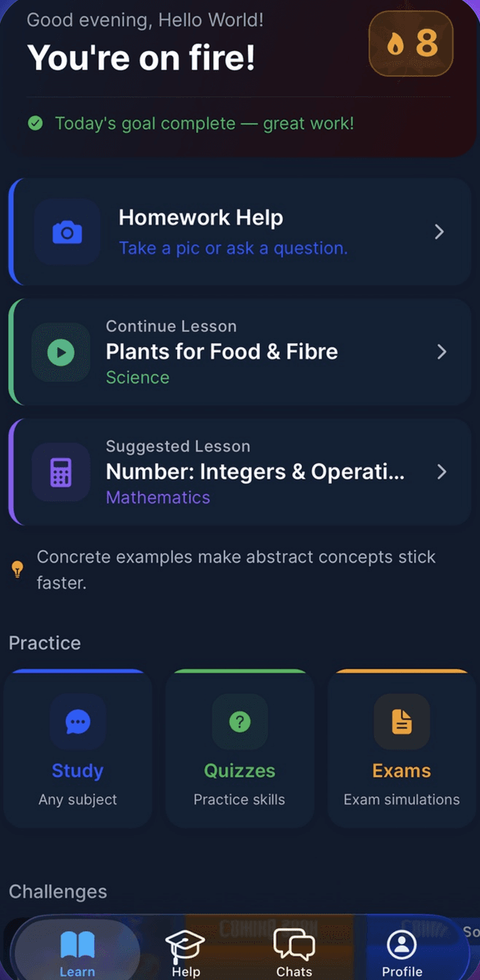
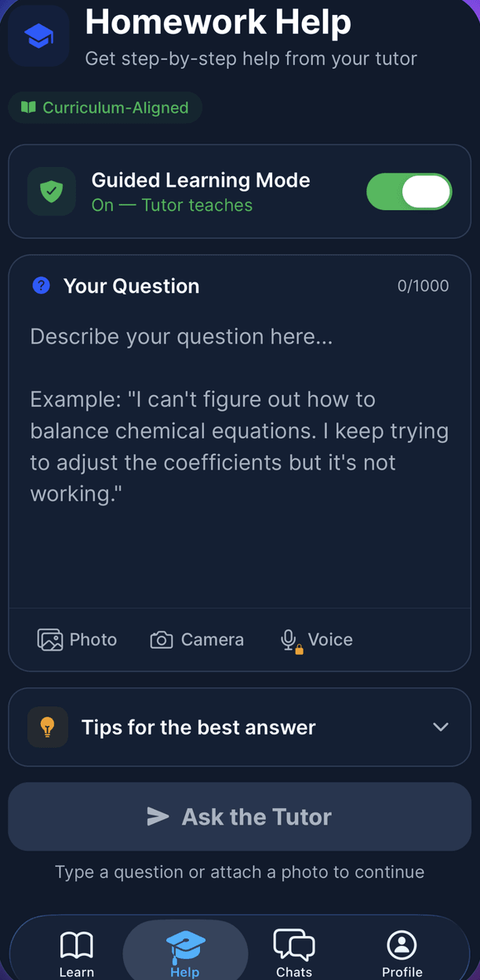
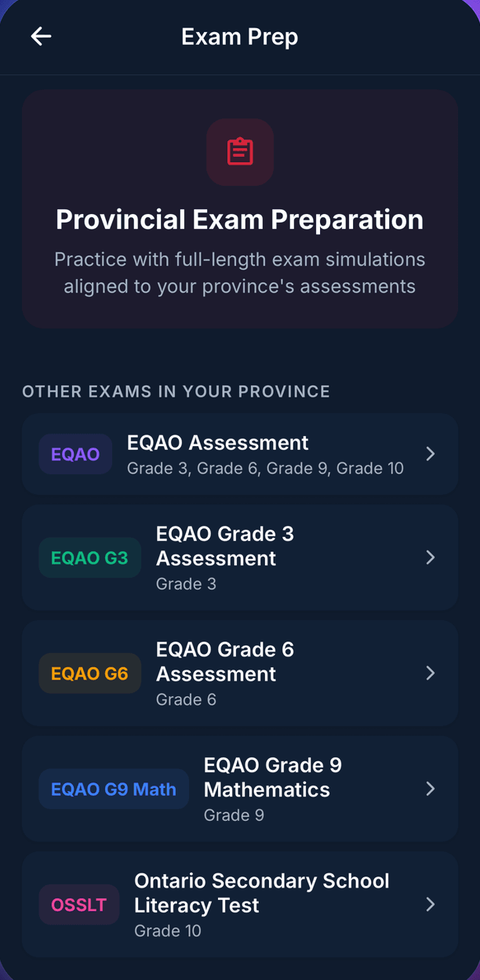
What it looks like in the app
Common questions
Can MapleMind help my child with Intensive French, Grade 5?
Yes. MapleMind's AI tutor covers all 35 skills in New Brunswick's Intensive French, Grade 5 — your child picks the exact skill, and the tutor teaches it step by step: a short lesson, a worked example, solving together, then a skill check to show it stuck.
Is MapleMind aligned to New Brunswick's official curriculum?
Yes. Every skill in this course maps to an official outcome code from New Brunswick's Grade 5 French curriculum, and the ministry's own wording is quoted under each unit on this page — with the official government source linked so you can check it yourself.
What does MapleMind cost?
It's free to start — 5 tutoring chats and a practice quiz every day, no credit card. A Pro subscription ($9.99/month or $49.99/year CAD, 7-day free trial) unlocks unlimited tutoring, practice, and exam simulations.
What if my child is stuck on just one topic?
That's the point of skill-level tutoring: open Intensive French, Grade 5 in the app, tap the exact skill from the list on this page, and the tutor teaches just that — no wading through lessons your child doesn't need.
Does MapleMind work in French or other languages?
Yes — 14 languages, including French. Both the app and the tutor's explanations switch to the language your child chooses.
Where can I see the official New Brunswick curriculum for Intensive French, Grade 5?
The official source is linked on this page — New Brunswick's official K-12 education resources. The outline here follows it: every MapleMind skill carries its official outcome code, and the ministry's own wording is quoted under each unit.
Keep exploring
Ready when you are
Pick a skill from this page and see it taught properly — free, in the browser, in under a minute.