Get help with French as a Second Language 7 (Nine-Year Program)
Most tutoring makes you sit through material you already know. MapleMind flips that: pick the exact skill that's causing trouble — any of the 20 below — and the tutor teaches just that one, step by step, as many times as it takes. Ask questions in plain words, any time of day, in English, French, or 12 other languages.
The official Alberta French as a Second Language 7 (Nine-Year Program) curriculum
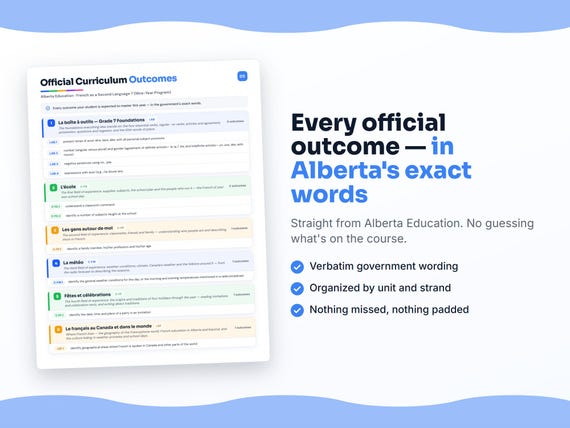
Alberta defines French as a Second Language 7 (Nine-Year Program) by strands and outcomes. MapleMind teaches the same curriculum reorganized for one-skill-at-a-time tutoring — the table shows exactly where every official strand lands, and the ministry's own wording is quoted under each unit below.
Official source Alberta's official programs of studyRead it on the government site — alberta.ca ↗| Official strand | Outcomes | Where MapleMind teaches it |
|---|---|---|
| Language | 2 | La boîte à outils — Grade 7 Foundations |
| Communication · Field: School | 4 | L'école |
| Communication · Field: People around Me | 2 | Les gens autour de moi |
| Communication · Field: Weather | 2 | La météo |
| Communication · Field: Four Holidays and Celebrations | 2 | Fêtes et célébrations |
| Culture | 1 | Le français au Canada et dans le monde |
Every skill below, taught one on one.
 Try the first session free
How MapleMind teaches French as a Second Language 7 (Nine-Year Program) — every unit, lesson, and skill
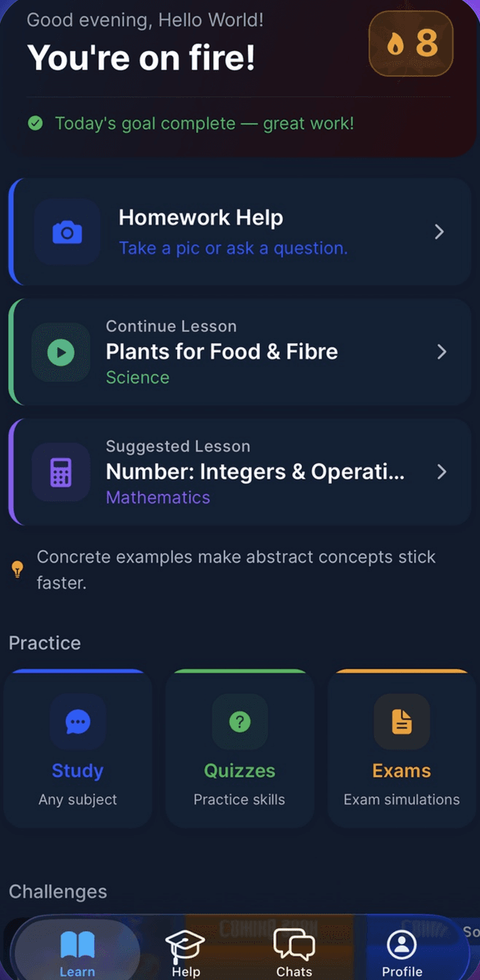
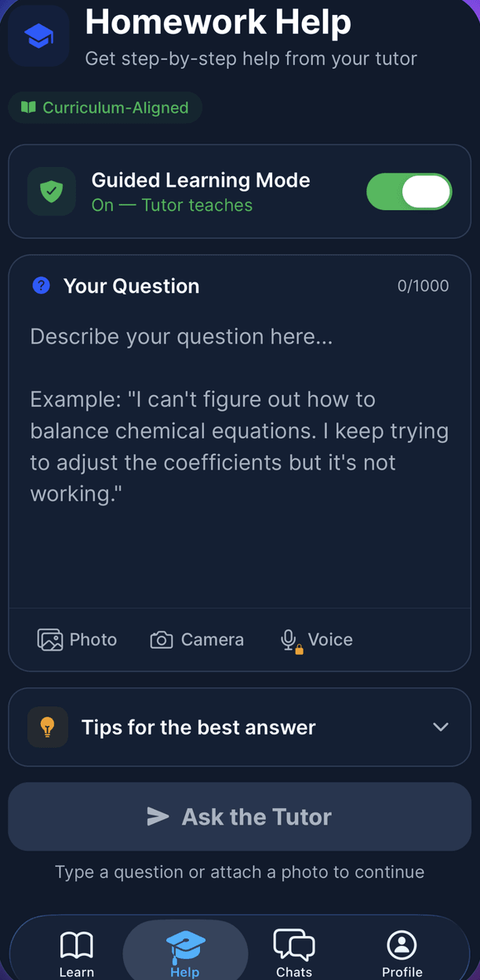
Every skill below runs as a short session: a plain-words lesson, a worked example, solving it together, then a five-question skill check that earns up to three stars. Guided Mode keeps it teaching instead of answer-handing — turning it off needs a parent's password.
Unit 1La boîte à outils — Grade 7 FoundationsOfficial strand · Language
The foundations everything else stands on: the four essential verbs, regular –er verbs, articles and agreement, possession, questions and negation, and the little words of place.
Les verbes essentiels
- Avoir, être, faire, aller in the present7.L.2 — Use the present tense of the four essential irregular verbs — avoir, être, faire, aller — with all subject pronouns.
- Regular –er verbs in the present7.L.1 — Conjugate regular –er verbs (aimer, étudier, dessiner, fêter, regarder, travailler) in the present tense.
Articles, genre et possession
- Articles and agreement7.L.2 — Match definite (le, la, l', les) and indefinite (un, une, des) articles to their noun's gender and number.
- Possessive adjectives7.L.2 — Use the possessive adjectives mon/ma/mes, ton/ta/tes, son/sa/ses, notre/nos to say whose things are whose.
Questions et négation
- Saying no: ne … pas7.L.2 — Build negative sentences with the ne … pas sandwich around the verb.
- Asking questions7.L.2 — Ask questions with est-ce que and rising intonation, and with the question words qui, qu'est-ce que, où, combien, comment, quand, quel/quelle, à quelle heure.
Expressions et prépositions de lieu
- Expressions with avoir and faire7.L.2 — Use everyday expressions with avoir (J'ai douze ans) and faire (Il fait beau; Il fait du ski).
- Prepositions of place7.L.2 — Say where things are with à, sous, sur, dans, devant, derrière, à côté de (Le bureau est à côté du tableau) — including the à/de contractions.
The official wording — 2 outcomes in this unit
- 7.L.2
present tense of avoir, être, faire, aller with all personal subject pronouns
- 7.L.1
conjugation pattern of regular –er verbs in the present tense
Unit 2L'écoleOfficial strand · Communication · Field: School
The first field of experience: supplies, subjects, the school plan and the people who run it — the French of your own school day.
Comprendre l'école en français
- Understanding classroom French7.C.1 — Understand spoken classroom French — commands, instructions and school talk — by catching key words (understand a classroom command).
- Reading school documents7.C.2 — Pull the needed information from written school French — understand a list of required school supplies.
Parler de mon école
- Talking about school subjects7.C.3 — Name and describe school life orally in structured French — identify a number of subjects taught at the school.
- Labelling a school floor plan7.C.4 — Produce written school French in a highly structured, modelled fashion — label a school floor plan.
The official wording — 4 outcomes in this unit
- 7.C.1
understand a classroom command
- 7.C.2
understand a list of required school supplies
- 7.C.3
identify a number of subjects taught at the school
- 7.C.4
label a school floor plan
Unit 3Les gens autour de moiOfficial strand · Communication · Field: People around Me
The second field of experience: classmates, friends and family — understanding who people are and describing them in French.
Ma famille et mes amis
- Understanding talk about people7.C.1 — Understand spoken French about people — identify a family member, his/her profession and his/her age.
- Describing people7.C.3 — Describe people orally with basic qualifying adjectives — colour (les yeux verts), physical traits (Son père est mince), qualities (Mon ami est sympathique).
The official wording — 2 outcomes in this unit
- 7.C.1
identify a family member, his/her profession and his/her age
- 7.C.3
name, list, describe, ask and answer questions, give simple directions, indicate basic needs or preferences orally
Unit 4La météoOfficial strand · Communication · Field: Weather
The third field of experience: weather conditions, climate, Canada's weather and the folklore around it — from the radio forecast to describing the seasons.
Quel temps fait-il ?
- Understanding a weather report7.C.1 — Understand spoken weather French — identify the general weather conditions for the day, or the morning and evening temperatures mentioned in a radio broadcast.
- Describing the weather7.C.3 — Describe weather and seasons orally with il fait expressions — describe the seasonal weather for a French-speaking area of the world.
The official wording — 2 outcomes in this unit
- 7.C.1
identify the general weather conditions for the day, or the morning and evening temperatures mentioned in a radio broadcast
- 7.C.3
describe the seasonal weather for a French-speaking area of the world
Unit 5Fêtes et célébrationsOfficial strand · Communication · Field: Four Holidays and Celebrations
The fourth field of experience: the origins and traditions of four holidays through the year — reading invitations and celebration texts, and writing about traditions.
Les fêtes
- Reading invitations and celebration texts7.C.2 — Pull the key details from written celebration French — identify the date, time and place of a party in an invitation; identify the name of a Francophone celebration and where, when and how it is celebrated.
- Writing about holiday traditions7.C.4 — Produce structured written French about celebrations — describe holiday traditions.
The official wording — 2 outcomes in this unit
- 7.C.2
identify the date, time and place of a party in an invitation
- 7.C.4
describe holiday traditions
Unit 6Le français au Canada et dans le mondeOfficial strand · Culture
Where French lives — the geography of the Francophone world, French education in Alberta and beyond, and the culture hiding in weather proverbs and school days.
Où parle-t-on français ?
- Where French is spoken7.CU.1 — Identify geographical areas where French is spoken in Canada and other parts of the world, and recognize that Francophone education is available in Alberta (Faculté Saint-Jean) and across Canada.
- Comparing ways of life7.CU.1 — Compare weather proverbs in English and French, and ways of life across cultures — like the school day in Canada versus France.
The official wording — 1 outcome in this unit
- 7.CU.1
identify geographical areas where French is spoken in Canada and other parts of the world

Printable workbook · A keepsake of the year
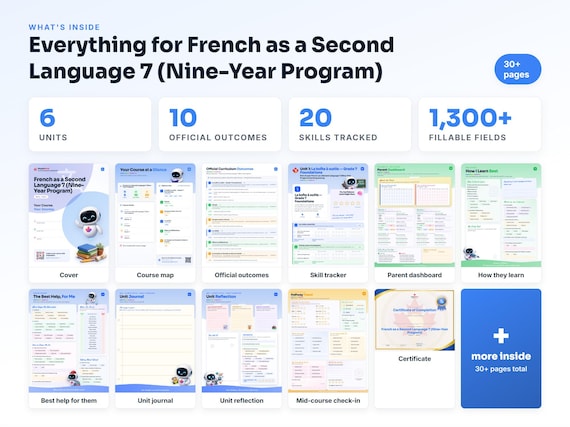
A French as a Second Language 7 (Nine-Year Program) workbook worth keeping
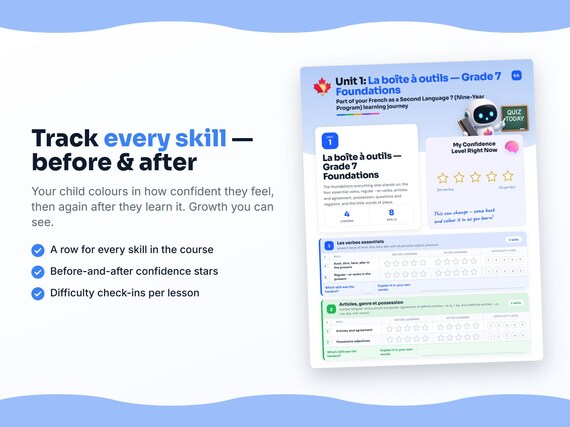
Built from the same official curriculum as this page. Before and after each skill above, your student colours in how sure they feel — so the two of you can see, on one page, what's clicking and what needs another look. It's a quiet way to follow how the year is really going.
By June it's full of their own handwriting: units worked through, confidence grown, a mid-year check-in, notes from parent-teacher night, and a certificate at the end. Less a worksheet, more a record of the year worth keeping on the shelf.
Instant download · see every page, reviews and the full description · five or more workbooks are $2.99 each
What it looks like in the app
Common questions
Can MapleMind help me with French as a Second Language 7 (Nine-Year Program)?
Yes. MapleMind's AI tutor covers all 20 skills in Alberta's French as a Second Language 7 (Nine-Year Program) — you pick the exact skill, and the tutor teaches it step by step: a short lesson, a worked example, solving together, then a skill check to show it stuck.
Is MapleMind aligned to Alberta's official curriculum?
Yes. Every skill in this course maps to an official outcome code from Alberta's Grade 7 French curriculum, and the ministry's own wording is quoted under each unit on this page — with the official government source linked so you can check it yourself.
What does MapleMind cost?
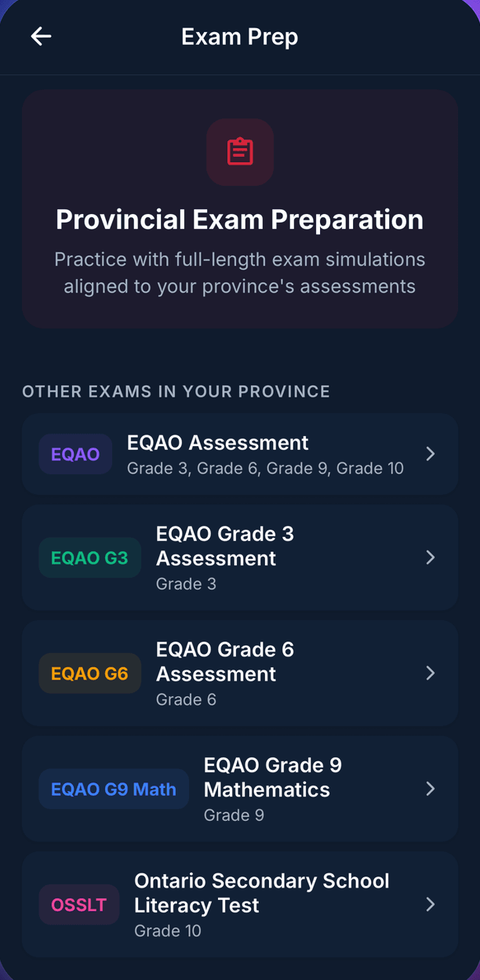
It's free to start — 5 tutoring chats and a practice quiz every day, no credit card. A Pro subscription ($9.99/month or $49.99/year CAD, 7-day free trial) unlocks unlimited tutoring, practice, and exam simulations.
What if I'm stuck on just one topic?
That's the point of skill-level tutoring: open French as a Second Language 7 (Nine-Year Program) in the app, tap the exact skill from the list on this page, and the tutor teaches just that — no wading through lessons you don't need.
Does MapleMind work in French or other languages?
Yes — 14 languages, including French. Both the app and the tutor's explanations switch to the language you choose.
Where can I see the official Alberta curriculum for French as a Second Language 7 (Nine-Year Program)?
The official source is linked on this page — Alberta's official programs of study. The outline here follows it: every MapleMind skill carries its official outcome code, and the ministry's own wording is quoted under each unit.
Keep exploring
Ready when you are
Pick a skill from this page and see it taught properly — free, in the browser, in under a minute.