Get help with English Language Arts 7
Most tutoring makes you sit through material you already know. MapleMind flips that: pick the exact skill that's causing trouble — any of the 28 below — and the tutor teaches just that one, step by step, as many times as it takes. Ask questions in plain words, any time of day, in English, French, or 12 other languages.
The official Nova Scotia English Language Arts 7 curriculum
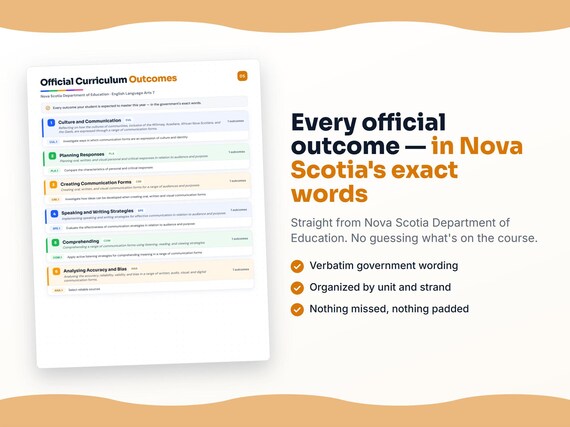
Nova Scotia defines English Language Arts 7 by strands and outcomes. MapleMind teaches the same curriculum reorganized for one-skill-at-a-time tutoring — the table shows exactly where every official strand lands, and the ministry's own wording is quoted under each unit below.
Official source Nova Scotia's official curriculumRead it on the government site — curriculum.novascotia.ca ↗| Official strand | Outcomes | Where MapleMind teaches it |
|---|---|---|
| Strand A | 4 | Culture and Communication |
| Strand B | 5 | Planning Responses |
| Strand C | 5 | Creating Communication Forms |
| Strand D | 5 | Speaking and Writing Strategies |
| Strand E | 4 | Comprehending |
| Strand F | 4 | Analysing Accuracy and Bias |
Every skill below, taught one on one.
 Try the first session free
How MapleMind teaches English Language Arts 7 — every unit, lesson, and skill
Every skill below runs as a short session: a plain-words lesson, a worked example, solving it together, then a five-question skill check that earns up to three stars. Guided Mode keeps it teaching instead of answer-handing — turning it off needs a parent's password.
Unit 1Culture and CommunicationOfficial strand · Strand A
Reflecting on how the cultures of communities, inclusive of the Mi'kmaq, Acadians, African Nova Scotians, and the Gaels, are expressed through a range of communication forms.
Culture in Communication Forms
- Investigating how forms express culture and identityNS-ELA-7.A.i1 — Investigate the ways a communication form — a story, song, image, or media text — becomes an expression of a community's culture and identity.
- Comparing voices within a cultureNS-ELA-7.A.i2 — Compare a range of voices and perspectives that exist within a single culture, recognizing that no community speaks with one voice.
- Comprehending cultural expression through creators' choicesNS-ELA-7.A.i3 — Comprehend a cultural expression by examining the choices its speaker, writer, or producer made to convey meaning.
- Investigating how forms vary across culturesNS-ELA-7.A.i4 — Investigate how communication forms vary — or stay the same — from one culture to another.
The official wording — 4 outcomes in this unit
- NS-ELA-7.A.i1
Investigate ways in which communication forms are an expression of culture and identity
- NS-ELA-7.A.i2
Compare a range of voices and perspectives from within a culture
- NS-ELA-7.A.i3
Comprehend cultural expressions using speakers’/writers’/producers’ choices
- NS-ELA-7.A.i4
Investigate how communication forms vary or look the same across cultures
Unit 2Planning ResponsesOfficial strand · Strand B
Planning oral, written, and visual personal and critical responses in relation to audience and purpose.
Planning Personal and Critical Responses
- Comparing personal and critical responsesNS-ELA-7.B.i1 — Compare the characteristics of a personal response and a critical response, so you can choose the right kind for a task.
- Questioning interpretations of messagesNS-ELA-7.B.i2 — Question personal and critical interpretations of the messages you perceive in a variety of communication forms.
- Developing ideas for responsesNS-ELA-7.B.i3 — Investigate the different ways ideas for a personal or critical response can be developed before you draft.
- Relating audience, purpose, and formNS-ELA-7.B.i4 — Investigate the relationship between audience and purpose and the communication form you choose for a response.
- Analysing supporting detailsNS-ELA-7.B.i5 — Analyse how supporting details strengthen the ideas and responses you plan.
The official wording — 5 outcomes in this unit
- NS-ELA-7.B.i1
Compare the characteristics of personal and critical responses
- NS-ELA-7.B.i2
Question personal and critical interpretations of perceived messages from a variety of communication forms
- NS-ELA-7.B.i3
Investigate how ideas for personal and critical responses can be developed
- NS-ELA-7.B.i4
Investigate the relationship between audience and purpose, and the chosen communication form
- NS-ELA-7.B.i5
Analyse how supporting details support ideas and responses
Unit 3Creating Communication FormsOfficial strand · Strand C
Creating oral, written, and visual communication forms for a range of audiences and purposes.
Creating for Audiences and Purposes
- Developing ideas when creatingNS-ELA-7.C.i1 — Investigate how ideas can be developed while creating an oral, written, or visual communication form.
- Applying writing, design, and research processesNS-ELA-7.C.i2 — Apply writing, design, and research processes to build a communication form.
- Selecting a form for an audience and purposeNS-ELA-7.C.i3 — Select a communication form that responds well to a specific audience and purpose.
- Applying revision, editing, and proof-readingNS-ELA-7.C.i4 — Apply revision, editing, and proof-reading strategies suited to a range of communication forms.
- Analysing publishing and sharingNS-ELA-7.C.i5 — Analyse the processes for publishing and sharing the communication forms you create.
The official wording — 5 outcomes in this unit
- NS-ELA-7.C.i1
Investigate how ideas can be developed when creating oral, written and visual communication forms
- NS-ELA-7.C.i2
Apply writing, design, and research processes
- NS-ELA-7.C.i3
Select a communication form that responds to an audience and purpose
- NS-ELA-7.C.i4
Apply revision, editing, and proof-reading strategies appropriate to a range of communication forms
- NS-ELA-7.C.i5
Analyse processes for publishing and sharing chosen communication forms
Unit 4Speaking and Writing StrategiesOfficial strand · Strand D
Implementing speaking and writing strategies for effective communication in relation to audience and purpose.
Strategies for Effective Communication
- Evaluating communication strategiesNS-ELA-7.D.i1 — Evaluate how effective a communication strategy is in relation to a specific audience and purpose.
- Investigating how language impacts communicationNS-ELA-7.D.i2 — Investigate how the way language is used can impact communication.
- Investigating source credibilityNS-ELA-7.D.i3 — Investigate how the accuracy and reliability of information are used to influence personal communication.
- Investigating bias and validity in communicationNS-ELA-7.D.i3 — Investigate how the validity of reasoning and the presence of bias are used to influence personal communication.
- Selecting organizational structures and devicesNS-ELA-7.D.i4 — Select organizational structures and devices that fit an intended audience and purpose.
- Applying conventionsNS-ELA-7.D.i5 — Apply the conventions of language appropriate to an intended audience and purpose.
The official wording — 5 outcomes in this unit
- NS-ELA-7.D.i1
Evaluate the effectiveness of communication strategies in relation to audience and purpose
- NS-ELA-7.D.i2
Investigate how language use can impact communication
- NS-ELA-7.D.i3
Investigate how accuracy, reliability, validity, and bias are used to influence personal communication
- NS-ELA-7.D.i4
Select organizational structures and devices for intended audience and purpose
- NS-ELA-7.D.i5
Apply conventions for intended audience and purpose
Unit 5ComprehendingOfficial strand · Strand E
Comprehending a range of communication forms using listening, reading, and viewing strategies.
Comprehending with Strategies
- Applying active listening strategiesNS-ELA-7.E.i1 — Apply active listening strategies to comprehend meaning across a range of communication forms.
- Investigating reading and viewing strategiesNS-ELA-7.E.i2 — Investigate how reading and viewing strategies are used to build comprehension.
- Analysing how forms influence comprehensionNS-ELA-7.E.i3 — Analyse how the communication form itself influences how a message is comprehended.
- Reflecting on perspective and comprehensionNS-ELA-7.E.i4 — Reflect on how a person's perspective influences their comprehension of communication forms.
The official wording — 4 outcomes in this unit
- NS-ELA-7.E.i1
Apply active listening strategies for comprehending meaning in a range of communication forms
- NS-ELA-7.E.i2
Investigate how reading and viewing strategies are used in comprehension
- NS-ELA-7.E.i3
Analyse how communication forms influence comprehension
- NS-ELA-7.E.i4
Reflect on how perspectives influence comprehension of communication forms
Unit 6Analysing Accuracy and BiasOfficial strand · Strand F
Analysing the accuracy, reliability, validity, and bias in a range of written, audio, visual, and digital communication forms.
Weighing Sources and Information
- Selecting reliable sourcesNS-ELA-7.F.i1 — Select reliable sources from among the many available.
- Comparing accuracy across sourcesNS-ELA-7.F.i2 — Compare the accuracy of information drawn from a variety of sources.
- Choosing valid informationNS-ELA-7.F.i3 — Apply strategies for choosing valid information from a range of communication forms.
- Investigating bias in the messageNS-ELA-7.F.i4 — Investigate how bias influences the message of a communication form.
The official wording — 4 outcomes in this unit
- NS-ELA-7.F.i1
Select reliable sources
- NS-ELA-7.F.i2
Compare the accuracy of information from a variety of sources
- NS-ELA-7.F.i3
Apply strategies for choosing valid information from a range of communication forms
- NS-ELA-7.F.i4
Investigate how bias influences the message of communication forms
Printable workbook · A keepsake of the year
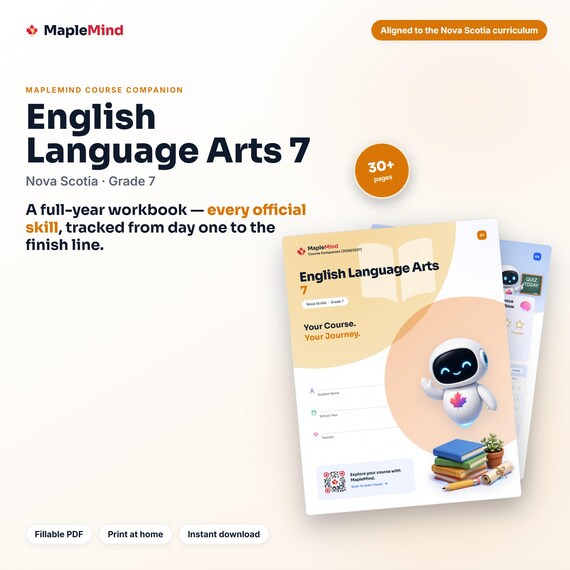
A English Language Arts 7 workbook worth keeping
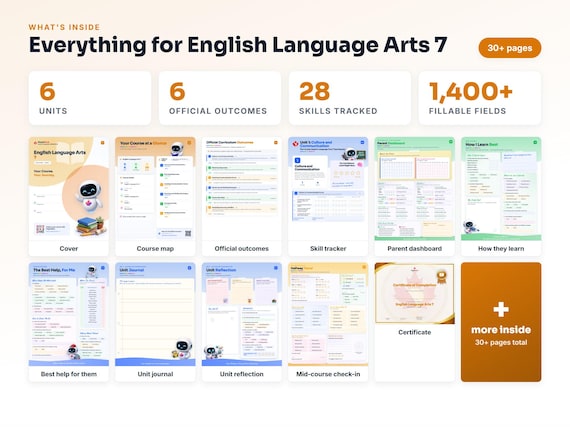
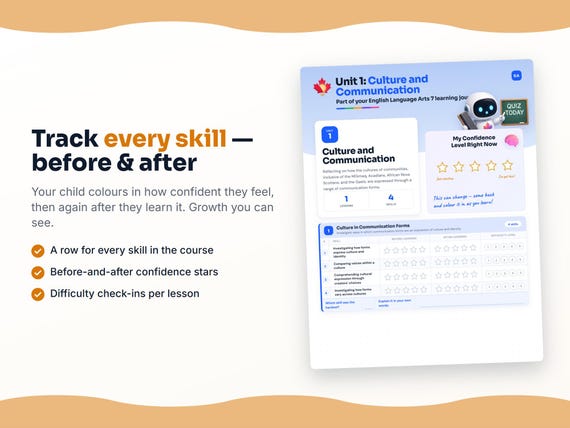
Built from the same official curriculum as this page. Before and after each skill above, your student colours in how sure they feel — so the two of you can see, on one page, what's clicking and what needs another look. It's a quiet way to follow how the year is really going.
By June it's full of their own handwriting: units worked through, confidence grown, a mid-year check-in, notes from parent-teacher night, and a certificate at the end. Less a worksheet, more a record of the year worth keeping on the shelf.
Instant download · see every page, reviews and the full description · five or more workbooks are $2.99 each
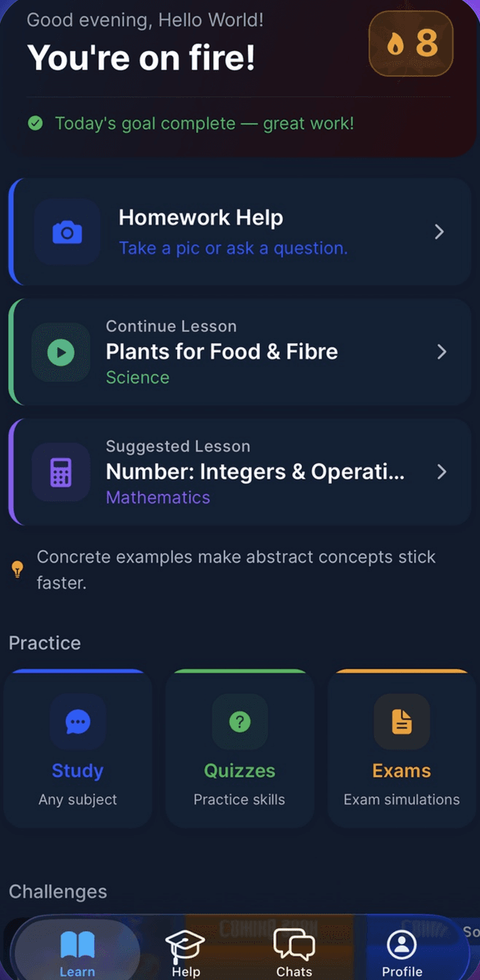
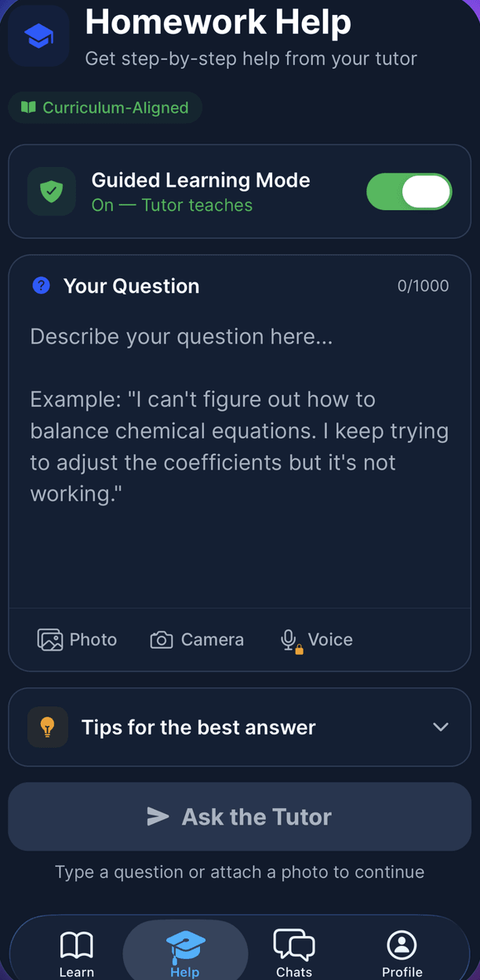
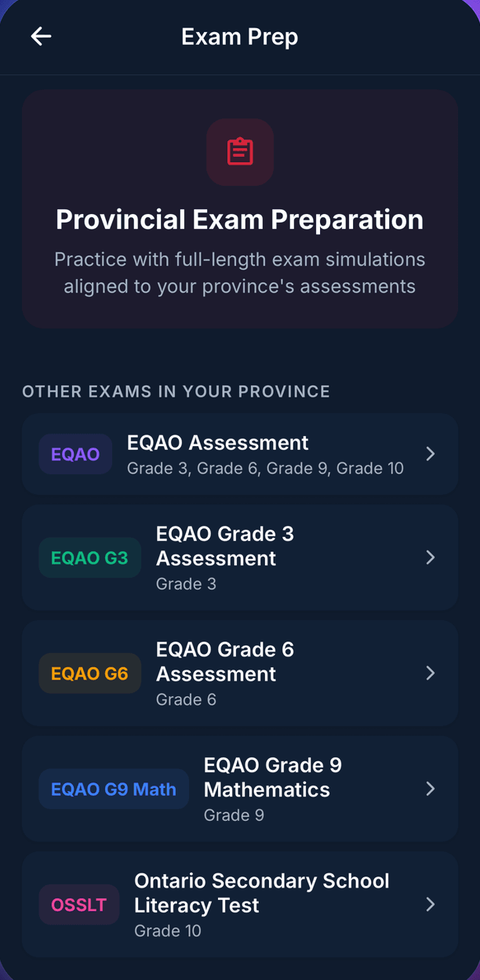
What it looks like in the app
Common questions
Can MapleMind help me with English Language Arts 7?
Yes. MapleMind's AI tutor covers all 28 skills in Nova Scotia's English Language Arts 7 — you pick the exact skill, and the tutor teaches it step by step: a short lesson, a worked example, solving together, then a skill check to show it stuck.
Is MapleMind aligned to Nova Scotia's official curriculum?
Yes. Every skill in this course maps to an official outcome code from Nova Scotia's Grade 7 English Language Arts curriculum, and the ministry's own wording is quoted under each unit on this page — with the official government source linked so you can check it yourself.
What does MapleMind cost?
It's free to start — 5 tutoring chats and a practice quiz every day, no credit card. A Pro subscription ($9.99/month or $49.99/year CAD, 7-day free trial) unlocks unlimited tutoring, practice, and exam simulations.
What if I'm stuck on just one topic?
That's the point of skill-level tutoring: open English Language Arts 7 in the app, tap the exact skill from the list on this page, and the tutor teaches just that — no wading through lessons you don't need.
Does MapleMind work in French or other languages?
Yes — 14 languages, including French. Both the app and the tutor's explanations switch to the language you choose.
Where can I see the official Nova Scotia curriculum for English Language Arts 7?
The official source is linked on this page — Nova Scotia's official curriculum. The outline here follows it: every MapleMind skill carries its official outcome code, and the ministry's own wording is quoted under each unit.
Keep exploring
Ready when you are
Pick a skill from this page and see it taught properly — free, in the browser, in under a minute.