Get help with English Language Arts, Grade 2
Most tutoring makes your child sit through material your child already knows. MapleMind flips that: pick the exact skill that's causing trouble — any of the 38 below — and the tutor teaches just that one, step by step, as many times as it takes. Ask questions in plain words, any time of day, in English, French, or 12 other languages.
The official Nova Scotia English Language Arts, Grade 2 curriculum
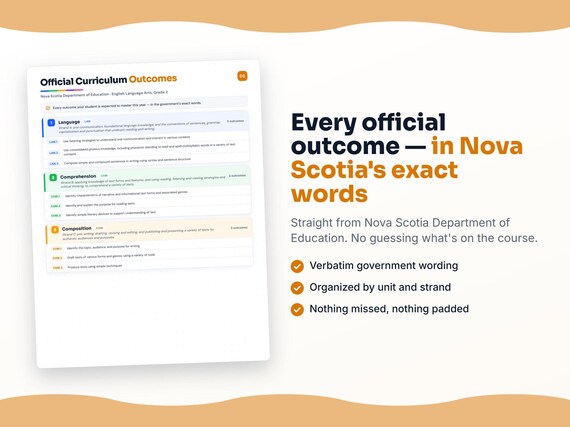
Nova Scotia defines English Language Arts, Grade 2 by strands and outcomes. MapleMind teaches the same curriculum reorganized for one-skill-at-a-time tutoring — the table shows exactly where every official strand lands, and the ministry's own wording is quoted under each unit below.
Official source Nova Scotia's official curriculumRead it on the government site — curriculum.novascotia.ca ↗| Official strand | Outcomes | Where MapleMind teaches it |
|---|---|---|
| Strand A | 10 | Language |
| Strand B | 15 | Comprehension |
| Strand C | 13 | Composition |
Every skill below, taught one on one.
 Try the first session free
How MapleMind teaches English Language Arts, Grade 2 — every unit, lesson, and skill
Every skill below runs as a short session: a plain-words lesson, a worked example, solving it together, then a five-question skill check that earns up to three stars. Guided Mode keeps it teaching instead of answer-handing — turning it off needs a parent's password.
Unit 1LanguageOfficial strand · Strand A
Strand A: oral communication, foundational language knowledge, and the conventions of sentences, grammar, capitalization and punctuation that underpin reading and writing.
Oral and Non-Verbal Communication
- Using listening strategies (Grade 2)NS-ELA-2.A1.i1 — Use listening strategies to understand oral communication and interact in various contexts.
- Oral and non-verbal communication strategies (Grade 2)NS-ELA-2.A1.i2 — Use oral and non-verbal communication strategies to interpret and contribute to the meaning of messages and information.
- Using taught vocabulary, syntax and grammar in talk (Grade 2)NS-ELA-2.A1.i3 — Use explicitly taught vocabulary, syntax, and grammar to expand on communicating ideas and information.
Foundational Language: Phonics, Vocabulary and Fluency
- Phonics: blending and segmenting to read and spell (Grade 2)NS-ELA-2.A2.i1 — Use consolidated phonics knowledge, including phonemic blending to read and spell multisyllabic words in a variety of text contexts.
- Letters and alphabetic knowledge / orthographic patterns (Grade 2)NS-ELA-2.A2.i2 — Use consolidated orthographic knowledge, including position-based tendencies, to spell or pronounce a word when reading.
- Grapheme-phoneme correspondences / morphology and vocabulary (Grade 2)NS-ELA-2.A2.i3 — Develop and use explicitly taught vocabulary in various contexts, including commonly used and subject specific words. Apply developing morphological knowledge to understand new words in context.
- Reading fluently with expression and intonation (Grade 2)NS-ELA-2.A2.i4 — Read words, sentences, and paragraphs in various texts fluently, with accuracy and appropriate pacing to support comprehension, and read aloud with expression and intonation.
Sentence Structure, Grammar and Conventions
- Composing sentences (Grade 2)NS-ELA-2.A3.i1 — Compose simple and compound sentences in writing using syntax and sentence structure.
- Parts of speech to support reading and writing (Grade 2)NS-ELA-2.A3.i2 — Use knowledge of parts of speech in oral language to support reading comprehension and communicate meaning in writing.
- Capitalization and punctuation (Grade 2)NS-ELA-2.A3.i3 — Apply knowledge of capitalization and appropriate punctuation when reading and writing.
The official wording — 10 outcomes in this unit
- NS-ELA-2.A1.i1
Use listening strategies to understand oral communication and interact in various contexts
- NS-ELA-2.A1.i2
Use oral and non-verbal communication strategies to interpret and contribute to the meaning of messages and information
- NS-ELA-2.A1.i3
Use explicitly taught vocabulary, syntax, and grammar to expand on communicating ideas and information
- NS-ELA-2.A2.i1
Use consolidated phonics knowledge, including phonemic blending to read and spell multisyllabic words in a variety of text contexts
- NS-ELA-2.A2.i2
Use consolidated orthographic knowledge, including position-based tendencies, to spell or pronounce a word when reading
- NS-ELA-2.A2.i3
Develop and use explicitly taught vocabulary in various contexts, including commonly used and subject specific words. Apply developing morphological knowledge to understand new words in context
- NS-ELA-2.A2.i4
Read words, sentences, and paragraphs in various texts fluently, with accuracy and appropriate pacing to support comprehension, and read aloud with expression and intonation
- NS-ELA-2.A3.i1
Compose simple and compound sentences in writing using syntax and sentence structure
- NS-ELA-2.A3.i2
Use knowledge of parts of speech in oral language to support reading comprehension and communicate meaning in writing
- NS-ELA-2.A3.i3
Apply knowledge of capitalization and appropriate punctuation when reading and writing
Unit 2ComprehensionOfficial strand · Strand B
Strand B: applying knowledge of text forms and features, and using reading, listening and viewing strategies and critical thinking, to comprehend a variety of texts.
Text Forms, Features and Style
- Narrative and informational text forms (Grade 2)NS-ELA-2.B1.i1 — Identify characteristics of narrative and informational text forms and associated genres.
- Organizational structures and text features (Grade 2)NS-ELA-2.B1.i2 — Identify organizational structures and text features and apply this knowledge to support reading comprehension.
- Visual elements and design (Grade 2)NS-ELA-2.B1.i3 — Identify the relationship between visual elements and visual design and describe how they communicate meaning.
- Elements of style (Grade 2)NS-ELA-2.B1.i4 — Identify elements of style in text and explain how they help to communicate meaning.
- Narrator's point of view (Grade 2)NS-ELA-2.B1.i5 — Examine how texts present the narrator’s point of view and suggest an alternative point of view.
Reading, Listening and Viewing Strategies
- Purpose for reading / background knowledge (Grade 2)NS-ELA-2.B2.i1 — Identify and explain the purpose for reading texts.
- Making and confirming predictions / reading goals (Grade 2)NS-ELA-2.B2.i2 — Make and confirm predictions using background knowledge and evidence from the text.
- Monitoring comprehension (Grade 2)NS-ELA-2.B2.i3 — Use strategies to monitor reading comprehension.
- Making connections text to text, self and world (Grade 2)NS-ELA-2.B2.i4 — Make connections text to text, text to self, and text to world.
- Main idea and details (Grade 2)NS-ELA-2.B2.i5 — Identify the main idea and details in texts.
- Strategies that support comprehension (Grade 2)NS-ELA-2.B2.i6 — Identify the strategies that support comprehension of texts.
Critical Thinking and Response
- Literary devices and rhetorical techniques (Grade 2)NS-ELA-2.B3.i1 — Identify simple literary devices to support understanding of text.
- Making inferences from information and visuals (Grade 2)NS-ELA-2.B3.i2 — Use information and visual elements from texts to make inferences and identify implied information.
- Sequencing important information (Grade 2)NS-ELA-2.B3.i3 — Identify and sequence important information in texts.
- Personal thoughts and feelings about texts (Grade 2)NS-ELA-2.B3.i4 — Express personal thoughts and feelings about ideas presented in texts.
The official wording — 15 outcomes in this unit
- NS-ELA-2.B1.i1
Identify characteristics of narrative and informational text forms and associated genres
- NS-ELA-2.B1.i2
Identify organizational structures and text features and apply this knowledge to support reading comprehension
- NS-ELA-2.B1.i3
Identify the relationship between visual elements and visual design and describe how they communicate meaning
- NS-ELA-2.B1.i4
Identify elements of style in text and explain how they help to communicate meaning
- NS-ELA-2.B1.i5
Examine how texts present the narrator’s point of view and suggest an alternative point of view
- NS-ELA-2.B2.i1
Identify and explain the purpose for reading texts
- NS-ELA-2.B2.i2
Make and confirm predictions using background knowledge and evidence from the text
- NS-ELA-2.B2.i3
Use strategies to monitor reading comprehension
- NS-ELA-2.B2.i4
Make connections text to text, text to self, and text to world
- NS-ELA-2.B2.i5
Identify the main idea and details in texts
- NS-ELA-2.B2.i6
Identify the strategies that support comprehension of texts
- NS-ELA-2.B3.i1
Identify simple literary devices to support understanding of text
- NS-ELA-2.B3.i2
Use information and visual elements from texts to make inferences and identify implied information
- NS-ELA-2.B3.i3
Identify and sequence important information in texts
- NS-ELA-2.B3.i4
Express personal thoughts and feelings about ideas presented in texts
Unit 3CompositionOfficial strand · Strand C
Strand C: pre-writing, drafting, revising and editing, and publishing and presenting a variety of texts for authentic audiences and purposes.
Pre-Writing and Planning
- Topic, audience and purpose / writing goals (Grade 2)NS-ELA-2.C1.i1 — Identify the topic, audience, and purpose for writing.
- Generating ideas for writing (Grade 2)NS-ELA-2.C1.i2 — Use various strategies to generate ideas for writing.
- Gathering information for writing (Grade 2)NS-ELA-2.C1.i3 — Gather information and content relevant to a topic from multiple sources.
- Organizing writing (Grade 2)NS-ELA-2.C1.i4 — Use various strategies to organize writing.
Drafting, Revising and Editing
- Drafting texts / handwriting (Grade 2)NS-ELA-2.C2.i1 — Draft texts of various forms and genres, using a variety of tools.
- Transcribing / drafting with conventions (Grade 2)NS-ELA-2.C2.i2 — Transcribe letters, words, and sentences with increasing accuracy in authentic writing.
- Personal voice / revising (Grade 2)NS-ELA-2.C2.i3 — Demonstrate personal voice in written text.
- Identifying the point of view in my own writing (Grade 2)NS-ELA-2.C2.i4 — Identify the point of view used in their texts.
- Revising by adding, deleting, or using feedback (Grade 2)NS-ELA-2.C2.i5 — Revise and review text drawing on feedback from others.
- Editing and proofreading with correct spelling (Grade 2)NS-ELA-2.C2.i6 — Use strategies to edit and proofread with correct spelling drafts of texts.
Publishing and Presenting
- Producing and presenting final texts (Grade 2)NS-ELA-2.C3.i1 — Produce texts using simple techniques.
- Selecting media and tools to present (Grade 2)NS-ELA-2.C3.i2 — Select from a variety of media to present final texts.
- Presenting created texts to audiences (Grade 2)NS-ELA-2.C3.i3 — Present created texts to audiences.
The official wording — 13 outcomes in this unit
- NS-ELA-2.C1.i1
Identify the topic, audience, and purpose for writing
- NS-ELA-2.C1.i2
Use various strategies to generate ideas for writing
- NS-ELA-2.C1.i3
Gather information and content relevant to a topic from multiple sources
- NS-ELA-2.C1.i4
Use various strategies to organize writing
- NS-ELA-2.C2.i1
Draft texts of various forms and genres, using a variety of tools
- NS-ELA-2.C2.i2
Transcribe letters, words, and sentences with increasing accuracy in authentic writing
- NS-ELA-2.C2.i3
Demonstrate personal voice in written text
- NS-ELA-2.C2.i4
Identify the point of view used in their texts
- NS-ELA-2.C2.i5
Revise and review text drawing on feedback from others
- NS-ELA-2.C2.i6
Use strategies to edit and proofread with correct spelling drafts of texts
- NS-ELA-2.C3.i1
Produce texts using simple techniques
- NS-ELA-2.C3.i2
Select from a variety of media to present final texts
- NS-ELA-2.C3.i3
Present created texts to audiences
Printable workbook · A keepsake of the year
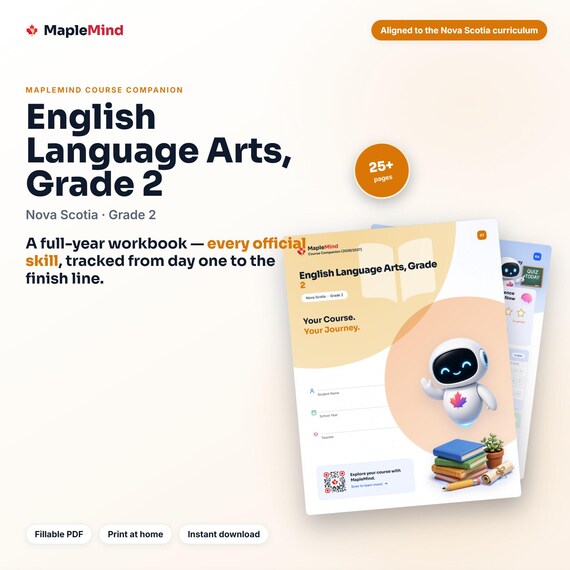
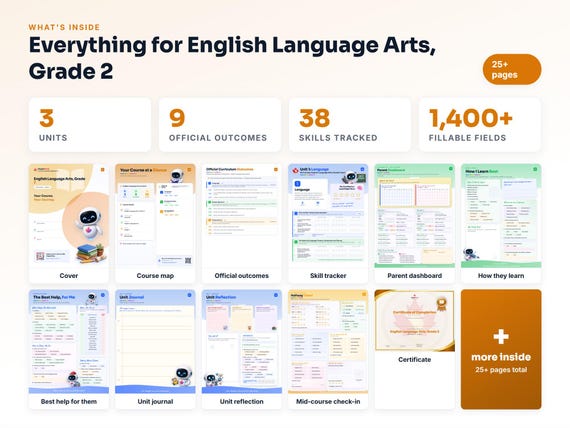
A English Language Arts, Grade 2 workbook worth keeping
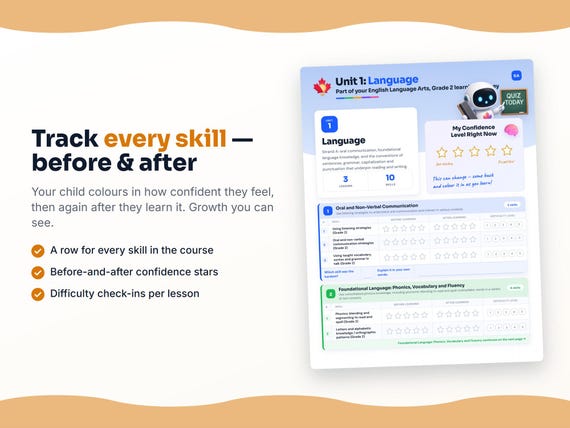
Built from the same official curriculum as this page. Before and after each skill above, your student colours in how sure they feel — so the two of you can see, on one page, what's clicking and what needs another look. It's a quiet way to follow how the year is really going.
By June it's full of their own handwriting: units worked through, confidence grown, a mid-year check-in, notes from parent-teacher night, and a certificate at the end. Less a worksheet, more a record of the year worth keeping on the shelf.
Instant download · see every page, reviews and the full description · five or more workbooks are $2.99 each
What it looks like in the app
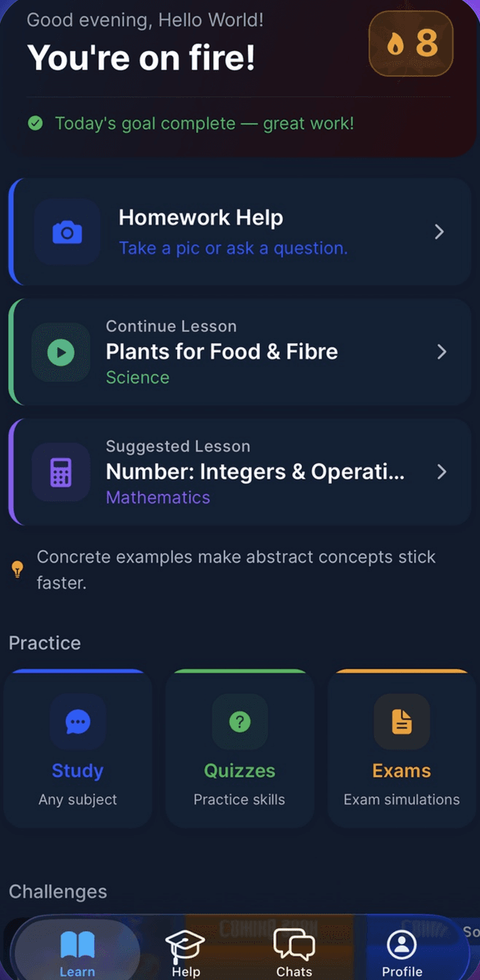
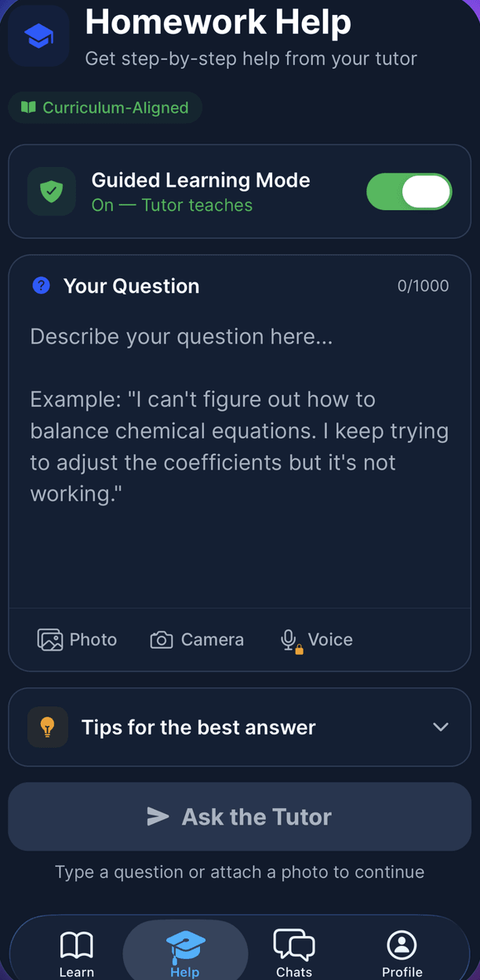
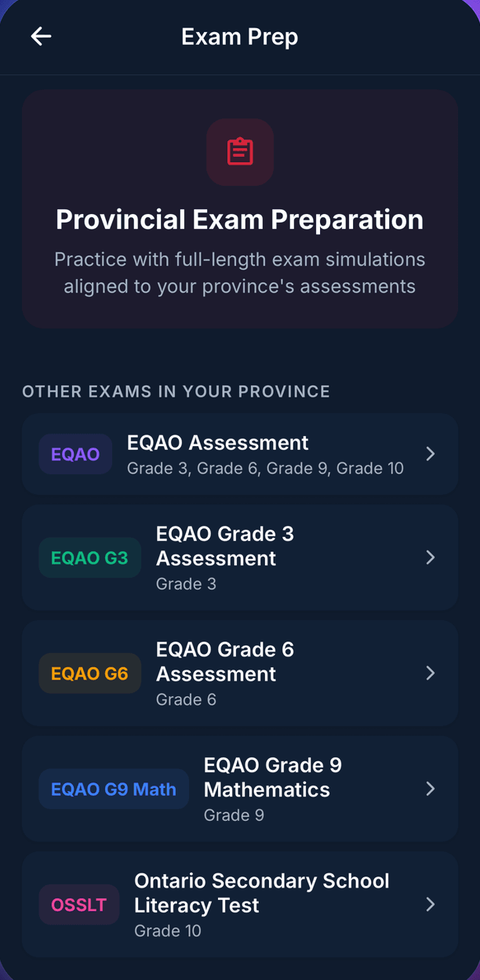
Common questions
Can MapleMind help my child with English Language Arts, Grade 2?
Yes. MapleMind's AI tutor covers all 38 skills in Nova Scotia's English Language Arts, Grade 2 — your child picks the exact skill, and the tutor teaches it step by step: a short lesson, a worked example, solving together, then a skill check to show it stuck.
Is MapleMind aligned to Nova Scotia's official curriculum?
Yes. Every skill in this course maps to an official outcome code from Nova Scotia's Grade 2 English Language Arts curriculum, and the ministry's own wording is quoted under each unit on this page — with the official government source linked so you can check it yourself.
What does MapleMind cost?
It's free to start — 5 tutoring chats and a practice quiz every day, no credit card. A Pro subscription ($9.99/month or $49.99/year CAD, 7-day free trial) unlocks unlimited tutoring, practice, and exam simulations.
What if my child is stuck on just one topic?
That's the point of skill-level tutoring: open English Language Arts, Grade 2 in the app, tap the exact skill from the list on this page, and the tutor teaches just that — no wading through lessons your child doesn't need.
Does MapleMind work in French or other languages?
Yes — 14 languages, including French. Both the app and the tutor's explanations switch to the language your child chooses.
Where can I see the official Nova Scotia curriculum for English Language Arts, Grade 2?
The official source is linked on this page — Nova Scotia's official curriculum. The outline here follows it: every MapleMind skill carries its official outcome code, and the ministry's own wording is quoted under each unit.
Keep exploring
Ready when you are
Pick a skill from this page and see it taught properly — free, in the browser, in under a minute.